
Federated Farmers Welcomes ACT’s New Farming Policies
Federated Farmers has welcomed new rural policies released by ACT, saying they align closely with its own election priorities.




 increase font size
 William Rolleston.
Farmer confidence has moved further into negative territory, as shown by the Federated Farmers’ new-season July 2015 Farm Confidence Survey.
Pessimists far outnumbered optimists over the economy in general and farm profitability.
For dairy, 44.6% of respondents expect economic conditions to worsen, 16.5% expect them to improve and 36.5% expect them to stay the same over the next 12 months. The resultant net 28.1% with a negative outlook is 6.9% more than in the last survey in January.
For their own farm profitability, 70.5% expect it to worsen over the next 12 months, 20.7% expect it to stay the same and 8.1% expect an improvement. That results in a net 62.4% with a negative outlook – a 9% improvement on January.
But Federated Farmers president William Rolleston says while initial payout forecasts from dairy companies indicates a modest improvement for 2015-16, more recent falls in world commodity prices is causing economists to revise them down.
“Most dairy farmers should be able to cope with one bad season, which 2014-15 most certainly was. The real test is coming this 2015-16 season. If it repeats last season more and more dairy farmers will find themselves under severe pressure,” the Feds report comments.
World dairy prices are in the doldrums. “Fonterra’s initial forecast for 2015-16 is $5.25/kgMS, up $0.85 on its initial forecast the previous season. However, with the Global Dairy Trade continuing to fall since the opening forecast… the forecast is looking more and more challenging. Most dairy farmers expect their profitability to worsen.”
The higher-than-usual dairy cow cull has increased supply at meat processors and reduced schedule prices, the report says. Production expectations, hit in January by the drought and the low dairy payout, have also eased back further in this survey, although remain positive.
A silver lining has been a 12.5% drop in the New Zealand dollar since April. This should buffer the weak world prices. They could fall to more of a ‘fair value’, given the 25% fall in world commodity prices since March 2014.
Pessimism about profitability is reflected in farmers’ spending intentions. A higher proportion of farmers expect to reduce spending to levels not seen since the global financial crisis. The intention to close cheque books is especially strong among dairy farmers.
More farmers expect to increase debt than reduce it. Banks’ support will be important in this challenging period.
The farm labour market remains tight but appears to have eased slightly since January. Slightly fewer farmers report it is harder to find skilled and motivated staff.
The biggest concern for farmers is commodity and farmgate prices, cited by nearly 37% of farmers. This was followed by regulation and compliance costs (17%), the weather (13%) and industry specific issues (11%). “A jump in concern about industry specific issues reflects farmer dissatisfaction with the performance of Fonterra and the meat industry,” the report says.
Farmers’ highest priority for the Government is regulation and compliance costs. At least 24% mentioned it generally or raised specific hot topics such as health and safety and the RMA.
As with the last survey the overall results mask industry and regional variations, and the report discusses these.
Headline results
Headline results of the Farm Confidence Survey for all industry groups:
Federated Farmers has welcomed new rural policies released by ACT, saying they align closely with its own election priorities.

Federated Farmers is backing Feilding High School’s call to keep Agriculture and Horticultural Science as a standalone subject in Year 11.
National’s pledge to introduce 19 new national standards shows the party is serious about getting Wellington out of farming, Federated Farmers says.
Mobile phone coverage and reliability are deteriorating in rural areas, and farming families are bearing the cost, according to a Federated Farmers survey.
Central Otago District Council (CODC) has voted against a plan to spread treated sewage sludge from Cromwell and Alexandra on farmland near Lauder, a decision Federated Farmers says reflects strong opposition from rural residents.


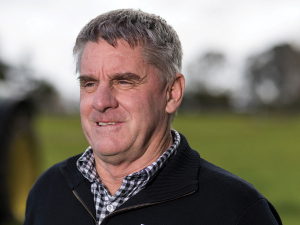
Federated Farmers has welcomed new rural policies released by ACT, saying they align closely with its own election priorities.

Rural Contractors NZ says proposed changes to land transport rules for agricultural vehicles are a welcome response by the Government to out of date regulations which have seen members hit with huge fines.
Alliance is calling for final applications for its 2027 Graduate Programme, with applications closing on Sunday 25 October.
Decades piloting planes has ensured vet and farmer David Hayes is focused on safety. So, after a serious accident while welding on farm, he is sharing his experience so others can learn from it.
Canterbury milk processor, Synlait Milk has confirmed Leon Fung as its chief executive officer.
OPINION: Making it easier to collect rainwater and use it to grow crops and livestock is a no brainer.




OPINION: It seems Canterbury processor Synlait is still in the doldrums.
OPINION: Get offside with New Zealand First leader Winston Peters at your own peril.




