International Day of Rural Women: Two DairyNZ Farmers’ Stories
Today, 15 October, is the International Day of Rural Women, which recognises rural women’s contribution to farming, communities and the environment.




 increase font size
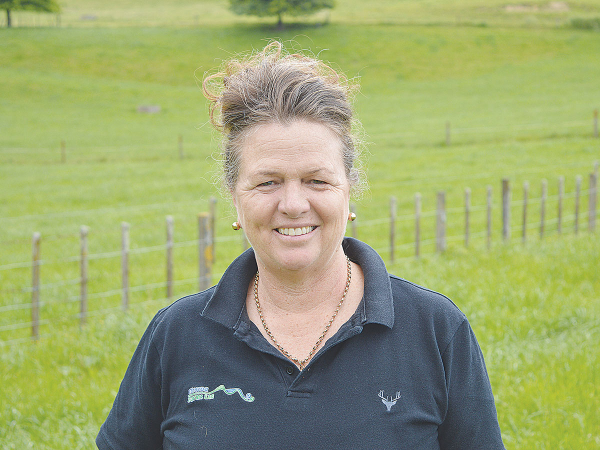 New DairyNZ chair Tracy Brown says farmers cannot plan or invest if they don’t know what you are up against.
New DairyNZ chair Tracy Brown says bipartisan agreement among political parties on emissions pricing and freshwater regulations would greatly help farmers.
Brown, the first female chair of the industry-good organisation, says farmers need certainty around what future regulations may look like.
"Farmers cannot plan or invest if they don't know what you are up against," she told Dairy News.
Agriculture sector leaders are engaging more with National, Labour and Greens to understand their positions and help allay farmer uncertainty around emissions and water regulations.
DairyNZ was part of He Waka Eke Noa (HWEN), set up by the previous Labour government and made up of the pastoral sector, farmer groups, Ministry for Primary Industries and Maori, to look at emissions pricing. However, the current Government disbanded HWEN in June this year.
The Government has since established a Pastoral Sector Group to tackle biogenic methane and take agriculture out of the New Zealand Emissions Trading Scheme (NZ ETS). The group is likely to meet in the coming months.
Brown says the Pastoral Sector Group's challenge is to work out how we can meet our climate change obligations while keeping kiwi farmers in business.
"That's why bipartisan agreement with major political parties is critical. We're spending a lot of time talking to National, Labour and the Greens as well as Act and NZ First," she says.
"The challenge is how can we meet somewhere in the middle and keep the economy going and giving certainty to farmers which is not crippling.
"If change needs to be made then it needs to be over a reasonable timeframe and with reasonable expectations."
Brown notes that the world we operate in is changing, with an increased focus on sustainability. She says it's not going to go away, and the dairy sector needs to keep moving on this.
"Our markets are demanding it, we hear from our milk producers that they are coming under scrutiny, being questioned around what farmers are doing, and [asked] to provide evidence," she says.
HWEN is credited with bringing the pastoral sector together to discuss solutions. Brown says while HWEN involved some good work, it "didn't quite land".
"We're now in a different space with a new Government."
Brown wants regulations that are practical and workable to all parties.
"However we operate going forward, it must be practical and workable to all parties. It must be a system that farmers understand and where their efforts are recognised and rewarded."
She notes that since 2001, 96% of farms have got a greenhouse gas emissions profile and 60% have a plan to manage emissions, that's up from only 15% three years before in May 2021.
"Our knowledge and understanding is growing all the time," she says.
"But farmers need certainty. Right now, the target reviews are going on, farmers don't know what they need to do, so there's quite a lot of uncertainty."
And Brown adds that regardless of where that lands DairyNZ will remain focused on delivering the on-farm solutions farmers need to meet their obligations, and continuing farming sustainability and profitably into the future.
Today, 15 October, is the International Day of Rural Women, which recognises rural women’s contribution to farming, communities and the environment.

National’s much-touted free trade deal with India featured in the Rural Issues Debate at Mystery Creek, Hamilton on Wednesday night.
The first major update to the Dairy Cattle Code of Welfare in more than a decade has been released, marking what DairyNZ describes as an important step in ensuring animal welfare standards continue to evolve alongside scientific evidence and on-farm realities.
Have a plan in place for your cows and staff.
It was billed as a chance for all the political parties to woo the rural vote, but question marks hang over just how effective this was.


A major move is about to get underway to improve the quality and viability of dairy beef and cattle in NZ.
Veterinarians say changes to the code of welfare for dairy cattle provides a positive foundation for improved cattle welfare across the country.
Today, 15 October, is the International Day of Rural Women, which recognises rural women’s contribution to farming, communities and the environment.
Global dairy giant Lactalis has integrated its Australian operations with the Mainland Dairy consumer business it acquired from Fonterra earlier this year.
After almost two decades of sharemilking, saving and building equity, Aaron and Marcia Flay this year realised their long-held dream of settling on their first dairy farm.
Good medium to long term prospects for NZ beef, especially in the US, has heighted the focus on various initiatives to capitalise on this situation.


OPINION: It seems Canterbury processor Synlait is still in the doldrums.
OPINION: Get offside with New Zealand First leader Winston Peters at your own peril.




