
Resilient Global Dairy Industry Overcoming Volatility
Fonterra chief executive, Richard Allen says being resilient has helped the dairy industry overcome extreme volatility in recent years.




 increase font size

FONTERRA HAS told the primary production select committee it is 'broadly supportive' of the DIRA Bill and says it's pivotal to its future.
Heading Fonterra's team at the committee hearing, chairman Sir Henry van der Heyden noted that at a principle level the board thinks it's the right thing for New Zealand, the right thing for the co-op and the right thing for its farmers.
"We're actually quite excited it's finally coming into the back straight, especially around TAF which we think can deliver a hellava lot for New Zealand.
"There is a silent majority of farmers out there who email and phone me every day saying 'Let's get on with it; we've been waiting for this for a long time and we're excited."
Unsurprisingly, one of Fonterra's main points was on TAF, saying it will ensure Fonterra has the stable, permanent capital base it needs to protect itself from future shocks and to invest and grow.
Van der Heyden told the committee "TAF ensures permanent capital – a balance sheet that allows the board to execute strategy that will deliver value for all new Zealanders, the cooperative itself and farmer shareholders."
Most of the changes the co-op had put forward in TAF were of a "technical nature," van der Heyden said. But he noted concerns about "behavioural" provisions in section 109K which he claimed could "impede conduct that is part of operating a well functioning market."
He also voiced concerns about the milk oversight provisions in the bill. "Fonterra's position on the milk price oversight is that we don't think it's necessary, but we can live in that space. The Shareholders Council has a different view. From our perspective we've always had a transparent, robust process in setting the farmgate milk price so we don't see the need for oversight, but we can live with it."
Chief executive Theo Spierings told the committee Fonterra as a co-op was now at a crossroads in respect of where it was going.
Growth during the past ten years had been unprecedented and the organisation was well placed for the future. But nothing could be taken for granted, and the DIRA Bill is seen as a defining moment for Fonterra.
"We welcome the legislation as it enables us to go forward and deliver our strategy. I have viewed Fonterra for about 25 years from the other side of the world as a competitor and I've always regarded it as the envy of the world."
Fonterra chief executive, Richard Allen says being resilient has helped the dairy industry overcome extreme volatility in recent years.

Northland farmer Greg Collins has taken over as chair of the Fonterra Co-operative Council.
Fonterra’s 2026 financial year was a year of delivery, with record volumes of milk collected, processed and shipped by the co-op.
Dairy farmers, still holding onto their Fonterra shares despite switching milk supply elsewhere or exiting the industry, now face a stricter share sell-down requirement.
Milk powder prices are continuing their merry run, firming up a potential $10/kgMS farmgate price this season.


During the nesting season, from September to December, industrious starlings can quickly build nests in the darker areas behind tractor and vehicle, usually close to hot engines, typically resulting in localised damage or in some cases complete write-offs.
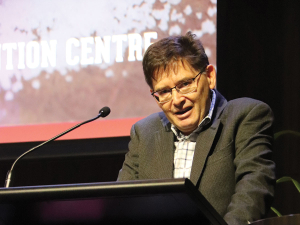
The meat processing industry is much more collegial than it was in the past and is now more focused on common goals.
With the last couple of months having seen some potential tractor purchases put on hold with the impending election and continued input cost rises, year-to-date figures, ending September, has seen deliveries up around 5% over the same period in 2025, with a total of 2026 units.
Beef+Lamb New Zealand is calling for nominations for director roles in the Northern South Island and Northern North Island electoral districts.
Fonterra chief executive, Richard Allen says being resilient has helped the dairy industry overcome extreme volatility in recent years.
The head of the Ministry for Primary Industries (MPI) trade and international relations group says New Zealand is well-positioned to secure trade access and compete internationally as the world becomes more complicated, demanding and uncertain.
OPINION: It seems Canterbury processor Synlait is still in the doldrums.
OPINION: Get offside with New Zealand First leader Winston Peters at your own peril.




