
Resilient Global Dairy Industry Overcoming Volatility
Fonterra chief executive, Richard Allen says being resilient has helped the dairy industry overcome extreme volatility in recent years.




 increase font size
 Welding cracks were found at the base of milk silos at Fonterra’s Edendale plant.
Fonterra says weld cracks were found at the base of the raw milk silo that collapsed last month at its Edendale plant.
Checks revealed cracks at other silos at Edendale, Southland and at one silo in Clandeboye, South Canterbury.
Fonterra chief operating officer global dairy operations Robert Spurway says repair work at the silos have now made them safe to use.
He says it’s too early to say why the cracks appeared.
“Our focus now is to understand why cracks appeared, then make sure they don’t happen again,” he told Rural News.
The silo, supplying milk to Edendale’s E4 milk powder dryer and whey protein concentrate plant, collapsed last month.
Now the silo is recommissioned and milk is flowing through ED4, the plant having reopened ahead of schedule. Around five million litres of milk were processed through the dryer over the first 48 hours of operation last week.
Spurway says a lot of work went into getting ED4 – Southland’s biggest dryer – back online following the silo collapse.
“We’ve engaged a strong team of third party experts and engineers to work alongside us throughout the clean-up and investigation. That has allowed us to get the dryer back up and running quickly, while also giving us further assurances that our site is a safe place,” says Spurway.
“While it has been a challenging time for those onsite and for our local farmers, the spirit and collaboration the team and community have shown over recent weeks have been encouraging.”
Fonterra is working contractors and Worksafe NZ to fully understand the issues that led to the silo collapse.
With ED4 resuming normal operation, the project team can begin gathering new data that will help them understand the particular pressures on the silos at Edendale.
“Silos face different pressures depending on a wide range of factors, such as ground vibration, wind and exposure to the elements,” says Spurway.
“As we bring the site back up to full capacity, we will monitor and gather further information from our silos that will help make all Fonterra sites safer places to work, including taking real-time data from several silos to give us more visibility of loading strains.”
The co-op is now working to restart its milk protein concentrate plant at Edendale and expects to finish the work in late November.
Fonterra chief executive, Richard Allen says being resilient has helped the dairy industry overcome extreme volatility in recent years.

Northland farmer Greg Collins has taken over as chair of the Fonterra Co-operative Council.
Fonterra’s 2026 financial year was a year of delivery, with record volumes of milk collected, processed and shipped by the co-op.
Dairy farmers, still holding onto their Fonterra shares despite switching milk supply elsewhere or exiting the industry, now face a stricter share sell-down requirement.
Milk powder prices are continuing their merry run, firming up a potential $10/kgMS farmgate price this season.


During the nesting season, from September to December, industrious starlings can quickly build nests in the darker areas behind tractor and vehicle, usually close to hot engines, typically resulting in localised damage or in some cases complete write-offs.
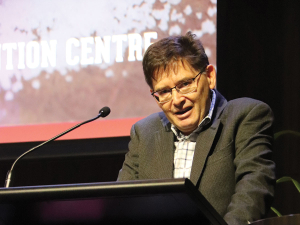
The meat processing industry is much more collegial than it was in the past and is now more focused on common goals.
With the last couple of months having seen some potential tractor purchases put on hold with the impending election and continued input cost rises, year-to-date figures, ending September, has seen deliveries up around 5% over the same period in 2025, with a total of 2026 units.
Beef+Lamb New Zealand is calling for nominations for director roles in the Northern South Island and Northern North Island electoral districts.
Fonterra chief executive, Richard Allen says being resilient has helped the dairy industry overcome extreme volatility in recent years.
The head of the Ministry for Primary Industries (MPI) trade and international relations group says New Zealand is well-positioned to secure trade access and compete internationally as the world becomes more complicated, demanding and uncertain.
OPINION: It seems Canterbury processor Synlait is still in the doldrums.
OPINION: Get offside with New Zealand First leader Winston Peters at your own peril.




