
Fonterra CFO Andrew Murray Resigns
Fonterra Co-operative Group chief financial officer Andrew Murray has resigned to take up a role outside the dairy giant.




 increase font size
 ComCom has queried whether new dairy conversions should have 'open entry' to join Fonterra in its latest report.
The Commerce Commission has queried whether new dairy conversions should have 'open entry' to join Fonterra in its latest report.
In the report released today the Commerce Commission says there is not sufficient competition at the farm gate and factory gate to consider full deregulation at this time.
Deputy Chair Sue Begg says keeping the open entry and exit provisions in place during any reforms would help with the transition by aiding the growth in competition at the farm gate by suppliers that could then enter the factory gate market.
"However, we think it is worth exploring whether open entry for new dairy farm conversions should be removed," Begg says.
"Open entry for new conversions contributes little to supporting competition in the farm gate market, while imposing costs on Fonterra."
The Commission released its final report on the state of competition in New Zealand's dairy industry in a review review which began in June last year at the request of the Minister for Primary Industries as required under the Dairy Industry Restructuring Act 2001 (DIRA).
Begg says while the costs and benefits of the DIRA Regulation are more or less balanced, the risks of removing it too soon outweigh the risks of it remaining longer than it should.
"As it stands, without regulation Fonterra would be able to increase the price of raw milk it sells to other domestic processors and this would likely flow through to higher retail prices of dairy products for New Zealand consumers," Begg says.
"Increased competition is needed, particularly at the factory gate, and our view is it is better to err on the side of caution before embarking on full deregulation."
The final report recommends that a pathway to deregulation would be smoothed by facilitating the development of a factory gate market for non-DIRA milk. Options the Minister could consider include:
· reducing DIRA milk entitlements;
· investigating if and when the DIRA milk price covers Fonterra's opportunity costs; and
· tightening the terms and conditions for DIRA milk supply.
The final report also confirms the recommendation to reset the market share thresholds in both the North and South Islands to 30% (up from the current 20%), as well as resetting the time limit threshold to the 2021/22 season as the triggers for the next competition review of the dairy industry.
"The support of the dairy processors, industry bodies and experts has been integral to enabling us to complete this work in such a short timeframe. On behalf of the Commission, I would like to thank all those who provided information, gave interviews and submitted on our draft report," Begg says.
Fonterra Co-operative Group chief financial officer Andrew Murray has resigned to take up a role outside the dairy giant.

Four candidates have been confirmed for two director positions on Fonterra’s board.
A record farmgate milk price and strong global demand is laying the foundation for continued growth of organic dairy farming in New Zealand.
Waikato milk processor Tatua has again declared a record milk payout to farmer shareholders, leaving other processors in the dust.
Fonterra has unveiled its annual results for the 2026 financial year, posting $27 billion in revenue and close to $20 billion returned to New Zealand farmer owners and unit holders.


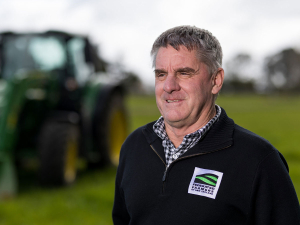
National’s pledge to introduce 19 new national standards shows the party is serious about getting Wellington out of farming, Federated Farmers says.
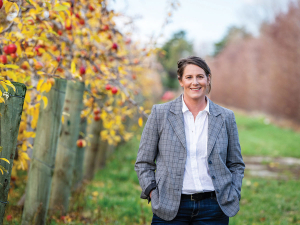
The National Party’s policies to make it easier to grow fresh vegetables, secure reliable water and energy and simplify farm planning are practical changes that will give growers the confidence to invest, according to Horticulture New Zealand (HortNZ).
Fonterra Co-operative Group chief financial officer Andrew Murray has resigned to take up a role outside the dairy giant.
A major move is about to get underway to improve the quality and viability of dairy beef and cattle in NZ.
Veterinarians say changes to the code of welfare for dairy cattle provides a positive foundation for improved cattle welfare across the country.
Today, 15 October, is the International Day of Rural Women, which recognises rural women’s contribution to farming, communities and the environment.


OPINION: It seems Canterbury processor Synlait is still in the doldrums.
OPINION: Get offside with New Zealand First leader Winston Peters at your own peril.




