Synlait FY26 Result: $75.4m Loss, Second-Half Profit
Synlait has swung to second-half profit as operations stabilise, but the dairy processor still posted a $75.4m annual loss.




 increase font size
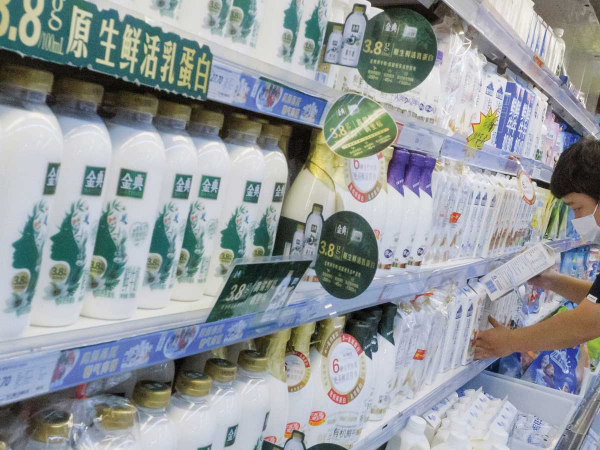 China’s relaxation of Covid-zero policies is expected to boost dairy consumption in our biggest market.
China's economy could determine how milk prices trend this year, says NZX dairy insights manager Stuart Davison.
He notes that China's recent relaxation of Covid-zero policies has built expectations of a rapid return to normality, with some commentators expecting dairy demand to increase during the first two months of 2023.
"However, reports from within China suggest that dairy supplies are currently adequate, and imports aren't cheap enough to drive increased importation just yet," says Davison in his latest global dairy update.
"Not to mention that reports are arising that consumption continues to struggle as the country returns to normality.
"Looking at China's economy with a wider lens, there are greater concerns about the speed of the recovery of this economic giant, such as trade partners in recession during the coming year, ongoing credit and monetary issues within the country and Covid related death and sickness impactng on the economy as the virus spreads throughout the population," says Davison.
Analysing the final quarter of 2022, he notes that it was as uncertain and interesting as the quarters preceding.
Global supply side dynamics changed into a positive aspect, while demand shifted from "firm" to "firmish-at-best", while the macro-economic factors leveraged more pessimistic expectations into the market going into 2023.
Davison points out that global milk production hit the middle of 2022 in the realms of slight milk undersupply.
European milk production lagged, as EU farmers dealt with dry and hot summer conditions, along with input price inflation creating downward pressure.
US milk production picked up, as cow numbers grew slightly, along with yield increasing.
The start of the NZ season commenced slowly, with negative growth figures punctuating the first four months of the season.
However, all of these factors were flipped during the last quarter on 2022, with a wall of late season milk in Europe surprising the market, forcing dairy processors to process more milk than expected, creating excess skim milk powder in the European market, along with a sense of desperation to move product in a hurry.
"US farmers over the last few months have also managed to increase production outputs, with four consecutive months of growth, derived from both increased cow numbers, but also from increased milk yield," he says.
"Unsurprisingly, this increase in milk production has also driven significant growth in US exports, with skim milk powder and milk fat exports increasing to both Canada and Mexico over the quarter.
"New Zealand milk production throughout the start of Q4 was still negative, with season to date milk production at the end of November at 2.8% behind the same period prior," he says.
December's milk production is likely to print slightly positive, while a wet start to January has set the majority of the NZ's dairy regions up well or good milk production throughout January and February.
"Our forecast is still for the full season's milk production output to be lower than the season prior, but current weather conditions indicate that the margin might be tighter than earlier expectations," says Davison.
Looking into quarter one of 2023, it is hard to be very optimistic from the sell side of the situation, with expectations that farm gate milk prices in New Zealand will likely retreat for the current and coming season, while dairy commodity prices continue to retreat.
On the buy side of the market, buyers are expected to continue with their cautious approach while volatility and uncertain colour the global markets. How well consumers' finances and sentiment weather the post-Covid era will determine the short-term outcomes of the global dairy market.
Synlait has swung to second-half profit as operations stabilise, but the dairy processor still posted a $75.4m annual loss.
Milk powder prices are keeping farmgate prices up, helping processors offset the dip in milk fat prices.
More signs of a booming kiwifruit sector.
After delivering a strong financial year, rural trader PGG Wrightson says the coming months will depend on customer confidence and weather.


Farmer-owned fertiliser company, Ballance Agri Nutrients is welcoming National’s plan to negotiate security agreements with key supplier countries to protect New Zealand-bound products from export restrictions and greater supply chain certainty.

Carrfields has announced the appointment of Stu Hall to the newly created role of chief operating officer, Carrfields Ltd, reflecting the continued growth of their agribusinesses and the need to ensure the company has the leadership capacity and support in place as it pursues the emerging opportunities ahead.
New Zealand's role is not to compete with Indian growers, according to NZ Apples and Pears.
The potato industry is celebrating the success of two rising stars - James Blair, the 2026 Young Grower of the Year and runner-up and innovation award winner, Amber Davy.
Twenty-eight emerging leaders from across the horticulture sector spent two days last month learning valuable skills and connecting with industry experts.
There are five entrants in this year’s Young Horticulturist of the Year, competing in a series of technical, practical, business and leadership challenges.



OPINION: It seems Canterbury processor Synlait is still in the doldrums.
OPINION: Get offside with New Zealand First leader Winston Peters at your own peril.