Milk Powder Prices Prop Up Farmgate Milk Price
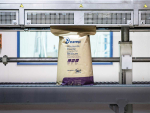
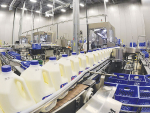
Milk powder prices are keeping farmgate prices up, helping processors offset the dip in milk fat prices.




 increase font size
 Dairy prices on Global Dairy Trade (GDT) have tumbled in recent months as the Chinese Government again locked down cities as part of its zero-Covid policy.
China's sway over what New Zealand dairy farmers get paid for their milk has been on display this year.
Dairy prices on Global Dairy Trade (GDT) have tumbled in recent months as the Chinese Government again locked down cities as part of its zero-Covid policy.
However, the latest GDT event broke a run of three consecutive price falls: the price index rose 2.4%, while key whole milk powder (WMP) prices posted a 3.1% rise.
Overall and WMP prices remain down 18% and 19% respectively on the same time a year ago.
Westpac senior agri economist Nathan Penny says the positive result follows an easing in Covid restrictions in China.
He notes that Chinese dairy demand had been progressively weakening over the year on the back of the soft Chinese economy.
"However, the loosening of Covid restrictions recently may signal a more pragmatic approach to Covid being adopted by Chinese officials."
When the Chinese economy is booming, NZ dairy farmers tend to benefit.
Penny expects the Chinese economy to grow by 6% over 2023 from a soft 3.5% over 2022.
He says this pickup in the Chinese economy and looser Covid restrictions should translate into improved Chinese dairy demand over the year ahead.
But ASB economist Nathaniel Keall believes dairy prices won't fully recover until the Chinese economy picks up. "We don't expect prices to make a more sustained recovery until that Chinese demand comes back - and that doesn't look imminent."
Keall notes that alongside ultratight global supply, aggressive purchases by China helped fuel the massive gains in dairy prices seen over early 2021.
This largely kept them high over the first part of this year, so the subsequent absence of strong Chinese demand has been sorely missed.
"As we've highlighted over numerous publications, the lack of Chinese demand is being driven by a softer domestic picture: a strict anti-Covid regime and slowing economic growth more broadly have meant the outlook for household consumption in China has weakened considerably."
ASB recently revised its forecast milk price for the season from a $10/kgMS to $9.40/kgMS.
Westpac is forecasting $8.75/kgMS for this season and $10 for the following season.
Milk powder prices are keeping farmgate prices up, helping processors offset the dip in milk fat prices.
OPINION: With 10,500 dairy farms, New Zealand continues to punch above its weight around the world.
A milk glut around the world shows no sign of easing, putting downward pressure on farmgate milk prices for the next few months.
Fonterra has reduced its forecast 2026/27 Farmgate Milk Price.
New Zealand dairy farmers are set to be the first in the world to receive access to a new digital physical milk pricing tool that enables them to fix the price for their physical milk.


New Zealand's red meat and fifth-quarter exports reached $867 million in August, up 23% on the same month last year, as stronger returns lifted earnings across all major markets.

State farmer Pāmu is bracing for a $30 million hit from soaring farm input costs this financial year.
Flat pricing in the face of significant increases in costs is the greatest problem facing the arable sector, says Foundation for Arable Research (FAR) chief executive Dr Scott Champion.
Entries opened on Monday, 5 October 2026 for the 2027 New Zealand Dairy Industry Awards (NZDIA), which organisers describe as the nation's biggest celebration of excellence in the dairy sector.
Waikato milk processor Tatua has again declared a record milk payout to farmer shareholders, leaving other processors in the dust.
A Labour-led Government won’t be bringing back the controversial freshwater rules of 2020.



OPINION: It seems Canterbury processor Synlait is still in the doldrums.
OPINION: Get offside with New Zealand First leader Winston Peters at your own peril.