Milk Glut Drags Fonterra Forecast Down to $9.20/kgMS
A milk glut around the world shows no sign of easing, putting downward pressure on farmgate milk prices for the next few months.




 increase font size
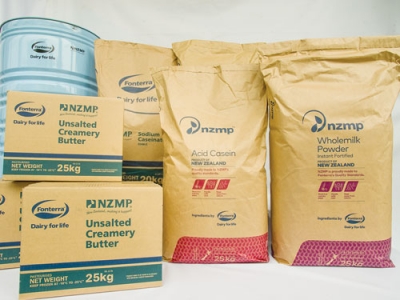 Sellers are reportedly receiving off-GDT bids for dairy products.
Anybody watching international dairy markets knows it’s a bad time to try to move product.
Buyers are sitting on relatively comfortable stocks, looking to dictate terms, as weakness in GlobalDairyTrade (GDT) results flows readily to other transactions.
Sellers are reportedly receiving off-GDT bids based on anticipated starting prices for the next auction (typically 15% below the most recent average). Milk is being dumped in the US, protests and warnings of a ‘dairy crisis’ are re-emerging in Europe, and New Zealand farmers are bracing for another loss-making season as payout forecasts are cut further.
It all looks dire, especially given that the current six-year low comes only 18 months after record high prices in early 2014. But such is the price cycle for the markets into which most dairy exports are sold, and against which an even larger proportion of production is ultimately priced.
As dramatic and destructive as these swings and roundabouts can be, for the most part they come back to basic economics: supply and demand. And at the moment supply has overshot demand.
The economic signal to increase production was heard loud and clear in 2013-14, and milk output has been increasing in most key exporting regions since. Only in recent months have lower farmgate prices begun to sound the opposite signal, while lower prices have helped stimulate demand in more price-sensitive markets. So how long will rebalancing take?
With its overwhelming export exposure, NZ is as usual at the pointy end of the market. Farmgate prices fell from NZ$8.40/kgMS in 2013-14 to NZ$4.40/kg MS in 2014-15, but that – and a South Island drought – didn’t prevent the Kiwis from producing a record volume of milk last season – almost 22 billion L (up 2.8%).
After initial hopes of a recovery, the price outlook for this season is marginally worse, with the bulk of recent forecasts close either side of $4.00/kgMS. These are loss-making numbers for many, but as local analysts put it, “NZ dairy farmers are renowned for milking their way out of trouble”.
If the weather is favourable through spring (while variable costs are low), farmers will be looking to produce as much milk as possible to cover the higher proportion of fixed costs built into many NZ operations. It will be later in the season, when pasture becomes limiting and ‘feed versus cull’ decisions are to be made, that any substantial slowdown is likely.
In parts of Europe farmers have taken to the streets as the effects of quota removal, Russia’s import embargo, favourable seasonal conditions and a bearish market more broadly, begin to show up in farmgate pricing.
Data from statistics agency Eurostat shows milk production expanded 2.4% in April, and around 3% in May – the first two months following the abolition of milk production quotas. Average farmgate prices are 20% lower than the same time last year and likely to fall further as contracted pricing follows spot prices downwards.
After months of speculation, late in July the first skim milk powder (SMP) was sold into the European Commission’s intervention buying scheme. Manufacturers had been selling product on the spot market below the support level, reportedly to cut stocks and get payment more quickly. While the €1698/tonne (US$1850/tonne) intervention price will prove increasingly attractive to European sellers and see product taken off the market in the short term, NZ and US volumes will maintain pressure on markets.
There is also the question of when skim milk powder (SMP) will reappear – possibly slowing the eventual price recovery. Despite the protests, without quotas constraining the fastest growing regions, and in the absence of severe weather impediments, it’s likely to take some months for production to slow substantially.
A strong domestic market has largely kept the US dairy industry in its own bubble in recent months, with cheese and butter prices coasting along well above international benchmarks.
Overall, from a supply perspective, there is light at the end of the tunnel. Market signals are being passed back to the farmgate, and production will ultimately slow, bringing supply and demand back into balance. The problem however, is that this adjustment is proceeding particularly slowly. In the absence of a dramatic supply shock (a drought, for example) or a significant upturn in demand, the international dairy market will remain a difficult place to do business for some months.
• John Droppert is a senior analyst at Dairy Australia.
A milk glut around the world shows no sign of easing, putting downward pressure on farmgate milk prices for the next few months.
The final Global Dairy Trade (GDT) auction has delivered bad news for dairy farmers.
With global milk prices falling, the question is when will key exporting countries reach a tipping point where production starts to dip.
The upheaval in the Middle East may have eased the fall in global dairy prices last week.
Weaker milk production in the Northern Hemisphere is keeping dairy prices high.


Farmer-owned fertiliser company, Ballance Agri Nutrients is welcoming National’s plan to negotiate security agreements with key supplier countries to protect New Zealand-bound products from export restrictions and greater supply chain certainty.

Carrfields has announced the appointment of Stu Hall to the newly created role of chief operating officer, Carrfields Ltd, reflecting the continued growth of their agribusinesses and the need to ensure the company has the leadership capacity and support in place as it pursues the emerging opportunities ahead.
New Zealand's role is not to compete with Indian growers, according to NZ Apples and Pears.
The potato industry is celebrating the success of two rising stars - James Blair, the 2026 Young Grower of the Year and runner-up and innovation award winner, Amber Davy.
Twenty-eight emerging leaders from across the horticulture sector spent two days last month learning valuable skills and connecting with industry experts.
There are five entrants in this year’s Young Horticulturist of the Year, competing in a series of technical, practical, business and leadership challenges.



OPINION: It seems Canterbury processor Synlait is still in the doldrums.
OPINION: Get offside with New Zealand First leader Winston Peters at your own peril.




