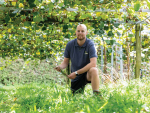
Rabobank Launches HortPathways for Emerging Hort Leaders
Twenty-eight emerging leaders from across the horticulture sector spent two days last month learning valuable skills and connecting with industry experts.




 increase font size
 Emma Higgins, RaboResearch, expects global market fundamentals to remain weak into the first half of next year.
Rabobank has lifted its forecast farmgate milk price by 40c to $6.35/kgMS.
However, RaboResearch senior dairy analyst Emma Higgins says its forecast remains towards the lower end of Fonterra’s forecast range of $5.90 to $6.90/kgMS as uncertainty looms large on the global market.
Covid-19 has brought significant disruption to global dairy markets but dairy commodity prices have been resilient and rallied in quarter two on the back of government support, in the form of government purchases, inventory management and fiscal stimulus for consumers.
Despite this, Higgins said global market fundamentals are expected to remain weak into the first half of next year, with consumption taking time to recover and milk production forecast to grow over the next 12 months.
“Food service revenues are improving, but they remain well back on pre-Covid levels and it will take time for this sector to make a full recovery, even for those countries that have been well ahead of the curve.
“We are also seeing early signs of retail dairy sales decelerating. Ultimately, year-on-year dairy demand growth is unlikely to be in sight for the key dairy-export regions until quarter one 2021,” she said.
The potential removal of government support programmes is another reason the bank is taking a cautious view towards the global dairy market recovery.
“These programmes have contributed significantly to improved dairy commodity prices over recent months, however, the outlook for these is much less certain as we move into the final quarter of the year.”
Higgins said uncertainty over Chinese demand and an anticipated lift in global dairy production were additional reasons for caution.
“Chinese dairy import behaviour over the next six to nine months presents uncertainties. So far Chinese dairy consumption has recovered better than expected, but China’s strengthening domestic production and possible shift in stocking strategy raises questions over its import requirement into 2021,” she said.
“We also expect to see global dairy supply across the big seven dairy exporters – US, Uruguay, Brazil, Argentina, EU, Australia and New Zealand – to continue to increase over the course of this year and into the first half of next.”
Fonterra this month reaffirmed its wide forecast range with co-op chairman John Monaghan noting that the impact of Covid-19 is still playing out globally.
Monaghan says from a milk price perspective, the supply and demand picture remains finely balanced.
“There continues to be significant uncertainties – including how the global recession and new waves of Covid-19 will impact demand globally, and what will happen to the price relativities between the products that determine our milk price and the rest of our product range.
“As a result of these uncertainties and given that financial year has just begun, we are giving a forecast earnings range wider than we usually would.”
Twenty-eight emerging leaders from across the horticulture sector spent two days last month learning valuable skills and connecting with industry experts.

A 'tsunami' of milk from key exporting countries is winding down and this may be good news for New Zealand dairy farmers.
Chinese beef trade quotas and a looming suspension of Brazilian beef imports into the European Union are expected to reshape global beef trade flows over the remainder of 2026, with implications for New Zealand exporters, according to Rabobank's Q3 Global Beef Quarterly report.
New Zealand consumers are paying more for beef mince than ever before, with the average retail price now sitting above $24 per kilogram, according to Rabobank.
West Otago dairy farmer Luke Kane has been awarded the 2026 Rabobank Dr John Morris Business Development Prize.


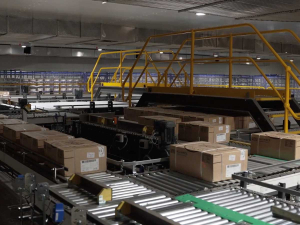
Alliance is calling for final applications for its 2027 Graduate Programme, with applications closing on Sunday 25 October.
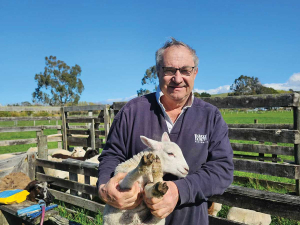
Decades piloting planes has ensured vet and farmer David Hayes is focused on safety. So, after a serious accident while welding on farm, he is sharing his experience so others can learn from it.
Canterbury milk processor, Synlait Milk has confirmed Leon Fung as its chief executive officer.
OPINION: Making it easier to collect rainwater and use it to grow crops and livestock is a no brainer.
As part of its Election 2026 coverage, Rural News asked political parties how they would help pull the arable sector out of the doldrums. Here's what they said:
Farmers are being encouraged to rethink how they manage waste on farm with the launch of ruralwastesorted.co.nz, a new website bringing together practical tips, real farmer experiences and resources.




OPINION: It seems Canterbury processor Synlait is still in the doldrums.
OPINION: Get offside with New Zealand First leader Winston Peters at your own peril.




