
Labour Vows to Change Tact on How to Handle Freshwater Rules
A Labour-led Government won’t be bringing back the controversial freshwater rules of 2020.




 increase font size
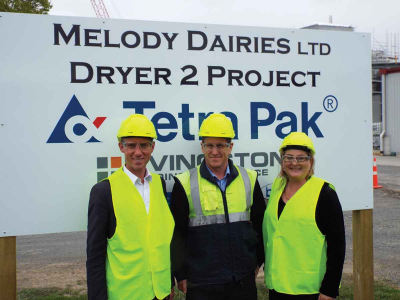 Left to right Jamie Strange MP, Craig Hoare, Melody Dairies, Angie Warren, Clark MP.
Waikato Innovation Park, at Hamilton, soon home to another spray dryer, recently hosted Labour politicians and other visitors.
Dairy News spoke to Labour MPs Jamie Strange and Angie Warren-Clark, at the Park, where they applauded the expansion of its milk drying capacity.
After running its first spray dryer for about eight years, owners Melody Dairies has started work on dryer number 2, expecting to finish it by year end and start full production by Apr/May 2020. Full capacity will be about 1.2 tonnes/hour – 2.4 times greater than the existing unit.
The $50 million Melody Dairies plant is being developed by Pamu (formerly Landcorp), Nu-Mega Ingredients, Dairy Nutraceuticals and Food Waikato, each holding 35%, 35%, 20% and 10% respectively.
Business development manager Craig Hoare said the new dryer will process milk from Spring Sheep New Zealand and eventually from other suppliers. It will help the company to develop early-life nutrition products for export.
Its output is expected to rise to $130 million of sheep milk exports and its employee numbers from the current 17 to 35.
The market for sheep milk products is estimated to be $11.6 billion at the farmgate and $47b at retail.
Asia is a key market and sheep milk products are also popular in France, Spain, Greece and the Netherlands. Consumers like their digestibility, nutrition and taste, and they suit people with (cow milk) lactose intolerance and dairy protein allergies.
Much of the growth in sheep milk production in NZ over the last few years has been furthered by high-performance genetics from Europe.
While NZ sheep produce 100-150L of milk each season – making the model financially challenging – first-generation crosses are said to be on target to produce 300L as hoggets and 400L when fully grown, with no increase in environmental impact.
Said Jamie Strange: “This dryer is a significant investment in the Waikato region, providing economic growth for our economy”.
“I am excited to see the development of the sheep milk industry in particular. There is huge potential to increase our exports of this.”
A Labour-led Government won’t be bringing back the controversial freshwater rules of 2020.

Federated Farmers says it welcomes Labour's commitment to reviewing the Sharemilking Agreements Act, calling on other major parties to do the same.
Red meat farmers are welcoming Labour’s plan to review the Emissions Trading Scheme and not to campaign on pricing agricultural emissions.
OPINION: It's election time.
National's decision to ‘dribble’ information about the NZ/India to Labour contributed to the delay in it deciding to supported the FTA.

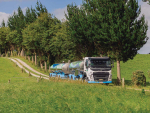
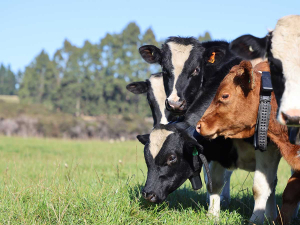
High country stations, mixed sheep and beef farms, Māori-owned farms, corporates and family operations are among the nine commercial farms taking part in the Livestock Innovation Farming Transformation programme, known as LIFT.
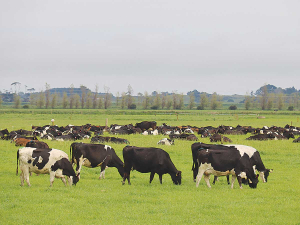
OPINION: New health and safety guidance unveiled by the Government recently provides farmers greater certainty about what is expected of them when managing risks on farm.
The National Animal Welfare Advisory Committee (NAWAC) is seeking public feedback on proposed changes to the Code of Welfare for Rodeos.
A New Zealand initiative supporting farmers to restore the health of grazing landscapes has received international backing through the Regenerative Fund for Nature, a global collaborative fund supporting regenerative agriculture and the communities that produce natural fibres for the fashion industry.
Combine premium New Zealand products, blend in a family ritual and what do you get? A world-class functional drink.
Entries are now open across eleven regions for the 2027 New Zealand Dairy Industry Awards (NZDIA).


OPINION: It seems Canterbury processor Synlait is still in the doldrums.
OPINION: Get offside with New Zealand First leader Winston Peters at your own peril.




