
El Niño Warning: NZ Farmers Urged to Plan Fert Early
Plan ahead and be patient. That’s the message to farmers and horticulturalists from the chairman of the NZ Agricultural Aviation Association, Kent Weir.




 increase font size
 Tony Joseph, Terra Care Fertilisers.
Dr Tony Joseph explains how to assess your soil and keep it healthy.
For a farmer, the soil is the base of everything you do. How much time, however, should you spend tending to your soil to make sure it remains in the best condition to produce quality feed for your animals?
To get the most from your land, it’s important to understand your soil and treat it correctly. Do so, and you will be rewarded with high-quality feed to raise happy and healthy stock – making your farming experience more profitable and enjoyable.
Healthy soil allows air to circulate and water to seep through it. Plants growing in healthy soil have dense root mass meaning more access to soil nutrients, air and water. Plants growing with a deep root system are also more likely to remain resilient under dry conditions and return to full life when conditions improve. In healthy soil, plants utilise nutrients well and achieve quality production with full yield potential.
To achieve and maintain soil health, one must first have a thorough understanding of its present condition and then undertake an assessment of the soil’s physical, chemical and biological components. Following this analysis, farmers must take effective steps to improve soil quality to achieve farm productivity and meet environmental goals.
Assessing your soil
Soil health is commonly assessed by digging a spade full of soil and examining the colour, smell, structure and texture; as well as the roots, soil life and other organic matter present in the soil.
Soil is made up of sand, silt and clay, and the variation in the proportion of these components will determine the textural class of the soil. To quickly understand the soil type on your land, you can take a small amount of dry soil and add water to see how solid it becomes when squeezing it in your hand. If your soil remains loose and falls apart you have more sandy or coarse textured soil. Whereas, if rubbed, a fine-textured clay soil will usually create a long ribbon, while silty soil feels smooth and can form easily into balls or other shapes in your hand. Soil texture will influence the available water-holding capacity, water movement through the soil, soil strength, how easily pollutants can leach into groundwater, and the natural soil fertility. For example, coarse-textured soils have large pores making it highly permeable, which allow the water to move rapidly through the pore system.
Keeping soil healthy
To keep the soil healthy, good structure is required as it impacts many soil functions like soil aeration, storage and transmission of water, nutrient cycling, root growth, susceptibility to soil erosion and nutrient loss. Soil structure refers to how particles of soil are grouped together by physical, chemical, and biological processes and is an important component in forming fine soil aggregates: a term used to describe groups of soil particles that bind to each other more strongly than to adjacent particles. Soil organic matter and soil life also support the formation of aggregates. They create a larger number of pores within and between aggregates, making the soil more friable and crumbling. These pores maintain the correct balance of air and water to support the existence of soil organisms like microbes and earthworms and create the right environment for plant roots to grow and search for plant nutrients.
If the soil is lacking in nutrients, then it’s important to apply fertiliser which contains the necessary chemicals that the soil is deficient in. It’s also important to maintain the optimal soil nutrients as per soil type, such as Olsen P (a measure of plant available phosphorus) around 20-30 mg/l for Ash and Sedimentary soils and 30-45 mg/l for Pumice and Peat soils and minimise or avoid nutrient applications which are already present and plentiful in the soil.
Understanding your farm
Maintaining soil nutrient balance and correcting soil fertility are critical for optimal plant growth. It’s also important to measure the current soil nutrient status to assess whether a farm is in the maintenance or development stage.
Details of soil testing, fertiliser and crop history and farm management practices are beneficial in assessing changes in the status of soil nutrients. Herbage testing always complements soil testing too, because it will help in the process of understanding the movement of nutrients from soil to plants and plants to animals. It’ll also provide a better overall picture of the farm nutrient status for an improved fertiliser programme and to keep stock healthy.
Once you identify the type of soils and its characteristics at your farm, use a farm map and mark the boundary of those identified soils. By doing so, you will know the character of soil belonging to different paddocks or blocks of the farm. This is vital as it will affect your decision making on which crops will grow well, and what actions you need to take to get the most from your soil and to keep it healthy.
Remember to protect and monitor your land and soil to ensure it remains healthy and productive. Managing soils can be complex and your soil’s needs will change between the seasons and depend on what crops you choose to grow. Getting the basics right, however, will set you up for success.
To identify the soil types that exist on your farm, it is best to speak with local agronomists, such as Terra Care’s technical field consultants, who will be able to provide expert analysis and advise on the correct actions to take.
• Dr Tony Joseph heads product research and development at Terra Care.
Plan ahead and be patient. That’s the message to farmers and horticulturalists from the chairman of the NZ Agricultural Aviation Association, Kent Weir.
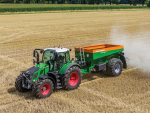
Amazone's ZG-TX combi spreader has been updated with several new features, centred around improved accuracy and easier operation.
When it comes to annual rebates, it's been a long time between drinks for Ravensdown shareholders.
Ravensdown has reported a net profit before tax and rebate of $50.1 million for the year ended 31 May 2026.
A new digital assistant is now helping Ballance Agri-Nutrients farmers speed up nutrient information and ordering.



Alliance is calling for final applications for its 2027 Graduate Programme, with applications closing on Sunday 25 October.
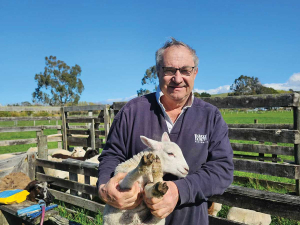
Decades piloting planes has ensured vet and farmer David Hayes is focused on safety. So, after a serious accident while welding on farm, he is sharing his experience so others can learn from it.
Canterbury milk processor, Synlait Milk has confirmed Leon Fung as its chief executive officer.
OPINION: Making it easier to collect rainwater and use it to grow crops and livestock is a no brainer.
As part of its Election 2026 coverage, Rural News asked political parties how they would help pull the arable sector out of the doldrums. Here's what they said:
Farmers are being encouraged to rethink how they manage waste on farm with the launch of ruralwastesorted.co.nz, a new website bringing together practical tips, real farmer experiences and resources.


OPINION: It seems Canterbury processor Synlait is still in the doldrums.
OPINION: Get offside with New Zealand First leader Winston Peters at your own peril.




