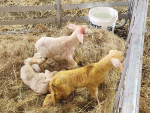
Beef + Lamb NZ's Lambing Kit Checklist for a Tough Season
With lambing underway in many regions, Beef + Lamb New Zealand is encouraging farmers to put together a wellequipped lambing kit to help minimise lamb losses, particularly in bad weather.



 increase font size
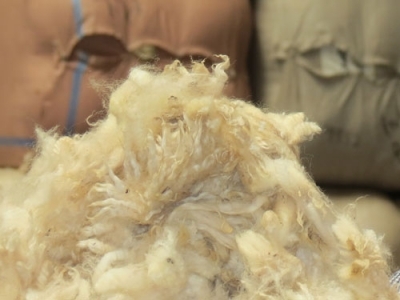 Of the 5,800 bales on offer 61% sold.
The more varied offering at this weeks' South Island auction saw targeted buying with better demand for the longer wools.
New Zealand Wool Services International Ltd's chief executive John Dawson reports that of the 5,800 bales on offer 61% sold, reflecting the general slow-down in new orders coming forward and exporters only buying for immediate requirements.
The continuing strengthening of the New Zealand dollar saw the weighted currency indicator lift 1.87% week on week, limiting market opportunities.
Dawson advises that compared to the South Island sale on June 30, Mid Micron Fleece were 1 to 2.5% cheaper with Fine Crossbred Fleece down 3.5%.
Compared to the North Island sale on July 7, Longer Finer Crossbred Shears were 2 to 4% dearer with shorter shears firm to 1% cheaper.
Coarse Crossbred Full Fleece, good and average styles were 1 to 1.5% easier with poor styles 3 to 5% dearer.
Coarse Second Shears 2 to 4 inches to 3 to 5 inches were 2 to 5% firmer with shorter types firm.
Long Oddments remained firm with good colour short oddments 2 to 4% dearer.
Limited activity with Australasia and Middle East principals, supported by Western Europe, China and India.
Next sale on July 21 comprises about 6,000 bales from the North Island.
With lambing underway in many regions, Beef + Lamb New Zealand is encouraging farmers to put together a wellequipped lambing kit to help minimise lamb losses, particularly in bad weather.

New Zealand wool is reaching new heights as air filtration companies move away from synthetic products to biodegradable alternatives.
Will a stronger, more coordinated voice help rebuild confidence and improve returns in the wool sector?
OPINION: Confidence in the wool sector is rebounding as prices hit levels not seen in more than 15 years.
The recently signed free trade agreement with India is an invitation to strengthen relationships between the New Zealand and Indian strong wool industries, says Wool Impact chief executive Andy Caughey.


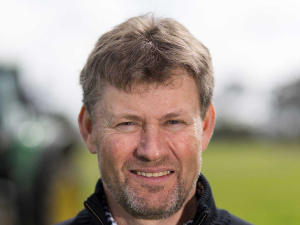
Mark Hooper has been appointed the new chair of NZPork, the industry organisation representing New Zealand pig farmers.
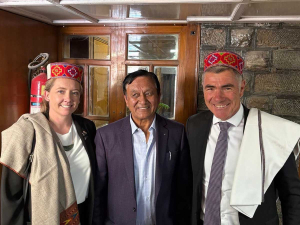
As the India-New Zealand free trade agreement enters into force, New Zealand’s apple industry has reaffirmed its commitment to the long-term development of India’s apple sector.
Fonterra shareholders can begin voting on Tuesday 20 October in the 2026 Board of Directors’ election, a Co-operative Council election in one Ward, and seven Annual Meeting resolutions.
National’s pledge to introduce 19 new national standards shows the party is serious about getting Wellington out of farming, Federated Farmers says.
The National Party’s policies to make it easier to grow fresh vegetables, secure reliable water and energy and simplify farm planning are practical changes that will give growers the confidence to invest, according to Horticulture New Zealand (HortNZ).
Fonterra Co-operative Group chief financial officer Andrew Murray has resigned to take up a role outside the dairy giant.

OPINION: The same mainstream media muppets that brought you Jacindamania in 2017 have been flat out pimping for the Opportunities…
OPINION: Your old mate reckons the atrocious way farmers in the UK are treated by their lords and masters in…




