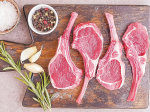
NZ Red Meat Exports Hit $867m in August, Up 23%
New Zealand's red meat and fifth-quarter exports reached $867 million in August, up 23% on the same month last year, as stronger returns lifted earnings across all major markets.




 increase font size
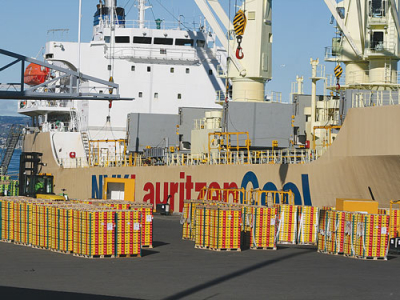 Exporters are concerned about the year ahead.
A survey of ExportNZ members shows exporters are feeling anything but well about what the Government intends to deliver in 2019.
This is despite the empty rhetoric about the year of ‘delivery’ and ‘wellness’ coming from the Beehive lately.
Similarly, the Federated Farmers January Mid-Season Farm Confidence Survey shows the worst farmer confidence since 2009. In both cases, domestic regulation by the Government was the major concern. (Both surveys were run before China-NZ relations really started to head south).
As National’s agriculture spokesperson Nathan Guy says about soaring costs and taxes on farmers, there’s more to come, as confirmed by Agriculture Minister Damien O’Connor when he told Rural News last year that farmers need to “get used to it”.
The ExportNZ survey zeroed in on industrial relations reforms. Over 400 exporters responded, described as “a good mix of small to medium to larger exporters”. When asked what their major barriers to exporting were, the number-one concern was “domestic regulation, e.g. upcoming changes to the industrial relations laws”.
Food and electronic equipment manufacturers said they already pay staff more than the minimum wage because good workers are hard to get. But all workers will want an increase “to maintain their relativity to the minimum wage” adding costs that, as exporters, they were unable to pass on to consumers.
Changes to immigration law could hobble growth in the horticulture sector, which is already desperately short of hands. A large commercial kiwifruit grower said, “We need the right immigration rules to support our industry because if we don’t have the people we can’t grow and our sector has big growth plans”.
The idea that locals could or would fill the labour gap just didn’t stack up. “We do work with WINZ, but out of 120 people sent to us by WINZ, we only gained four people over the course of a year.”
Creeping unionism is also identified by exporters as a concern, not just by manufacturers but also by large scale horticulture operators.
No government can deliver ‘wellness’, whatever that means, with growth in the economy already spluttering and diplomatic relations with our biggest customer, China, in trouble. The concerns of the people who drive our economy – exporters and farmers—should not be dismissed by the Government.
New Zealand's red meat and fifth-quarter exports reached $867 million in August, up 23% on the same month last year, as stronger returns lifted earnings across all major markets.

Meat Industry Association data, released alongside the Red Meat Sector conference in Wellington, shows export value climbing across the US, China, UK and Canada.
OPINION: The stats speak for themselves.
New Zealand exports to the European Union have surged by $3 billion in two years under the New Zealand-European Union Free Trade Agreement.
A Hawke's Bay apple orchardist supports the Government's objective of doubling exports but says this won't happen in the horticulture sector unless there's a change in the process for bringing new plant material into the country.



Fonterra Co-operative Group chief financial officer Andrew Murray has resigned to take up a role outside the dairy giant.
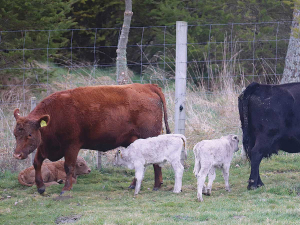
A major move is about to get underway to improve the quality and viability of dairy beef and cattle in NZ.
Veterinarians say changes to the code of welfare for dairy cattle provides a positive foundation for improved cattle welfare across the country.
Today, 15 October, is the International Day of Rural Women, which recognises rural women’s contribution to farming, communities and the environment.
Global dairy giant Lactalis has integrated its Australian operations with the Mainland Dairy consumer business it acquired from Fonterra earlier this year.
High country stations, mixed sheep and beef farms, Māori-owned farms, corporates and family operations are among the nine commercial farms taking part in the Livestock Innovation Farming Transformation programme, known as LIFT.



OPINION: The same mainstream media muppets that brought you Jacindamania in 2017 have been flat out pimping for the Opportunities…
OPINION: Your old mate reckons the atrocious way farmers in the UK are treated by their lords and masters in…




