Fonterra's New Roadmap Targets Climate, Nature, Animals
Climate, nature and animal wellbeing make up Fonterra's refreshed sustainability roadmap released last week.




 increase font size
 National’s acting spokesperson on agriculture Todd Muller.
OPINION: National was shocked and disappointed to learn last week that the Government has moved away from key elements of the consensus plan to reduce greenhouse gas emissions from agriculture.
A National government, like Labour, will be committed to reducing carbon emissions and acknowledges that the primary sector has an important role to play in doing that. Pricing emissions gives farmers an incentive to lower them, and National supports agriculture having its own process for recording and pricing emissions.
For three years, representatives of the primary sector and other stakeholders have worked through the He Waka Eke Noa (All in this Together) Partnership, to build a consensus approach to devise a new system.
In May, the partnership sent its recommendations to the Government but when the Government last week reported back its proposals, to apply from 2025, some key points that the partnership had suggested, were missing. In addition, the Government revealed that it anticipated that under its system, up to 20 per cent of the capacity of sheep and beef farming could be lost by 2030 – while seeing emissions increase offshore as production and jobs move overseas. This is as unacceptable to National as it is to farmers. Neither individual farmers, farming communities or the New Zealand economy want or can afford to sustain a blow like that. National believes that cost is unacceptable, especially when, with more care, there will be a better way to reduce emissions without so much damage.
New Zealand is the first country in the world to propose carbon pricing for farmers. New Zealand also already has the world’s most carbon-efficient farmers. In other words, producing a kilogram of milk solids here creates fewer emissions than producing a kg of milk solids in any other country.
National wants farmers to build on that advantage, not have it squandered by a government that seems prepared to let global demand for food be met by overseas farmers. That will simply lead to higher global emissions from agriculture – flying directly in the face of the whole purpose of the emissions scheme and costing Kiwi farmers income for no global environmental benefit.
In addition to the cost to farmers, communities and the New Zealand economy, and the prospect of farming shifting offshore, under the Government’s proposals farmers will not get enough credit for their on-farm carbon capture such as riparian planting or windbreaks.
It seems unfair to say on one hand that farmers will pay a cost for the carbon they create, but on the other hand get no benefit from some of the measures they introduce to sequester carbon on their farms or in their businesses.
What National will do
National supports methane targets but believes farmers, not Wellington bureaucrats, should decide how emissions come down.
We would negotiate a solution with the agriculture sector in good faith, using the proposal by He Waka Eke Noa as a starting point.
New Zealand’s primary sector is among the most sophisticated in the world, and adopts technological advances to improve production. A National Government would help drive new technology that would continue to lower agricultural emissions.
We would be more open to new options being trialled on farm as opposed to the highly restrictive approach from the current government. There are more gains to be had. We want to find them, and support farmers to succeed.
National also thinks that farmers should be allowed to earn revenue from more of their on-farm planting and carbon capture.
The Government is consulting on its plan for the next six weeks. New Zealanders should have their say and the Government should listen, then come back with a plan that has better support.
Todd Muller is National’s acting spokesperson on agriculture.
Climate, nature and animal wellbeing make up Fonterra's refreshed sustainability roadmap released last week.

OPINION: In politics, credibility is and should be big. It must surely rank higher than charisma, which is quite trite and superficial. Yet, voters nowadays are often wooed and influenced by how someone looks or talks at a superficial level. TV plays a huge role in this.
I think it's going to greatly weaken National at the election. That's the view of a former senior National MP on the recent attempted coup against Prime Minister Christopher Luxon.
OPINION: Since when did one and one make three? Who didn't smell an elephant-sized rat when our leaders decided to give $60 million to save the cement factory in Northland?
OPINION: The same mainstream media muppets that brought you Jacindamania in 2017 have been flat out pimping for the Opportunities Party, labelled by some as the 'LinkedIn Greens' for their corporate spin on Green-esque 'tax the rich' policies.


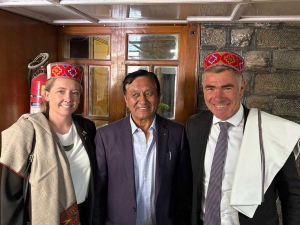
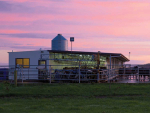
New Zealand's role is not to compete with Indian growers, according to NZ Apples and Pears.
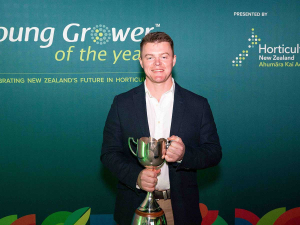
The potato industry is celebrating the success of two rising stars - James Blair, the 2026 Young Grower of the Year and runner-up and innovation award winner, Amber Davy.
Twenty-eight emerging leaders from across the horticulture sector spent two days last month learning valuable skills and connecting with industry experts.
There are five entrants in this year’s Young Horticulturist of the Year, competing in a series of technical, practical, business and leadership challenges.
A seasoned horticulturist has been appointed to deliver the Apple Action Plan, a key initiative of the India-New Zealand Free Trade Agreement.
South of the central Hawke’s Bay town of Waipukurau is Taniwha Station – a highly successful 550ha bull beef farming operation.



OPINION: The same mainstream media muppets that brought you Jacindamania in 2017 have been flat out pimping for the Opportunities…
OPINION: Your old mate reckons the atrocious way farmers in the UK are treated by their lords and masters in…