
Where Is The Honesty Among Our Representatives?
OPINION: A founding principle of Groundswell NZ is that farmers, and people generally, should be provided with full and accurate information about regulations that directly affect them.




 increase font size
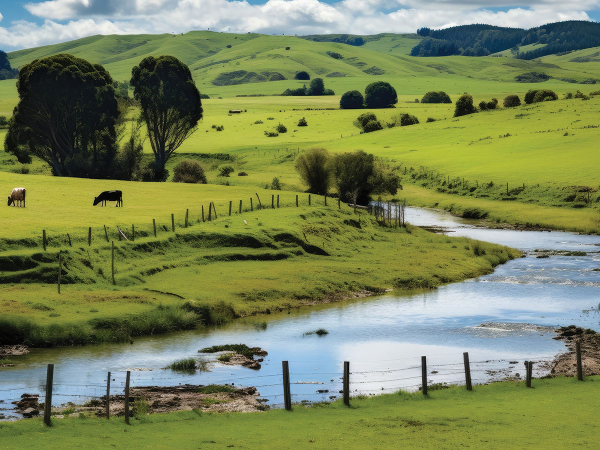 Sheep and beef farmers will be forced into a mandatory and more regulated freshwater farm plan regime.
OPINION: Many sheep and beef farmers will be worse off under the new environment legislation than they were under the Resource Management Act (RMA), claims Beef+Lamb New Zealand (B+LNZ) in an email to levy payers.
This will come as a surprise to farmers, who are under the impression the coalition Government is backing farmers, and committed to reducing government interference and red tape. So, what is going on?
B+LNZ’s email explains that sheep and beef farmers will be forced into a mandatory freshwater farm plan regime facing significantly higher administrative and regulatory burden than what they currently face. Our reading of the new legislation concurs with B+LNZ’s findings.
Under the existing Resource Management Act most sheep and beef farmers (and less intensive farms and those without irrigation) operate as a permitted activity, not requiring a consent. The presumption is that if the effects of your activity are no more than minor and you comply with any rules, then you can carry on free of government oversight. Another way of describing this is that regulators must provide justification for regulatory requirements on people. They can’t just regulate for the sake of regulation.
These restraints on regulators are one of the few good elements in the RMA and it is a major concern they have disappeared in the new legislation.
Under the new legislation, every livestock, horticulture and viticulture farmer over 50ha (arable is over 5ha) must have a Freshwater Farm Plan regardless of the region or catchment they are in, whether there are any freshwater issues or whether they operate as a permitted or consented activity. No regulatory or environmental justification is provided for this blanket requirement. The only reason the government have provided is that it is a compromise to quell the freshwater quality concerns of environmentalists and the public.
Reading through the fine print of the new legislation, intensive farming operations such as irrigators and dairy farmers may face less compliance, bureaucratic oversight and cost as the consent system is necessarily overhauled and an alternative, simpler freshwater farm plan pathway is provided. However, the government believes that in order for this to be acceptable to the public, all other farmers must now come under government oversight and essentially a consent to farm.
There are several alarming aspects to the proposed freshwater farm plan legislation.
It is not that farmers oppose farm plans as a useful management tool. Farmers have shown through industry initiatives and previous systems, e.g. catchment boards, they will embrace farm plans if used in the right context. But with a B+LNZ survey showing 83% of farmers opposed to mandatory government prescribed Freshwater Farm Plans, the legislation is doomed to fail.
With widespread adoption of industry led farm plans, the government’s proposal is completely unnecessary and shows they do not trust the rural sector to continue to take the lead in this space.
The Freshwater Farm Plan policy will be a key issue for farmers in the upcoming election and in the meantime, we are hoping that commonsense will prevail through the submission process.
OPINION: A founding principle of Groundswell NZ is that farmers, and people generally, should be provided with full and accurate information about regulations that directly affect them.

OPINION: Groundswell's opinion of the incumbent farm industry representatives isn't high.
OPINION: Bouquets this week from the old mutt for Fed Farmers and Groundswell for continuing to resist the proposed Gore District plan and its intention to apply costly "cultural values" across the district and a raft of land classifications that are unworkable and counterproductive.
Three farmer lobby groups are applying the blowtorch to political parties on key issues facing the primary sector ahead of the general elections.
A drop in methane targets announced by the Government this month has pleased farmers but there are concerns that without cross-party support, the targets would change once a Labour-led Government is voted into office.



During the nesting season, from September to December, industrious starlings can quickly build nests in the darker areas behind tractor and vehicle, usually close to hot engines, typically resulting in localised damage or in some cases complete write-offs.
The meat processing industry is much more collegial than it was in the past and is now more focused on common goals.
With the last couple of months having seen some potential tractor purchases put on hold with the impending election and continued input cost rises, year-to-date figures, ending September, has seen deliveries up around 5% over the same period in 2025, with a total of 2026 units.
Beef+Lamb New Zealand is calling for nominations for director roles in the Northern South Island and Northern North Island electoral districts.
Fonterra chief executive, Richard Allen says being resilient has helped the dairy industry overcome extreme volatility in recent years.
The head of the Ministry for Primary Industries (MPI) trade and international relations group says New Zealand is well-positioned to secure trade access and compete internationally as the world becomes more complicated, demanding and uncertain.





OPINION: The same mainstream media muppets that brought you Jacindamania in 2017 have been flat out pimping for the Opportunities…
OPINION: Your old mate reckons the atrocious way farmers in the UK are treated by their lords and masters in…