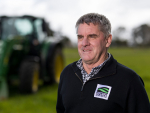
Feds Back National’s 19 Farming National Standards
National’s pledge to introduce 19 new national standards shows the party is serious about getting Wellington out of farming, Federated Farmers says.




 increase font size

By Rick Powdrell is Federated Farmers Meat & Fibre chairperson
THANK YOU television news, drystock farmers are the Grinch who stole the t-bone steak.
Look at how television news covered the best beef prices in six years. You would think they'd frame it as a good news story; as dairy prices tumble New Zealand's drystock farmers are providing much-needed economic cheer.
Instead, that cult of 'me-ism' reared its head with TV reporters earnestly warning consumers, "as the barbecue season begins, beef may be off the menu for many Kiwis as a global shortage drives its price to record levels."
Sweet Louise, reporting like this is frustrating. I think Paul Henry was the only one in television land to get that its good news for 'NZ Inc.'
We know from Beef+Lamb NZ that for the first time since 2006/07, the fall in beef cattle numbers has stopped and finally moved back into positive territory with 3.76 million animals.
The general public have no context either because we're at the trough for local beef supply. It's only spring, our industry is mostly grass-fed and television overlooks that last summer it was dry in the North Island so cattle went for early processing. As Beef+Lamb's Rob Davidson told Australia's ABC, "normally around June we'd import about 1,000 tonnes of Australian beef, but the difference this year, in July and August, we imported 1,000 tonnes again each month."
So yes, we are buying in Aussie beef right now but that's free trade. Guess what though; the price of our premium grass-fed beef heading to the United States and North Asia may be up as high as 65% on 2013 prices.
That means the export returns to New Zealand will be up, it means guys like me will be able to invest back into our farms, which is good news for the trades, for the farm merchants and the likes of Ravensdown. Some will be taking the opportunity to catch up on deferred maintenance, payback debt or even look at new kit. All of this is good economic news.
You know what else is important? It breaks the illusion that farming is a one trick pony.
Of course "drought" shouldn't be in our vernacular since we don't have a water shortage issue, just a water storage one. You see it's not just the dairy boys keen on irrigation, water storage and RMA reform. Better news for sheep and beef farmers gives our guys the chance to look above the parapet at things like red meat reform and to make our farms more resilient to dry spells. I say this as NIWA reckons we still have a borderline El Nino on the cards.
I also need to remind wool growers that the Wool Levy door shuts on October 10. If you haven't voted go to votewool.co.nz, click "how to vote" and vote. Given you've only got days to vote, online is now your best bet.
I guess there are three groups of wool growers voting; the believers have hopefully voted yes while others will say 'no way Jose.'
There's also a third group who aren't apathetic but more ambivalent. Their focus is on meat with wool effectively an animal health by-product. If you fall into that camp what have you got to lose by voting yes? If it doesn't deliver you'll get another vote on its continuance in five year's time.
And as Kiwis face the prospect of tucking into an Aussie steak over the summer BBQ, maybe just maybe, it will help them appreciate just how good our sheep and beef farmers really are and why we need every chance to prosper.
National’s pledge to introduce 19 new national standards shows the party is serious about getting Wellington out of farming, Federated Farmers says.
Mobile phone coverage and reliability are deteriorating in rural areas, and farming families are bearing the cost, according to a Federated Farmers survey.
Central Otago District Council (CODC) has voted against a plan to spread treated sewage sludge from Cromwell and Alexandra on farmland near Lauder, a decision Federated Farmers says reflects strong opposition from rural residents.
Federated Farmers has called on Central Otago District Council (CODC) to drop or vote down a plan to truck sludge from Alexandra and Cromwell to farmland near Lauder, warning it would compound an "outrageous" situation created by a separate council's decision weeks earlier.
Federated Farmers says new legislation replacing the Resource Management Act will cut red tape, unlock investment and help grow New Zealand's export-led economy, after the Planning Bill and Natural Environment Bill passed their third reading in Parliament yesterday.


Beef + Lamb New Zealand says the National Party’s agriculture plan provides a strong basis for lifting productivity, supporting rural communities and recognising the sheep and beef sector’s environmental track record.

Wools of New Zealand chief executive John McWhirter says its new direct-to-consumer wool carpet service, Laneve, is the next step in the development of the business.
The New Zealand-India Free Trade Agreement entered into force today, improving market access for New Zealand businesses across a wide range of sectors.
Vetekina Pau'u is the first Tongan to win the William Gearish Memorial prize and sadly she will also be the last recipient.
Things are looking up in the dairy goat sector.
As the India-New Zealand free trade agreement enters into force, New Zealand’s apple industry has reaffirmed its commitment to the long-term development of India’s apple sector.




OPINION: The same mainstream media muppets that brought you Jacindamania in 2017 have been flat out pimping for the Opportunities…
OPINION: Your old mate reckons the atrocious way farmers in the UK are treated by their lords and masters in…




