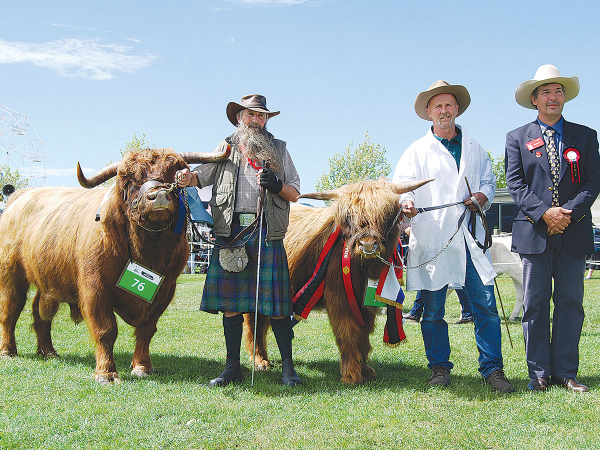
Months in the making and with endorsement from OSPRI, lifestyler champion Lisa Berthold devised and implemented a new biosecurity and traceability plan for the recent Carterton A&P show.
This ensured that cattle attending the event were adequately managed from a NAIT perspective and were ready for showing.
Lisa and husband Peter Holloway first moved onto a lifestyle block in the mid-2000s. At first purchasing a couple of Highland cattle, they quickly became enamoured with the breed and started breeding them. The couple eventually joined the Lifestyle Highland Society in 2016 to promote the breed, with Lisa becoming president in 2017.
Back in 2017-18, showing of cattle came to a grinding halt when M. bovis was first reported in the country. To still have a show, yet prevent the mixing of cattle, the Wairarapa A&P asked Berthold to exhibit her herd solo.
That got Berthold thinking about a plan for the future of what would be needed to get animals back into the shows, while keeping exhibitors comfortable and secure.
She’d had been working on the plan for several months leading up to the recent show and had received the endorsement of OSPRI from a NAIT (National Animal Identification and Tracing) and TB-free perspective.
The first thing animals had to do on arrival was to make sure they were NAIT compliant and appropriately tagged. If they were not, the animals didn’t get off the truck.
The next step was to marshal the animals to the wash bay where they were cleaned. Then, once removed from the (subsequently disinfected) wash bay, they were taken to individual stalls via separate entrances (beef and dairy animals are processed via separate entrances and wash bays).
All visitors to the pens were required to walk through foot baths and not able to touch the stock.
Although it was her first time coming up with such a plan, Berthold felt confident in her abilities.
“In a way it was a new experience, but my background was as a senior security officer at Parliament for nine years,” she told Rural News.
“A lot of our training in that was secure deliveries; it was always going through your mind what to look for; if there could be any threats. I had that mindset when I first went into it of what are the things that we need to be really serious about and how can we mitigate any problems.”
Berthold adds that the uptake to participate in the A&P show has been quite slow, with M. bovis and the cancellation of A&P shows for the last couple of years due to Covid.
“A way of encouraging people to return is to put precautionary procedures in place that ensure the animals are not in any danger of spreading disease,” she explains. “This is particularly relevant at the moment given the new strain of M. bovis identified in the Canterbury region and the threat of foot and mouth disease entering the country.”
OSPRI’s vet and epidemiologist Gillian Atikinson says it’s vital that biosecurity measures are in place for shows – such as the one held in Carterton. She says it was very pleasing to see it implemented so well.
OSPRI head of traceability Kevin Forward says the NAIT Compliance Requirements exceeded minimum requirements prescribed in the NAIT Act 2012.
“I commend Lisa on taking such a proactive stance to ensure good traceability practices at the show. There are a lot of lifestyle blocks in the Wairarapa and Wellington region and genuine interest to understand what the obligations are and how they can improve their farming practices.”