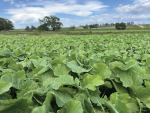
New Reviva Forage Rape Wins Over Dryland Farmers in First Year
It's only just hit the market, but a new forage rape bred for dryland farms has already won the approval of lambs and young cattle both north and south.




 increase font size

SHEEP AND beef farmers may be doing OK at the moment, but what happens when the wind changes?
Farmers wanting to improve their long term wealth and wellbeing will have an opportunity to meet and learn from award-winning Hawkes Bay farmer Steve Wyn-Harris about how to make more money and continue to make money when times get tough again.
Wyn-Harris is travelling around Kerikeri, Whangarei, Dargaville, Te Kauwahta and Te Kuiti during November explaining how feed budgeting enabled him to survive the recent droughts and even to make what he considers a reasonable profit each year. This is the latest series of roadshows organised by HR Consultant Ant Lagan; it follows an inaugural series that featured Marlborough farmer Doug Avery.
After establishing the ‘Beyond Reasonable Drought’ project, Lagan says he recognised a core group of top farmers had successfully embraced technology, data collection, alternative pasture use and protection of the environment to build resilient businesses.
Working with Cash Manager Rural, Farmax, Ravensdown, Seedforce and Focus Genetics, and teamed up with progressive accounting firms, Lagan has developed a series of farming workshops. These ‘gently’ take not-so-progressive farmers into cyberspace where they get to ask questions they are afraid to ask about IT and data collection.
“We know IT is hard for older farmers and we want to help them overcome the stumbling blocks of technological innovation,” Lagan says.
Along with Steve Wyn-Harris’s presentation, the workshops will include Australian resilience specialist Dennis Hoihberg who will speak about strategies that work.
“A strong support and communication network is a key building block in developing a resilient farm business and maintaining a healthy mindset in rural communities,” Hoihberg explains.
Lagan says sheep and beef farmers may be ok for a while – with the wind at their backs. “But when that wind changes, what will the not-so-resilient amongst them do?” he asks.
Steve and Dennis’s message to farmers looking to improve their long-term wealth and wellbeing is, if we change our thinking and our behaviour we can change the outcomes.
Kerikeri: 4.00pm Monday November 10
Tangiteroria: (Whangarei/Dargaville) 4.00pm Tuesday November 11
Te Kauwhata: 4.00pm Wednesday November 12
Te Kuiti: 4.00pm Thursday November 13.
To register visit www.beyondreasonabledrought.co.nz
It's only just hit the market, but a new forage rape bred for dryland farms has already won the approval of lambs and young cattle both north and south.
When Simon Hales discovered triple drench resistance on his Weber farm, it was a catalyst to fast-track farm system change.
Ravensdown has reported a net profit before tax and rebate of $50.1 million for the year ended 31 May 2026.
OPINION: Could beef cows play an increasingly important role in improving profitability and resilience on hill country farms?
Building a strong team is one of the biggest drivers of a successful sheep and beef business, but it can also be one of the tougher parts to get right.


Dairy processors are ready to further boost New Zealand’s export earnings but want the incoming government to match their ambition with good policy.
Massey University is best placed to solve the “problems” facing the dairy industry, says vice chancellor, Pierre Venter.
Synlait's longest serving employee – a man who joined the Canterbury-based milk processor even before it began processing milk – is now its newest executive.
A dairy industry leader believes eradicating the common and costly disease, Bovine Viral Diarrhoea (BVD) is within reach.
A farmgate milk price of $10/kgMS this season is firming up as milk powder prices soar and the New Zealand dollar weakens.
Federated Farmers has welcomed new rural policies released by ACT, saying they align closely with its own election priorities.


OPINION: The same mainstream media muppets that brought you Jacindamania in 2017 have been flat out pimping for the Opportunities…
OPINION: Your old mate reckons the atrocious way farmers in the UK are treated by their lords and masters in…




