
UV-C Treatment: Viticulture game changer
A system that combines UV-C light for disinfection could provide chemical free treatment of plant pathogens and diseases such as powdery mildew and botrytis on berry, vine and tree crops.




 increase font size
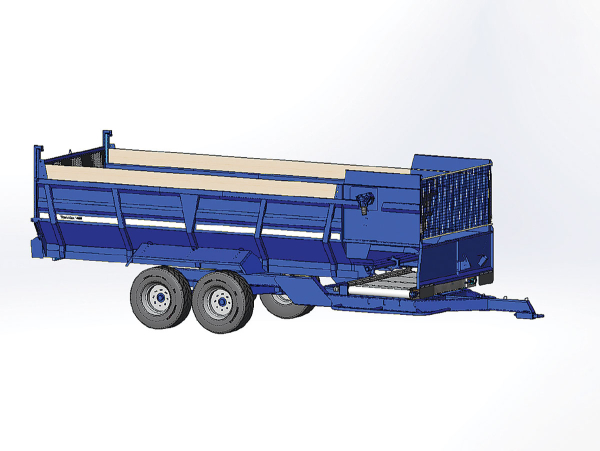 The ‘Titan Max’ wagon is designed to meet the needs of larger farms and herd sizes.
Well-known for its heavy-duty silage wagons, Palmerston North’s McIntosh Farm Machinery looks to have raised the bar even further with the release of its Titan Max Series.
One of the strongest and most durable wagons available in New Zealand and beyond, the “Titan Max” is designed to meet the needs of larger farms and herd sizes, who will typically feed multiple loads each day.
At the heart of the machine, McIntosh has addressed one of the major problems of conventional feeder wagons – the stretching of floor chains that, if left unadjusted, sees chains jumping off and damaging chains, slats and sprockets.
While the majority of manufacturers, including McIntosh, have 10mm or 13mm floor chains, McIntosh now have the option of 16mm/ 32 tonne breaking-strain chains, with three or four chains per wagon, depending on capacity. They also address the traditional method of chain tensioning via threaded rods and locking nuts, by fitting a novel tensioning system that can be described as “idiot proof”.
Used in heavy earth mowers to keep tracks correctly tensioned, McIntosh’s solution is to use grease pressurised idler roller assemblies to keep the floor chains at the correct tension, checked visually with a pressure gauge mounted on the outside of the wagon.
Available in four sizes, designated as the 1400, 1500, 1700 and 1900 models, each has a nominal capacity of 20, 21.5, 25 and 27 cubic meters capacity, respectively. Carried on walking beam tandem axle assemblies, the wagons are set up for ease of maintenance with centralised greasing locations on the outside of the wagon for the walking beams, floor and elevator drive shafts and the rear idler sprockets, meaning there is no need for operators to venture under the wagon.
Featuring a 1200mm wide cross conveyor, a 5mm thick Corten steel floor and stronger, heavily profiled sides increase durability, which is further extended by additional lower sidewall wear plates and a galvanised cross conveyor frame. Supplied as standard with LED lighting, rear orange beacon, grease gun holder, tapered mudguards and a swivel drawbar tongue, options include load cells, additional floor chains for the smaller models, extra heavy-duty axles and oversize tyre equipment.
Visit Site K33
A system that combines UV-C light for disinfection could provide chemical free treatment of plant pathogens and diseases such as powdery mildew and botrytis on berry, vine and tree crops.
OPINION: With the 2024 edition of National Fieldays behind us, it would be fair to say that although the mood was positive – a plus, given the negative sentiment across the rural sector – you must wonder if this showcase format’s days are numbered.
JFC Agri, the family-owned manufacturer of agricultural products from Galway, Ireland, used Fieldays to launch its innovative Evolution range of automatic calf feeders, including the state-of-the-art Evolution S4 Automatic Unit.
What do you want from your pasture? That's the question top Massey University scientists were asking farmers at the 'Science for Farmers' site at Fieldays recently.
Growing up on a South Waikato sheep and beef farm, Penny Ranger has firsthand experience on the day-to-day challenges.


Dairy processors are ready to further boost New Zealand’s export earnings but want the incoming government to match their ambition with good policy.

Massey University is best placed to solve the “problems” facing the dairy industry, says vice chancellor, Pierre Venter.
Synlait's longest serving employee – a man who joined the Canterbury-based milk processor even before it began processing milk – is now its newest executive.
A dairy industry leader believes eradicating the common and costly disease, Bovine Viral Diarrhoea (BVD) is within reach.
A farmgate milk price of $10/kgMS this season is firming up as milk powder prices soar and the New Zealand dollar weakens.
Federated Farmers has welcomed new rural policies released by ACT, saying they align closely with its own election priorities.



OPINION: The same mainstream media muppets that brought you Jacindamania in 2017 have been flat out pimping for the Opportunities…
OPINION: Your old mate reckons the atrocious way farmers in the UK are treated by their lords and masters in…




