Claas Balers Turn 30
Claas built its first variable chamber round baler - the Variant 100 - in 1996, so 2026 marks 30 years and the fifth generation of the Variant name, recently complemented by the new Cerex Series introduced in 2025.




 increase font size
 The Claas Lexion 8900 in action.
New CLAAS Lexion 8000 and 7000 series combine harvesters have arrived in Australasia, reports Claas Harvest Centre.
CLAAS claims the new series has 10% more capacity than its 700 range, which is known as the world’s most productive combine harvester.
Launched in 1995 after ten years development, the Lexion 480 was the first combine harvester to use Claas’ APS Hybrid threshing and separation system.
APS (accelerated pre-separation system) smoothly accelerates crop flow across all concave areas, resulting in 70% of separation occurring before the crop reached the twin longitudinal rotors. Claas is still the only manufacturer to offer both systems in one machine.
The latest Lexions use a new APS Synflow Hybrid system in which the threshing drum diameter is increased from 600 to 755mm and the feed impellor upsized from 375 to 600mm.
Likewise, the capacity of the twin rotor secondary grain separation area is 20% bigger.
Grain tank and unloading maximum capacities are also bigger -- 18 tonnes and 180 L/second, respectively.
The 7600, 7700 and 8700 models are fitted with 12.5 L, 6-cylinder Perkins 2206D engines, delivering a maximum output of 461, 524 and 571 hp, respectively. The 8800 model has a 15.6 L, 6-cylinder Mercedes-Benz engine delivering 653 hp.
The machines have the maker’s Dynamic Cooling and Dynamic Power systems. The former is on-demand, variable rate cooling said to save up to 26hp. The latter uses advanced engine management to adjust power output to operating conditions and cut fuel use by up to 10%.
Both series can be equipped with the Terra Trac system in 635, 735- and 890 mm operating widths or conventional tyres measuring 2.15 m front and 1.75 m rear.
Both variants are capable of 40 km/h ground speed for speedy on-road transport.
On-board technology includes the Cemos Auto machine optimisation system which continuously reviews and automatically adjusts the threshing, cleaning and separation settings for maximum throughput, grain quality and fuel efficiency.
The system is said to achieve 20% greater output than by manual operation.
Claas Telematics, standard on all machines, enables GPS tracking and data transmission for machine optimisation, harvesting logistics, fleet management, remote diagnostics and documentation.
Up front, the Lexion 8000 &7000 models can be equipped with Claas’ Vario variable cutter bar or the new Convio front, both available in 10.8, 12.3 or 13.8 m cutting widths.
Vario cutter-bars can adjust the knife position from -10 cm to +60 cm ‘on the go’ for optimum throughput, flexibility and ease of operation.
Convio fronts are said to offer smooth, reliable crop flow with minimal grain loss, even in lighter conditions or direct cut Canola.
The optional Flex configuration allows the cutter bar to flex up to 90 mm upwards or 135 mm downwards, said to make it ideal for harvesting pulse crops or lodged cereals.
All models are fitted with Jetstream, the maker’s eight- or six-stage turbine system that blasts air over dual-ventilated steps for pre-cleaning and the full length of the sieve box. Optional 3D or 4D cleaning systems automatically adjust the blower speed according to the lateral and longitudinal angle of the machine.
Rural News understands new straw walker machines will arrive in 2020. These would include the 5000 (5-walker) and 6000 (6-walker) series.
Claas built its first variable chamber round baler - the Variant 100 - in 1996, so 2026 marks 30 years and the fifth generation of the Variant name, recently complemented by the new Cerex Series introduced in 2025.
At a time when many businesses are taking a cautious investment approach, Landpower continues to back its customers, having officially opened the doors to its new CLAAS Harvest Centre dealership in Feilding, marking a significant investment in the future of agriculture across the lower North Island.
Twin rotor swathers have become the ‘go-to’ for forming swaths to feed hungry harvesters and balers, however, the design layout often means that crop located between the two rotors is not picked up, turned over or incorporated into the swath formed for subsequent harvesting.
Fifty Eight years ago, on the 16th of August 1968, August Claas, the founder of the harvesting company and father of Helmut Claas, personally presented a Claas Senator combine harvester to Scottish farmer John Steven.
Scheduled to replace its Axion 800 series, Claas has released details of the new, three model, Axion 8 CMATIC range.


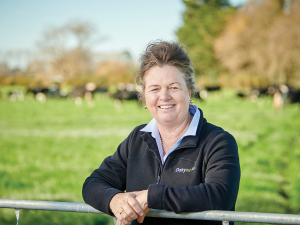
Farmers have until the end of this week to help shape DairyNZ’s future focus.
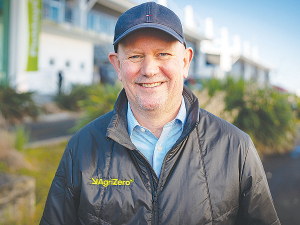
Wayne McNee, chief executive of AgriZeroNZ, has resigned and will leave the organisation on 15 January 2027.
The New Zealand dairy sector set a record in the 2025/26 season, producing more than two billion kilograms of milksolids for the first time.
Milk powder prices are continuing their merry run, firming up a potential $10/kgMS farmgate price this season.
Teachers are welcoming the outgoing Government’s U-turn allowing agriculture and horticultural science to remain a standalone Year 11 subject.
Outgoing ACT MP and dairy farmer Mark Cameron says Saturday’s election result reflects voters deeply impacted by the cost of living.



OPINION: The same mainstream media muppets that brought you Jacindamania in 2017 have been flat out pimping for the Opportunities…
OPINION: Your old mate reckons the atrocious way farmers in the UK are treated by their lords and masters in…