Reducing soil compaction has been recognised for many years as an efficient method of increasing production in grassland and arable operations.
While there are many products in the marketplace, key design features can have a major effect on efficiency, horsepower requirements, output and ultimately, the final surface finish.
The James Soil Aerator was designed and built to overcome compaction in heavy soils. This is evidenced by surface ponding after rainfall, shallow root systems and restricted plant growth or output.
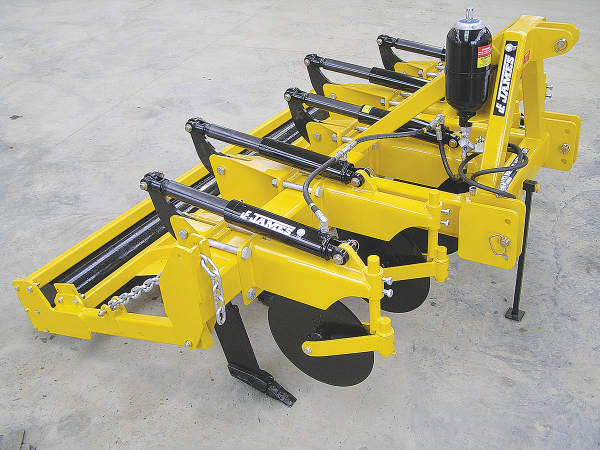
The five-leg aerator is a linkage-mounted design. It is centred around a heavy-duty frame for durability with inherent weight to aid penetration in difficult conditions. Operating to a working depth of 23cm. The initial lifting and subsequent “wave” effect creates a vertical slot and horizontal fissures, creating drainage, oxygenation and deeper root systems.
The process also promotes the release of “locked” minerals that are typically unavailable because of a lack of oxygen. MAF trials in Southland showed that “aerated” paddocks on average produced 21.7% more dry matter over a 15-month period.
Up front, individual disc assemblies’ slice through the surface and shallow root systems to allow easy entry for the aerator leg. This also reduces surface damage to the sward.
Each of the five legs, manufactured from highgrade carbon steels, are inclined slightly forwards to aid penetration and “pull” the machine into the ground. Each leg is also fitted with an adjustable and replaceable shin to prevent excessive wear to the main part of the leg.
At the base of the leg, a heavy-duty “frog” assembly carries a replaceable point that creates the initial “lift” and initiates the “wave effect”. This creates ground shatter and allows working depths of up to 25cm.
Integral to the machine is a hydraulic auto-reset system that removes the problem of overload and the frustratingly time-consuming issue of broken shear bolts. Importantly, the system can be easily adjusted to suit prevailing conditions— such as rock burdens or sub-surface timber. At the same time, it also acts as a shock absorber system for the aerator and the tractor rear linkage.
At the rear of the machine, a full width smooth roller and scraper assembly serves to level any surface imperfections. This ensures that pastures or paddocks can be returned as quickly to onward production.
www.james-engineeering.co.nz