40,000 meals donated as NZFN marks fifth anniversary
The New Zealand Food Network's (NZFN) fifth birthday celebrations have been boosted by a whopping five tonne meat donation from meat processor ANZCO.




 increase font size

REMOVAL OF excess capacity is a key to breaking the impasse in the meat industry, says Anzco Foods chairman Sir Graeme Harrison.
This will ultimately be achieved, either in a relatively orderly way or through company collapses, he says. “Either way, Anzco Foods as a predominantly beef company intends to remain a part of the New Zealand meat industry,” Harrison told Rural News.
His comments come as farmers make another push for merging co-ops Silver Fern Farms and Alliance in a bid to lift returns. However, combining the co-ops is unlikely to be enough to change the industry’s performance, strategy and structure.
SFF and Alliance collectively hold a market share of only 53%. Adding the private Affco and Anzco companies would bring total processing capacity to nearly 80%.
According to Harrison, Anzco supports the objective of New Zealand meat industry consolidation. But it is a strong believer in the importance of creative tension, regardless of the business sector, he says. “It has been unfortunate that focus has been given to the model of a single dominant player.
“ANZCO owned no slaughter plants 20 years ago and was a sheepmeat company, yet has transformed itself to become the industry’s second largest beef processor. It is important that such an opportunity is never lost to some other future industry player to be able to do the same, whether it is farmer or privately owned.”
Harrison, who has been associated with the meat industry for 40 years, also holds directorships in dairy and fishing sector companies.
He says land use competition with dairy and dairy support is the major challenge facing the red meat sector.
While improved market access and consumer demand in Asia looks set to improve the prospects for beef, the sheep sector will continue to be highly challenged unless returns for all items, and especially wool, can be lifted significantly, he adds.
The New Zealand Food Network's (NZFN) fifth birthday celebrations have been boosted by a whopping five tonne meat donation from meat processor ANZCO.

Meat processor ANZCO Foods says despite a challenging business environment, it has posted a net profit before tax of $61 million for 2023.
Meat processor ANZCO Foods has reported an annual turnover for 2022 of $1.90b - compared with $1.64b for 2021 - and net profit before tax of $147.7m (2021 $75m) for the 2022 financial year.
Beef + Lamb New Zealand (B+LNZ) has joined forces with Silver Fern Farms, Alliance, Greenlea Premier Meats, ANZCO and Deer Industry New Zealand (DINZ) to deliver 50 Greenhouse Gas workshops over the course of 30 days.
Meat processor and exporter ANZCO Foods has joined other NZ agri-sector businesses and reported a record net profit of $75m for the 2021 year.


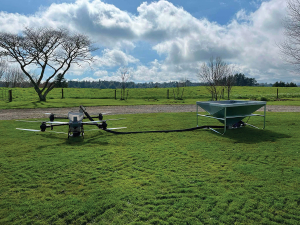
Agricultural drone operators say that a government decision to allow lower-risk drone work without certification won’t lower standards but drive innovation and efficiency.
Farmgate lamb prices are down by 8%, beef cattle by 4.5% and farm expenditure up by 4.2%.
Kiwifruit growers are watchful but remain optimistic as concerns around the potential effects of the El Niño weather pattern this season.
Almond hulls sourced from Australian orchards may have the potential to help New Zealand cows reduce emissions, boost milk yield and lower input costs.
Striking a balance between meeting the needs of industry to speed up approval time for products but on the other hand ensuring that risks are properly assessed.

OPINION: The same mainstream media muppets that brought you Jacindamania in 2017 have been flat out pimping for the Opportunities…
OPINION: Your old mate reckons the atrocious way farmers in the UK are treated by their lords and masters in…