
Editorial: Stay the Course
OPINION: The United States wine market has changed forever, and companies cannot use same old playbook, said Erin Kirschenmann at the New Zealand Wine 2026 Wine Business Forum in August.




 increase font size
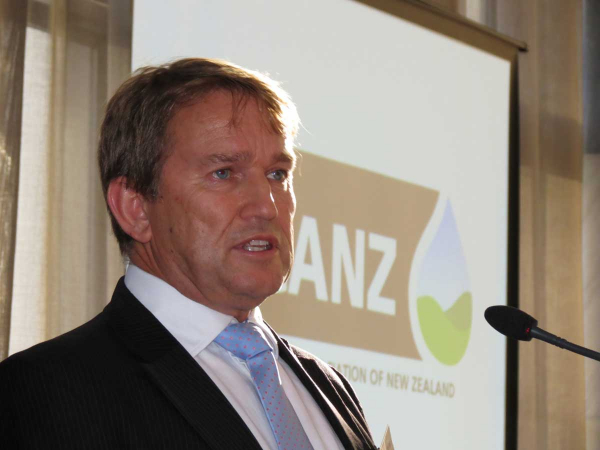 NZIBF chair, Malcolm Bailey.
New Zealand joining 15 other World Trade Organisation members to set up interim arrangements to solve trade disputes is a welcome step, says the NZ International Business Forum.
“Ensuring effective arbitration of trade disputes is a vital component of the international trade system,” says NZIBF chair, Malcolm Bailey.
New Zealand and 15 other members of the World Trade Organisation (WTO), including the European Union and China are establishing an arrangement that will allow them to bring appeals and solve trade disputes among themselves.
This is in view of the current paralysis of the WTO’s Appellate Body.
“New Zealand, as a small trading nation, has an enormous stake in the robustness of the WTO dispute settlement system. We have taken on the largest traders in the world and won when our trading interests have been unjustly threatened.”
Bailey says the WTO system has been seriously weakened by the unfortunate lapse of the Appellate Body at the end of last year.
“It is good to see a diverse number of WTO members taking steps to redress the situation, but this is at best a temporary solution – what we need is the Appellate Body fully functioning again.”
Bailey says that trade disputes are likely to increase as a consequence of increasing protectionism, already prevalent before the current global health crisis. Export bans and increased tariffs on the goods required to address the pandemic are a rising concern.
“Re-starting the engines of global trade and investment will be critical in the post-crisis world. Timely and effective arbitration of disputes between economies will be needed more than ever.
We urge other WTO members to come together to build a stronger dispute settlement system” says Bailey.
OPINION: The United States wine market has changed forever, and companies cannot use same old playbook, said Erin Kirschenmann at the New Zealand Wine 2026 Wine Business Forum in August.

Chinese beef trade quotas and a looming suspension of Brazilian beef imports into the European Union are expected to reshape global beef trade flows over the remainder of 2026, with implications for New Zealand exporters, according to Rabobank's Q3 Global Beef Quarterly report.
China remains New Zealand’s biggest market, taking $23 billion of our exports, but it’s no longer a commodity story, says Prime Minister Christopher Luxon.
According to new research, industry leaders have ranked world-class biodiversity as the number one priority for the 16th year in a row.
OPINION: This is my last article as Chief Executive, so I thought I’d take the opportunity to talk about three recurring issues which I have seen over the years, and which are almost certain to be issues in the future.


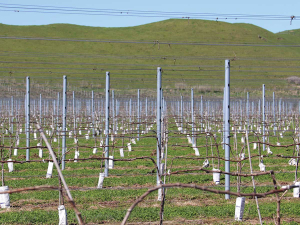
Hawke's Bay fruit growers are being reminded of the need to prepare for whatever the El Niño weather system may bring in the coming months.
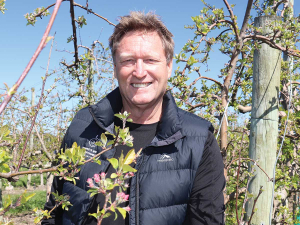
Three and a half years on from when Cyclone Gabrielle hit Hawke's Bay, some orchardists in the region are still receiving counselling to help them deal with the trauma they suffered.
South of the central Hawke’s Bay town of Waipukurau is Taniwha Station – a highly successful 550ha bull beef farming operation.
Beef + Lamb NZ funded research has shown that some simple changes to pasture management could help farmers make better use of rainfall and build resilience before dry conditions hit.
OPINION: There could hardly be a more appropriate theme for a conference than the one chosen by the red meat sector - Navigating Volatility.
When Northland leather worker Vernon Suckling started making horse saddles 50 years ago, quad bikes and side-by-side vehicles were unheard of.




OPINION: The same mainstream media muppets that brought you Jacindamania in 2017 have been flat out pimping for the Opportunities…
OPINION: Your old mate reckons the atrocious way farmers in the UK are treated by their lords and masters in…




