Cyclone Gabrielle: Hawke's Bay Orchardists Still Recovering
Three and a half years on from when Cyclone Gabrielle hit Hawke's Bay, some orchardists in the region are still receiving counselling to help them deal with the trauma they suffered.




 increase font size
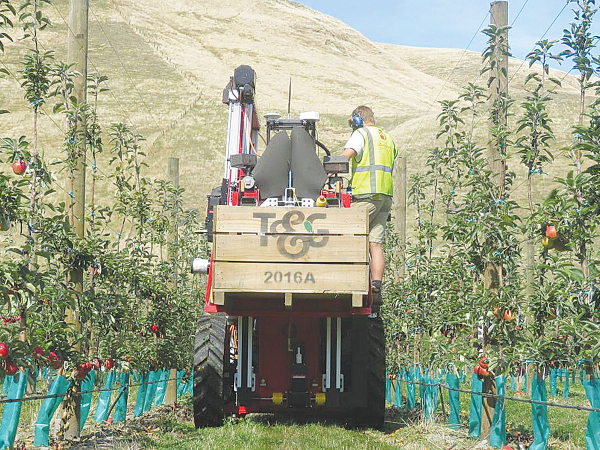 T&G Global saw its operating profit plunge from $20 million in 2022 to a $46m loss last year.
Weather events like Cyclone Gabrielle that hit over one year ago have landed two of the country's biggest fruit and vegetable traders with massive trading losses.
T&g Global, which grows apples, tomatoes, citrus and blueberries, and partners with over 800 independent growers to export to 60 countries, saw its operating profit plunge from $20 million in 2022 to a whopping $46m loss last year. The listed company's net loss before tax ballooned to $64.2m, compared to a $3.3m loss the previous year.
Another listed company, Seeka Limited, posted a half-year net loss of $14.5m, down from a $6.5m profit the previous year.
Both companies blame weather events for their financial woes Cyclone Gabrielle, which hit Northland and Hawke's Bay in February last year, left some orchards in ruins.
T&G Global chair Benedikt Mangold says their loss reflected both the cyclone's physical and fiscal impact and a challenging year in terms of growing and economic conditions.
"The February cyclone completely disrupted our apples operations in Hawke's Bay for five days, destroyed orchards on some 13% of our planted hectares and interrupted our supply chains for export and domestic crops. The cyclone, along with five-year highs in rainfall and lows in sunshine across the year, made conditions more than challenging."
Across at Seeka, a difficult 2023 harvest was extended beyond cyclone-affected areas and even in Australia. But the company is also bouncing back with better marketing and suspending dividends and reducing overheads. Seeka is one of the country's largest kiwifruit growers and also exports apples and pears.
Seeka chief executive Michael Franks says the 2023 harvest was difficult right across the horticultural sector, as a warm wet winter, cyclones and hail significantly impacted orchards in New Zealand and Australia.
Three and a half years on from when Cyclone Gabrielle hit Hawke's Bay, some orchardists in the region are still receiving counselling to help them deal with the trauma they suffered.
The chief executive of Apples and Pears New Zealand, Danielle Adsett, says fruit quality this year is phenomenal and the sector is hitting crop estimates, which is great for growers.
T&G Global says its 2025 New Zealand apple season has delivered higher returns for growers, reflecting strong global consumer demand and pricing across its Envy and Jazz apple brands.
Nearly three years on from Cyclone Gabrielle, Hawke's Bay apple orchardist Paul Paynter says they are still doing remedial work around their orchards and facing financial challenges.
If there was a silver lining in the tragedy that was Cyclone Gabrielle, for New Zealand Young Grower of the Year, Grace Fulford, it was the tremendous sense of community and seeing first-hand what good leadership looks like.


Federated Farmers has welcomed new rural policies released by ACT, saying they align closely with its own election priorities.

Rural Contractors NZ says proposed changes to land transport rules for agricultural vehicles are a welcome response by the Government to out of date regulations which have seen members hit with huge fines.
Alliance is calling for final applications for its 2027 Graduate Programme, with applications closing on Sunday 25 October.
Decades piloting planes has ensured vet and farmer David Hayes is focused on safety. So, after a serious accident while welding on farm, he is sharing his experience so others can learn from it.
Canterbury milk processor, Synlait Milk has confirmed Leon Fung as its chief executive officer.
OPINION: Making it easier to collect rainwater and use it to grow crops and livestock is a no brainer.

OPINION: The same mainstream media muppets that brought you Jacindamania in 2017 have been flat out pimping for the Opportunities…
OPINION: Your old mate reckons the atrocious way farmers in the UK are treated by their lords and masters in…




