
Agri sector to lead economic recovery
OPINION: Over the past month, people up and down the country have been asking me what I think is in store for the Agri sector.




 increase font size
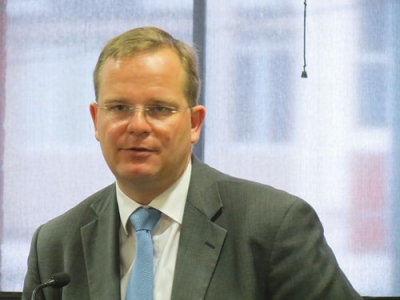 Oliver Hartwich: “At least we are not dependent on Greece!”
An economist who heads the ‘think tank’ New Zealand Initiative says despite dairy price problems the country’s economy is doing remarkably well.
Dr Oliver Hartwich told delegates at the recent AGCARM conference that the NZ economy was certainly no Greece and although it probably wasn’t the ‘rock star’ referred to previously it is still performing well.
Hartwich says NZ is growing faster than Australia, the UK, the Eurozone and Japan. He says despite the problems with dairying, in reality our dependence on China is not such a bad thing.
“While dairy is not doing too well at the moment it’s important to remember a couple of things. Dairy is important, but it is not the entire economy and typically when dairy goes down we see a weaker NZ dollar and that’s a good news story for all the other sectors of the economy – especially other exporters. So it’s not all bad news,” he told conference-goers.
“Also, the dairy industry has a very positive long term forecast based on other economies especially in Asia.”
Hartwich says as incomes rise for Asia’s growing middle class they will develop a taste for dairy products and other food exports NZ produces. He says we can expect a normalisation of dairy prices and probably an end to the downward price cycle seen in the last few months.
While there has been much talk about the risk of NZ becoming too dependent on China, Hartwich flippantly says at least we are not dependent on Greece!
“In a world that used to be American and European dominated, the Americans are at least in recovery now and doing quite well,” he explains. “But the Europeans are struggling and they will be for a bit longer. At least China is still growing at 7%.”
Hartwich says another phenomenon that will benefit NZ is the move of the hypothetical centre of economic gravity from west to east. In the 1980’s most of the world’s economic transactions took place somewhere between the USA and the UK. But by 2010 it had moved to Israel and it is forecast to reach Tibet by 2050.
“What this basically means is that more transactions are happening in Asia. More wealth is being created in Asia and for NZ that means the centre of the economic world is moving towards us and we don’t have to do anything. For the first time in our history there is no tyranny of distance.”
Hartwich says while NZ can’t change global dairy prices it can work on changing other economic inhibiting factors such as making housing affordable and improving education to ensure young people are equipped to get good jobs in a highly competitive global market. And we need to reform local government and reduce welfare dependency.
“And when a new regulation is introduced we should routinely do a cost-benefit analysis to make sure it is worth it,” he says.
Hartwich has a simple message for farmers.
“You are fortunate to be here even though times are tough. Times will get better and where else would you want to be?
“You wouldn’t want to be in Australia because they have problems of their own; you wouldn’t want to be in Europe; so NZ is still as good as it gets in the current global economy.”
OPINION: Over the past month, people up and down the country have been asking me what I think is in store for the Agri sector.

OPINION: Despite the volatility created by the shoot-from-the-hip trade tariff 'stratefy' being deployed by the new state tenants in the White House, farm commodity prices are holding their own.
Food and vegetable grower and marketer T&G Global has trimmed its half-year losses compared to last year, as it makes progress delivering its strategy and continues to recover from the impact of Cyclone Gabrielle.
Rabobank released its Agribusiness Monthly for March. Here's what the bank had to say about the dairy sector, farm input prices and the weather.
A leading accountant and agribusiness advisor says the present downturn in the rural sector is like no other he's seen in his nearly 60 years in the business.

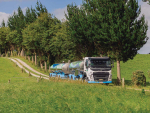
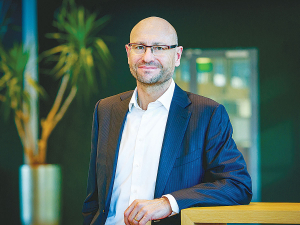
Farmer-owned fertiliser company, Ballance Agri Nutrients is welcoming National’s plan to negotiate security agreements with key supplier countries to protect New Zealand-bound products from export restrictions and greater supply chain certainty.
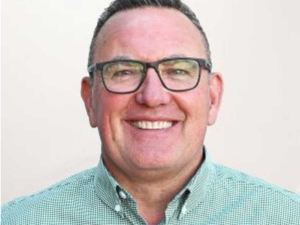
Carrfields has announced the appointment of Stu Hall to the newly created role of chief operating officer, Carrfields Ltd, reflecting the continued growth of their agribusinesses and the need to ensure the company has the leadership capacity and support in place as it pursues the emerging opportunities ahead.
New Zealand's role is not to compete with Indian growers, according to NZ Apples and Pears.
The potato industry is celebrating the success of two rising stars - James Blair, the 2026 Young Grower of the Year and runner-up and innovation award winner, Amber Davy.
Twenty-eight emerging leaders from across the horticulture sector spent two days last month learning valuable skills and connecting with industry experts.
There are five entrants in this year’s Young Horticulturist of the Year, competing in a series of technical, practical, business and leadership challenges.





OPINION: The same mainstream media muppets that brought you Jacindamania in 2017 have been flat out pimping for the Opportunities…
OPINION: Your old mate reckons the atrocious way farmers in the UK are treated by their lords and masters in…




