
PC1 Pause Looms as Coalition Targets Waikato Farm Rules
A pause on Waikato Regional Council's (WRC) plan change that sets new freshwater rules for farming could be announced in the coming weeks.




 increase font size
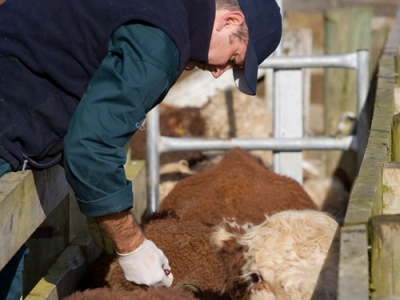
Waikato Regional Council says it is concerned proposed changes to the national plan for managing tuberculosis (Tb) in cows may be somewhat hypocritical when it comes to the Waikato.
The council is also concerned the plan does not pay enough attention to the possibility of the disease being transported into the region from outside.
The comments came during discussion at the council meeting, which considered the finalising of a council submission on the proposed changes.
Chief executive Vaughan Payne says that OSPRI, which manages bovine Tb-related possum control, had argued strenuously that the council should not stop collecting a rate for funding OSPRI in the region. OSPRI had said this could result in less pest control in Waikato. That argument recently helped lead the council to extend its rate collection for OSPRI for another year.
“Yet the proposed changes to the national plan suggest a greater focus on pest control in areas where TB is known to be, rather than continuing general treatment in a wider range of areas,” says Payne.
“The council considers that there is a high likelihood that this approach will result in a withdrawal of OSPRI pest control operations in the region north of Taupo.”
The submission also reflected concerns in the farming community that Tb was not well established in the region and that outbreaks could be the result of infected stock being trucked into or through the region.
“We think substantially more effort needs to be put into making sure that transporting of stock isn’t a significant factor in managing Tb in the Waikato,” Payne says.
“The council considers that an effective national Tb pest management strategy is vital to both the Waikato and national economies, to limit production loss and the associated economic impacts of the disease on our cattle and deer industries.”
A pause on Waikato Regional Council's (WRC) plan change that sets new freshwater rules for farming could be announced in the coming weeks.

OPINION: Staying on Plan Change 1, NZ First deputy leader Shane Jones took to social media to gain some political points.
OPINION: All eyes are on the Government as Waikato farmers seek urgent help to fend off the controversial Plan Change 1 (PC1), designed to manage nutrient discharges into waterways in the region.
Waikato farmers have been told that the Government’s new planning system legislation and the region’s Plan Change 1 (PC1) “won’t mesh together very well”.
The Government is looking at intervening on behalf of Waikato farmers who face new regulations around agricultural land use while Resource Management Act (RMA) reforms are underway.


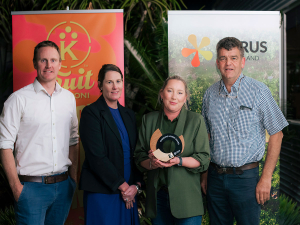
New Zealand's citrus growers were challenged to build their future on the value embedded in their fruit rather than the volume they produce, at Citrus New Zealand's annual gathering in Gisborne on 17 September.

Leading John Deere technicians and apprentices from New Zealand and Australians were recognised at the recent sixth annual JD Technician of the Year Awards, held in Brisbane.
In Dacre, near Invercargill in New Zealand’s South Island, Bruce Dinnington is running a dairy operation unlike any other.
A free online platform aggregating governance vacancies across rural and regional New Zealand has been launched.
Environment Minister Nicola Grigg has announced details of a new rural plastics recycling scheme.
Agricultural drone operators say that a government decision to allow lower-risk drone work without certification won’t lower standards but drive innovation and efficiency.




OPINION: The same mainstream media muppets that brought you Jacindamania in 2017 have been flat out pimping for the Opportunities…
OPINION: Your old mate reckons the atrocious way farmers in the UK are treated by their lords and masters in…