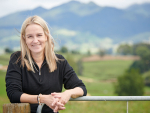
Susan O'Regan Appointed New Chair of QEII National Trust
Minister of Conservation Hon Tama Potaka has appointed Susan O'Regan as Chair of the Queen Elizabeth II National Trust (QEII) for a three-year term.




 increase font size
 Gordon and Celia Stephenson.
The Queen Elizabeth II National Trust has paid tribute to environmentalist Gordon Stephenson, who passed away last month.
Chair James Guild says Gordon was dedicated to promoting and protecting the natural environment.
As a key founder of the QEII National Trust, he was a visionary environmentalist with a deep appreciation for New Zealand's natural heritage, influencing how we perceive and care for it within our farming landscapes, says Guild.
"Gordon is a true conservation icon. He was also a great friend and a constant source of support for the National Trust. He will be greatly missed,"
Guild says Gordon has left a remarkable legacy for New Zealand.
'The National Trust protection model he played a critical role in establishing has proved to be a very successful. More that 100 covenants are registered every year protecting bush, wetlands, vulnerable biodiversity, and other sites of cultural and social interest on private land.
"The area protected covenants today totals around 180,000ha and every year more landowners approach the National Trust asking to establish covenants with it."
Guild says the National Trust was honoured to have Gordon and Celia Stephenson as special guests at its 4000th covenant registration celebration in May 2015.
"Gordon was a gifted orator and in his speech acknowledged the protection ethic of covenantors and the special value the 4000 existing covenants added, individually and collectively, to the character of New Zealand. He was proud of what the National Trust had achieved in the 40 years since it was established."
While farming in the 1970s, Gordon and Celia became deeply alarmed by the level of destruction of indigenous nature on private land, and the fact that there was nothing that could be done to prevent it. Gordon knew that many other landowners felt the same and socialised the idea of a 'Heritage Trust' with his peers, and with politicians and government officials in Wellington.
This eventually led to the establishment of the Queen Elizabeth II National Trust, offering landowners a way to permanently protect special features on their land with covenants while retaining ownership and management responsibility of the protected land.
Guild said Gordon's vision and the conservation movement he and Celia triggered in establishing New Zealand's first QEII National Trust open space covenant in 1979 changed the way natural and cultural places on private land are valued and preserved in New Zealand.
During his lifetime Gordon had an unwavering commitment to conservation and to good environmental management on the farm. He has sat on the national bodies of Federated Farmers and Forest and Bird and had leading roles in organisations such as the Waikato Conservation Board, the Maungatautari Ecological Island Trust, the New Zealand Landcare Trust, and the South Island High Country Review Committee.
He instigated the Ballance Farm Environment Awards, which are now held nationally with the national winner receiving the Stephenson Trophy. Gordon first mooted the idea of a farm environment competition in 1991 as a way of recognising farmers who were trying to balance farm productivity with environmental protection.
In 1992 Gordon and Celia Stephenson were jointly awarded the Loder Cup, New Zealand's most prestigious conservation award for plant conservation.
In 1998 Gordon became a Companion of the New Zealand Order of Merit. In 2000 he received a Biodiversity Accolade award at the launch of the New Zealand Biodiversity Strategy.
In 2013 Gordon received an Honorary Doctorate from the University of Waikato for his on-going contribution to the environment. Gordon was a Distinguished Life Member of Forest and Bird, an Honorary Member of Rotary, and an honorary kaumatua at Pikitu Marae, Waotu.
He passed away on 26 December 2015, aged 91.
Minister of Conservation Hon Tama Potaka has appointed Susan O'Regan as Chair of the Queen Elizabeth II National Trust (QEII) for a three-year term.
Environment Minister Nicola Grigg has announced details of a new rural plastics recycling scheme.
The Ballance Farm Environment Awards are coming to the West Coast of the South Island.
There's been widespread support from the primary sector for the Government's announcement on changes to freshwater farm plans that come under the Natural Environment Bill, which is now set to replace the existing RMA.
The chair of the country's environmental regulator, the Environmental Protection Authority (EPA), says changes are already under way to improve the performance of the agency to better meet the needs of those who interface with them.


South of the central Hawke’s Bay town of Waipukurau is Taniwha Station – a highly successful 550ha bull beef farming operation.
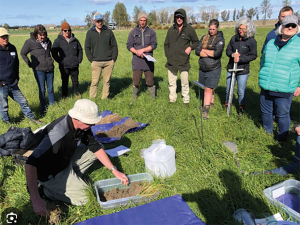
Beef + Lamb NZ funded research has shown that some simple changes to pasture management could help farmers make better use of rainfall and build resilience before dry conditions hit.
OPINION: There could hardly be a more appropriate theme for a conference than the one chosen by the red meat sector - Navigating Volatility.
When Northland leather worker Vernon Suckling started making horse saddles 50 years ago, quad bikes and side-by-side vehicles were unheard of.
Alliance Group has confirmed that eligible farmer-shareholders who supply and continue to back the business will receive up to $20 million later this year, following the strategic investment partnership with Dawn Meats.
With a general election under five weeks away, Rural News is asking major political parties about their policies and positions on key issues facing the primary sector. We will run their responses to each question over the next four weeks. The ACT Party and the Greens didn't respond in time.




OPINION: The same mainstream media muppets that brought you Jacindamania in 2017 have been flat out pimping for the Opportunities…
OPINION: Your old mate reckons the atrocious way farmers in the UK are treated by their lords and masters in…




