
Five orchardists fined over illegal water take
Over the past two Kiwifruit seasons, Toi Moana Bay of Plenty Regional Council has prosecuted five orchardists for illegally taking more than 100 million litres of water.




 increase font size
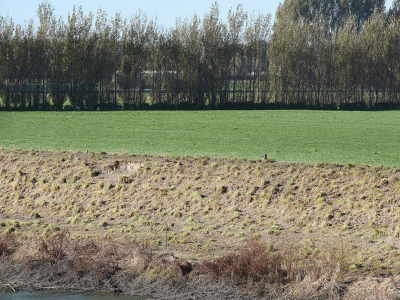 During winter, BOP Regional Council say it is common sense to keep stock off the stopbanks as much as possible to prevent pugging and damage.
With winter fast approaching, Bay of Plenty Regional Council is again reminding rural landowners of the requirements to protect the region’s stopbanks from the effects of stock and overgrazing.
Rivers and Drainage Asset Manager Kirsty Brown says most farmers and lifestyle block owners know the rules but the importance of maintaining the region’s flood defences can’t be underestimated.
The council manages and maintains almost 352km of stopbanks across the region to protect people, property and livelihoods.
During winter, it is common sense to keep stock off the stopbanks as much as possible to prevent pugging and damage.
“Churned up ground is not just a surface problem, it can cause much greater issues. Good grass cover helps to ‘knit together’ the soil structure underneath, so weakening that element can have a disastrous effect on surrounding properties and potentially the wider community,” she says.
“Pigs and horses scraping and tearing up the grass cover can also be a potential problem and bulls are never permitted on stopbanks because their weight and behaviour can very quickly cause significant damage.”
The Bay of Plenty Regional Council Floodway and Drainage Bylaw applies to drains, pumping stations, defences against water, river edge protection works and floodways owned by Council. Under the bylaw it is an offence to damage stopbanks, and landowners can be held liable for any damage. Minor offences will receive written and verbal warnings, while more serious offences could face abatement notices, fines and prosecution.
The bylaw also requires an authority to be applied for by anyone intending to build or demolish any structure, undertake earthworks, or any ground penetrating work in the vicinity of a stopbank. Conditions differ across the region, so anyone intending to carry out work near a flood defence should contact the Regional Council for full details.
“Our Rivers and Drainage team naturally keep an eye on the condition of our stopbanks and we always welcome contact from members of the public who may suspect a problem. Our Pollution Hotline (0800 884 883) is the best way to report any areas of concern,” Brown adds.
Over the past two Kiwifruit seasons, Toi Moana Bay of Plenty Regional Council has prosecuted five orchardists for illegally taking more than 100 million litres of water.
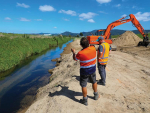
Bay of Plenty Regional Council Toi Moana is seeking applications from rivers and drainage scheme ratepayers to join its Rivers Scheme Advisory Groups.
A Rotorua dairy farm has been convicted and fined $40,000 for an illegal dairy effluent discharge from a travelling irrigator.
A kiwifruit orchard has been convicted and fined $35,000 in the Tauranga District Court for unlawfully taking more than 18 million litres of water for irrigation.
Bay of Plenty Regional Council says the region has received help in its pest control efforts from an online mapping system.


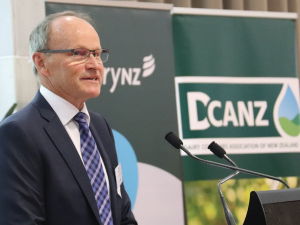
Dairy processors are ready to further boost New Zealand’s export earnings but want the incoming government to match their ambition with good policy.

Massey University is best placed to solve the “problems” facing the dairy industry, says vice chancellor, Pierre Venter.
Synlait's longest serving employee – a man who joined the Canterbury-based milk processor even before it began processing milk – is now its newest executive.
A dairy industry leader believes eradicating the common and costly disease, Bovine Viral Diarrhoea (BVD) is within reach.
A farmgate milk price of $10/kgMS this season is firming up as milk powder prices soar and the New Zealand dollar weakens.
Federated Farmers has welcomed new rural policies released by ACT, saying they align closely with its own election priorities.





OPINION: The same mainstream media muppets that brought you Jacindamania in 2017 have been flat out pimping for the Opportunities…
OPINION: Your old mate reckons the atrocious way farmers in the UK are treated by their lords and masters in…




