Arla targets $25b in total revenue
European dairy co-operative Arla Foods is forecasting a total revenue of nearly $25 billion this year.




 increase font size
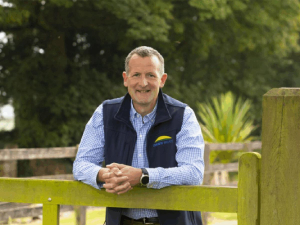
 Bartosz Lenart.
In what many would see as a classic case of exporting coals to Newcastle, the Polish meat industry is looking at New Zealand as a potential export market.
It has embarked on a two-year campaign to promote Polish pork, beef and products to NZ and four other countries – South Africa, Taiwan, Singapore and Kazakhstan. David Anderson reports...
Under the auspices of the Union of Producers and Employers of Meat Industry (UPEMI) and the Polish Association of Beef Cattle Breeders (PZPBM), an information and promotion campaign entitled ‘The taste of quality and tradition directly from Europe’ was developed in July 2015 to promote and market chilled or frozen beef, pork and their products originating in the European Union.
According to Agnieszka Rozanska, managing director of UPEMI, the European Union has one of the world’s highest standards for the production of beef, pork and products.
“Apart from food safety, one EU priority is to cultivate local traditions and customs,” she told Rural News.
“The use of traditional methods of production of European cold meat enables the creation of varied products of unique taste and aroma.”
Among these traditional and regional pork and beef products are sausages, hams, brawn, gammon, bacon, pork fat, pork chops, liver sausage, black pudding, smoked bacon, smoked sirloin, pâté, leg, knuckle and neck.
Rozanska says the Polish meat industry is very modern with most of the country’s meat plants rebuilt to high, European standards over the past 10 years or so and this means it can actively seek new markets. Poland joined the European Union in 2004.
She says the latest market push to the five countries – including NZ – follows UPEMI’s inaugural promotional campaign five years ago to the US, South Korea and Vietnam.
“We are not afraid of distance and are prepared to seek new markets,” Rozanska says. “Our first campaign was very successful and we now see Poland as the second biggest exporter of pork to the US behind Denmark.”
But it is not all one way traffic; there may also be opportunities for NZ meat exports to Poland and beyond.
Country manager for Polish meat company Madej Wrobel Bartosz Lenart believes Poland provides an ideal “bridge” to get our meat to other countries in Europe.
“Poland has high standards, is affordable and is central to Europe, Russia, the Baltic States and Scandinavia,” he told Rural News.
Lenart also believes the many Poles living in other countries – Poland has 40 million people and as many again are believed to be living elsewhere – offer opportunities for NZ meat products.
NZ is already a major exporter of beef to Poland – behind only the US and Australia – with annual exports in 2015 totalling $120 million for frozen product and $40m in fresh – up 26% and 22% respectively on the previous year.
Meanwhile, Lenart, in common with many other Polish meat companies, sees NZ as a lucrative market for Polish pork exports. Around 58% of pig meat consumed in NZ in 2015 was imported, meaning the percentage of local pork production fell from 50% only a year earlier.
However, fledgling Polish pork exporters to NZ were given clear instructions by NZ Trade’s European representative Katherine Clift that key requirements will have to be met to satisfy NZ’s stringent biosecurity measures.
“It is crucial to understand that the NZ government and pork industry take biosecurity very seriously,” she told the seminar held by UPEMI. “Although PRRS (porcine reproductive and respiratory syndrome) has spread all over the world, NZ is free of PRRS; also with the potential outbreak of Asian swine flu (ASF) in the EU there is concern in NZ over the risks of importing product from areas where the disease is present.
“It is important that the Polish industry does everything it can to promote high health standards and co-operate with all measures to control and eradicate ASF,” Clift concluded.
• David Anderson travelled to Poland as a guest of UPEMI
European dairy co-operative Arla Foods is forecasting a total revenue of nearly $25 billion this year.
According to numbers sourced from national authorities, 151,800 tractors were registered across Europe in 2023, of which 26,200 tractors (17%) were 37kW (50 hp) and under and 131,900 (83%) were 38kW and above.
OPINION: European farmers are going to extreme lengths to have their message heard.
OPINION: Farmer protests have swept Europe in recent weeks.
OPINION: The heat wave that hit Europe last week has forced a rethink among UK dairy farmers who normally graze their cows outdoors in summer.


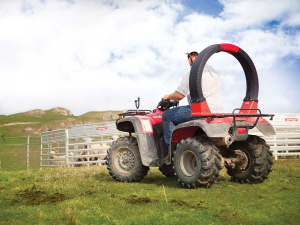
When Northland leather worker Vernon Suckling started making horse saddles 50 years ago, quad bikes and side-by-side vehicles were unheard of.
Alliance Group has confirmed that eligible farmer-shareholders who supply and continue to back the business will receive up to $20 million later this year, following the strategic investment partnership with Dawn Meats.
With a general election under five weeks away, Rural News is asking major political parties about their policies and positions on key issues facing the primary sector. We will run their responses to each question over the next four weeks. The ACT Party and the Greens didn't respond in time.
The red meat sector is in great heart.
Dr Scott Champion, Foundation for Arable Research chief executive, says that everyone in the supply chain had a role to play in driving the sector's long-term success.
Entries opened on Monday, 5 October 2026 for the 2027 New Zealand Dairy Industry Awards (NZDIA), which organisers describe as the nation's biggest celebration of excellence in the dairy sector.


OPINION: The same mainstream media muppets that brought you Jacindamania in 2017 have been flat out pimping for the Opportunities…
OPINION: Your old mate reckons the atrocious way farmers in the UK are treated by their lords and masters in…