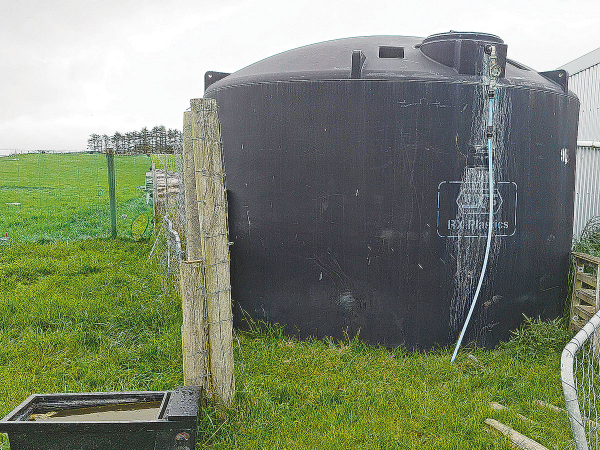
A Bay of Plenty school will be able to keep its fruit and veg plants hydrated with the help of a new rainwater tank.
Oropi School was a recipient of Bay of Plenty Regional Council’s School Sustainability and Resilience Fund which has allowed it to install a 1,600-litre rainwater tank so they can water their gardens over the summer months, even out of school hours and through the school holidays.
The rural school runs a garden to table program where the students learn to grow their own food, harvest it, and then use it to cook meals together.
However, up until the installation of the rainwater tank, students have not been able to plant in the garden greenhouse because of a lack of water supply to it.
Oropi School principal Andrew King says support from the fund enabled them to install the rainwater tank in December, a move which has helped to alleviate water issues during the summer months.
The new tank has meant the school could set up an irrigation system, with the greenhouse being self-sufficient. It also meant there was no risk of draining the school’s boar.
King says the garden to table sessions have been invaluable to students today.
“In the 90s there was a big push for pupils to be using computers and learn that technology,” he says.
“Today, our children need to get back in touch with nature and the environment, with hands-on learning – these sessions foster that.
“Learning about the needs of the modern world and how to connect to the land because more and more children are living on smaller sections and don’t have the opportunities or space at home,” King says.
The School Sustainability and Resilience Fund is designed to support schools and early childhood education centres to carry out sustainability projects and prepare for the impacts of climate change and natural hazards.
The 2023 fund is still open for applications for schools and early childhood centres to apply for their share of $35,000.
Applications close for the School Sustainability and Resilience Fund 2023 on Friday, 31 March.
For more information on the fund and application forms, head to www.boprc.govt.nz/sustainability-resilience-fund