
Lanaco and Blueair Launch World-First NZ Wool Air Filter
New Zealand wool is reaching new heights as air filtration companies move away from synthetic products to biodegradable alternatives.




 increase font size
 Greg Smith says the local industry is now seeing a growing awareness of wool carpet across millennial homeowners.
Perceptions of wool are changing, according to a recent study by carpet manufacturer Bremworth.
The nationwide study, the results of which were released earlier this month, showed that Millennials (age 26 to 41), in particular, are changing their views on wool carpets.
Greg Smith, chief executive of Bremworth, says wool carpet was once a regular fixture in Kiwi homes but over the past two decades synthetic flooring has become dominant in the market.
However, Smith says the local industry is now seeing building awareness of wool carpet across millennial homeowners, who did not grow up with it in their house. He says the research suggests that half of those renovating or refurbishing their homes are now in that millennial age bracket.
“This is a market segment who is looking to wool for a range of reasons that weren’t priorities for the generations that preceded them,” Smith says.
He adds that millennials are also likely to spend time researching products prior to purchasing and are more likely to choose brands that align with their ethical beliefs and values.
“The length of life of a product, sustainability and environmental impact are also factors they take into consideration before making a purchase,” he says.
Smith believes it is important to educate domestic consumers on the benefits of wool otherwise there will be little chance of growing the industry’s overseas markets. He told Rural News Bremworth is embarking on a nationwide campaign to do exactly that, across digital, print and out of home platforms.
“A key objective of the campaign is to educate consumers that all synthetics are essentially plastic. This helps present wool as a premium, value added product,” Smith adds. “Bremworth has had experience manufacturing many different natural and manmade fibres and have found wool is a far superior product.”
Smith says imagery is important to positioning wool carpeting as a premium offering on the domestic market.
“With all of our campaign executions the imagery is designed to portray an aspirational, premium offering,” he explains. “Wool is not a cheap product to manufacture and requires artisan experts to work with – it naturally lends itself to be positioned at the premium end of the market.”
Smith says this helps Bremworth pay its farmers and suppliers at a fair rate.
“We are investing to elevate wool as a versatile and premium fibre that has qualities which can’t be replicated in a synthetic product. All of the inputs including the carpet backing are designed to be premium, which shows we don’t cut any corners, and this provides overall consistency with our positioning.”
New Zealand wool is reaching new heights as air filtration companies move away from synthetic products to biodegradable alternatives.
Will a stronger, more coordinated voice help rebuild confidence and improve returns in the wool sector?
OPINION: Confidence in the wool sector is rebounding as prices hit levels not seen in more than 15 years.
The recently signed free trade agreement with India is an invitation to strengthen relationships between the New Zealand and Indian strong wool industries, says Wool Impact chief executive Andy Caughey.
Strong competition and tightening supply have seen wool reach its highest prices paid at auction since 2011.



Alliance is calling for final applications for its 2027 Graduate Programme, with applications closing on Sunday 25 October.
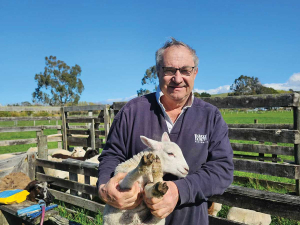
Decades piloting planes has ensured vet and farmer David Hayes is focused on safety. So, after a serious accident while welding on farm, he is sharing his experience so others can learn from it.
Canterbury milk processor, Synlait Milk has confirmed Leon Fung as its chief executive officer.
OPINION: Making it easier to collect rainwater and use it to grow crops and livestock is a no brainer.
As part of its Election 2026 coverage, Rural News asked political parties how they would help pull the arable sector out of the doldrums. Here's what they said:
Farmers are being encouraged to rethink how they manage waste on farm with the launch of ruralwastesorted.co.nz, a new website bringing together practical tips, real farmer experiences and resources.




OPINION: The same mainstream media muppets that brought you Jacindamania in 2017 have been flat out pimping for the Opportunities…
OPINION: Your old mate reckons the atrocious way farmers in the UK are treated by their lords and masters in…




