
Rural Mobile Coverage Worse After 3G Shutdown, Survey Finds
Mobile phone coverage and reliability are deteriorating in rural areas, and farming families are bearing the cost, according to a Federated Farmers survey.




 increase font size
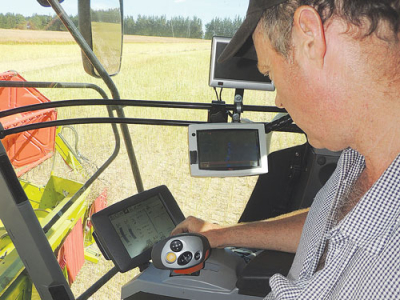 Better connectivity and coverage is essential for rural business and communities.
An announcement of increased rural broadband and mobile coverage has been welcomed by the sector organisations, but they say more is needed.
Late last year, Regional Economic Development Minister Shane Jones and Broadcasting, Communications and Digital Media Minister Kris Faafoi announced additional rural broadband and mobile coverage across New Zealand, taking coverage to 99.8% of the population.
The additional coverage will roll out over the next four years due to the expansion of the Rural Broadband Initiative phase two/Mobile Black Spots Fund (RBI2/MBSF) programme.
Faafoi said he was pleased to see broadband and mobile coverage extend even further. Meanwhile, Jones said the $40 million contribution from the Provincial Growth Fund (PGF) would ensure vital technology will be available in some of the most far-flung parts of provincial NZ.
Federated Farmers welcomed the rollout saying better connectivity and coverage was needed for rural business and communities to thrive.
“It is good the Government will invest in delivering broadband and mobile coverage to 99.8% of the population over the next four years,” says Feds telecoms spokesman Andrew Hoggard. But the current service is sporadic, he says.
“Coverage is incredibly patchy. It makes farmers, rural-based businesses and the communities they serve feel isolated. The poor service that exists for many rural communities has become expected, but our members are well over it.”
Hoggard said the $40m is great “but it can’t stop there”.
“We need more reliable land line services. We need mobile coverage that is better than expecting someone to stand on a remote fence post on the farm and we need internet connections that remain stable day and night.”
He says it is important that when completion approaches, the Government runs a review to find any gaps in service delivery and fixes them.
“Rural has had enough of being the afterthought.”
Rural Women New Zealand (RWNZ) agrees that the additional rural broadband and mobile coverage is good news for rural communities, but says more is needed.
“It’s encouraging to read that the outcome of the tenders will take coverage to nearly 100% of population coverage however; rural communities need geographic coverage,” says RWNZ Fiona Gower.
Currently only 50% of NZ’s geography is covered and RWNZ says this is where rural families live and work and they need better coverage.
“Our rural communities need better mobile coverage and rural broadband so that rural families and businesses can contact emergency services from anywhere on their properties, retain staff, and take full advantage of technology in running farms, for social inclusion and education,” Gower says.
“Wireless internet service providers (WISPs), particularly rural-based providers, are vital to ensuring internet to every rural premise and it is great that this is very nearly achieved.
“RWNZ understands that it is more expensive to increase cellphone coverage due to NZ’s geography; however, by involving all the WISPs with their local knowledge, territorial authorities who have a role in keeping sight lines clear and the Rural Connectivity Group, this can be achieved.”
Mobile phone coverage and reliability are deteriorating in rural areas, and farming families are bearing the cost, according to a Federated Farmers survey.

A pause on Waikato Regional Council's (WRC) plan change that sets new freshwater rules for farming could be announced in the coming weeks.
OPINION: Staying on Plan Change 1, NZ First deputy leader Shane Jones took to social media to gain some political points.
OPINION: Meanwhile, red blooded Northland politician Matua Shane Jones has provided one of the most telling quotes of the year thus far.
As the clock ticks towards the 3G mobile network shutdown, farmers are being warned to upgrade or risk losing connection to their supply chain.



Federated Farmers has welcomed new rural policies released by ACT, saying they align closely with its own election priorities.

Rural Contractors NZ says proposed changes to land transport rules for agricultural vehicles are a welcome response by the Government to out of date regulations which have seen members hit with huge fines.
Alliance is calling for final applications for its 2027 Graduate Programme, with applications closing on Sunday 25 October.
Decades piloting planes has ensured vet and farmer David Hayes is focused on safety. So, after a serious accident while welding on farm, he is sharing his experience so others can learn from it.
Canterbury milk processor, Synlait Milk has confirmed Leon Fung as its chief executive officer.
OPINION: Making it easier to collect rainwater and use it to grow crops and livestock is a no brainer.





OPINION: The same mainstream media muppets that brought you Jacindamania in 2017 have been flat out pimping for the Opportunities…
OPINION: Your old mate reckons the atrocious way farmers in the UK are treated by their lords and masters in…




