Biosecurity Ranked Top Priority In KPMG Agribusiness Agenda 2026
According to new research, industry leaders have ranked world-class biodiversity as the number one priority for the 16th year in a row.




 increase font size
 Ian Proudfoot says farmers should be talking with their advisors and bankers and not delaying making decisions.
KMPG's global head of agribusiness Ian Proudfoot believes the flow-on effects of the present dairy crisis could run into the next decade.
However, his key message to dairy farmers is not to put off decisions that inevitably have to be made and that it’s critical they talk with their advisors and bankers.
“When you say the average breakeven point for a farmer is $5.50kg/MS, and we’re going to have two seasons going deep below that, we won’t get back to the $5.50 for the 2016-17 season, which we see as challenging,” he told Rural News.
“You end up looking at how long it is going to take for farmers to recover the equity they had in that business at the start of the season just finished. Realistically you need a number of seasons above that long term average to recover that equity.”
Proudfoot says the pressure facing the dairy industry will force people to look at how they farm.
He says they will look at a wide range of opportunities beyond dairy that may offer better and more profitable solutions – especially in parts of the country where environmental pressure is increasing.
He says many farmers are getting rid of low performing cows and this may put pressure on the price of cow beef, which is essentially a commodity product as opposed to prime beef. Farmers may also stop using PKE.
“I was in Ashburton recently and one of the stories we were hearing was that arable farmers who had been highly focused on producing grain for the dairy industry for feed were starting to think a lot more widely about what business they could be in.”
But Proudfoot says re-converting a dairy farm which may have cost several millions of dollars is probably not an option; he says instead that farmers will do such things as culling cows early, rearing calves and perhaps buying in stock they can finish quickly, as a way of making extra revenue.
Banks will take a pragmatic view
Ian Proudfoot can’t see how banks, in some circumstances, can avoid foreclosures, particularly where farmers were struggling to make ends meet on an $8.40 payout.
“It’s better for the industry that some of those hard decisions are made because what those operators could end up doing is putting the industry at risk by cutting corners that are unacceptable -- that cannot be cut,” he says.
But Proudfoot says the problems in the dairy industry are unlikely to put much downward pressure on land prices. International interest in buying land hasn’t gone away and he reckons investors are likely to consider a time horizon of 25 years, not two years.
Proudfoot has a word of warning – US dairy!
He says while European farmers have been vocally protesting about low dairy prices, it appears that the US is prepared to take lower prices as part of a long term strategy to get a bigger share of the global market.
According to new research, industry leaders have ranked world-class biodiversity as the number one priority for the 16th year in a row.

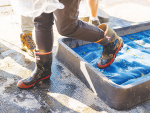
Biosecurity remains the top priority for agribusiness leaders, according to KPMG’s 2025 Agribusiness Agenda released last week.
Biosecurity remains the top priority for agribusiness leaders, according to KPMG's 2025 Agribusiness Agenda released last week.
OPINION: In the same way that even a stopped clock is right twice a day, economists sometimes get it right.
OPINION: Noted economist and self-promoter Cameron Bagrie took one look at KPMG's recently released Financial Institutions Performance Survey on banks and zeroes in one key number that suggests banks are so risk averse in this country that they are probably stifling growth and innovation.


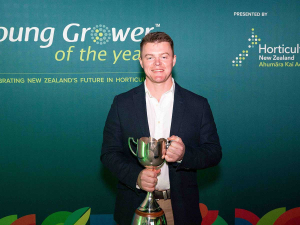
The potato industry is celebrating the success of two rising stars - James Blair, the 2026 Young Grower of the Year and runner-up and innovation award winner, Amber Davy.
Twenty-eight emerging leaders from across the horticulture sector spent two days last month learning valuable skills and connecting with industry experts.
There are five entrants in this year’s Young Horticulturist of the Year, competing in a series of technical, practical, business and leadership challenges.
A seasoned horticulturist has been appointed to deliver the Apple Action Plan, a key initiative of the India-New Zealand Free Trade Agreement.
New Zealand's citrus growers have been told to compete on the value built into their fruit rather than the volume they grow.
Hawke's Bay fruit growers are being reminded of the need to prepare for whatever the El Niño weather system may bring in the coming months.





OPINION: The same mainstream media muppets that brought you Jacindamania in 2017 have been flat out pimping for the Opportunities…
OPINION: Your old mate reckons the atrocious way farmers in the UK are treated by their lords and masters in…