
Feds Back National’s 19 Farming National Standards
National’s pledge to introduce 19 new national standards shows the party is serious about getting Wellington out of farming, Federated Farmers says.




 increase font size

Federated Farmers told Environment Southland (ES) at an annual plan hearing their proposal to heap additional costs on to the region's dairy farmers, by increasing a rating differential on dairy land use, makes no sense.
"It is our view that you are simply imposing an environmental tax on one land use in Southland based entirely on perception," said Russell McPherson, Southland provincial president.
"Dairy farms comprise only 3.6% of the total number of rating units yet, if this proposal goes ahead, will be paying 41% of the property value based general rates.
"In total, the dairy sector is already paying their fair share for what are Environment Southland's public good resource management responsibilities, but it is specifically and solely targeted through the differential as if it was failing to meet its obligations. That could not be further from the truth.
"Taken at face value the dairy differential indicates that if there was no dairying in the region then there would be no water quality issues. Clearly, this is not the case. Nor is it the case that the dairy sector is the only sector which needs to do better to address water quality.
"If the differential is nothing about recognising the costs attributed to ES work and a blatant environmental tax then the differential does not recognise or incentivise individual farmer behaviour. It is like handing a speeding ticket to every driver just for getting in the car. It is simply a tax for being a dairy farmer.
"If you are trying to put dairying in Southland on the back foot and alienate farmers then you are on the right track. You will not engage at a farm level with dairy farmers during any response to the NPS for freshwater by telling them they have to pay you to tell them what to do.
"The dairy differential detracts from the goodwill felt towards council from the very dairy farmers council should be supporting – the dairy farmers who are doing things the right way and leading environmental on farm best practice though massive investment and innovation.
"Council's decision on whether or not to increase the costs allocated to the dairy sector through the dairy differential this year is actually a decision on how it perceives the sector and how water quality issues in Southland will be addressed.
"If the intention is to develop a partnership approach to identifying the mechanisms to best address resource management issues, then the dairy differential is a bad idea.
"If the intention is to recognise and incentivise good practice, then the dairy differential is a bad idea. If the intention is to require all sectors of the community to do a better job of resource management then the dairy differential, is a bad idea.
"If the differential is an attempt to identify a scapegoat, distance this council from a key sector in the region and absolve all other resource management users from responsibility, then the dairy differential is a good step," McPherson says.
National’s pledge to introduce 19 new national standards shows the party is serious about getting Wellington out of farming, Federated Farmers says.

Mobile phone coverage and reliability are deteriorating in rural areas, and farming families are bearing the cost, according to a Federated Farmers survey.
Central Otago District Council (CODC) has voted against a plan to spread treated sewage sludge from Cromwell and Alexandra on farmland near Lauder, a decision Federated Farmers says reflects strong opposition from rural residents.
Federated Farmers has called on Central Otago District Council (CODC) to drop or vote down a plan to truck sludge from Alexandra and Cromwell to farmland near Lauder, warning it would compound an "outrageous" situation created by a separate council's decision weeks earlier.
Federated Farmers says new legislation replacing the Resource Management Act will cut red tape, unlock investment and help grow New Zealand's export-led economy, after the Planning Bill and Natural Environment Bill passed their third reading in Parliament yesterday.


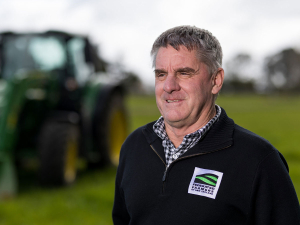
National’s pledge to introduce 19 new national standards shows the party is serious about getting Wellington out of farming, Federated Farmers says.
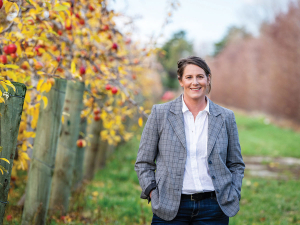
The National Party’s policies to make it easier to grow fresh vegetables, secure reliable water and energy and simplify farm planning are practical changes that will give growers the confidence to invest, according to Horticulture New Zealand (HortNZ).
Fonterra Co-operative Group chief financial officer Andrew Murray has resigned to take up a role outside the dairy giant.
A major move is about to get underway to improve the quality and viability of dairy beef and cattle in NZ.
Veterinarians say changes to the code of welfare for dairy cattle provides a positive foundation for improved cattle welfare across the country.
Today, 15 October, is the International Day of Rural Women, which recognises rural women’s contribution to farming, communities and the environment.




OPINION: The same mainstream media muppets that brought you Jacindamania in 2017 have been flat out pimping for the Opportunities…
OPINION: Your old mate reckons the atrocious way farmers in the UK are treated by their lords and masters in…




