NZ Food Safety Boss on Balancing Speed and Risk in Approvals
Striking a balance between meeting the needs of industry to speed up approval time for products but on the other hand ensuring that risks are properly assessed.




 increase font size

Some primary industries are hiring staff from overseas, whereas there are many young Maori ready to enter the workforce, says chairman of the Export Industry Skills Analysis Advisory Group, Peter Douglas.
They need to be found and assisted through their training, says Douglas.
The Export Industry Skills Analysis Advisory Group met for the first time recently as part of Maori Economic Development Action Plan. The plan was announced by Minister for Economic Development Stephen Joyce and Maori Affairs Minister Pita Sharples in November 2012.
The group consists of representatives from across New Zealand's leading export industries. Careers New Zealand is the secretariat.
The advisory group's focus is to increase Maori participation in in-work training to increase Maori employment in the primary export industries and; to provide skills analysis and identify Maori workforce development opportunities across New Zealand.
Douglas, who is also chief executive of Te Ohu Kaimoana, says the first meeting was well attended and helped the group identify its focus areas.
"The meeting was highly beneficial because each industry can identify with each other's recruitment issues. Our primary industry exports are growing fast and we need to attract New Zealand permanent residents that can carry on the future of the industry," Douglas says.
"Some of these industries are hiring staff from overseas while there are so many young Maori ready to go into the workforce but they need to be found and assisted throughout their training."
Careers New Zealand general manager strategic development, Hikitia Ropata says this is an important time for these industries and organisations to come together to discuss skill needs and the Maori workforce.
"The young Maori population is growing and becoming more diverse and many are going off to settle in Australia. If we want them here, we need to work harder to provide proper career paths," Ropata says.
"Maori are no longer a guaranteed workforce for traditional manual labour areas. Since entering tertiary education, many are now well paid professionals. Young Māori need to be attracted to industries that have good remuneration and career pathways that don't leave them in low skilled, low wage occupations."
The next meeting of the advisory group will be held in September.
Group members: Maori Economic Development Panel, DairyNZ, Beef & Lamb NZ, Federated Farmers, NZ Maori Tourism, Tourism Industry Association, Seafood New Zealand, NZ Oil & Gas, BusinessNZ, The Primary Industry ITO, National Urban Maori Authority, Federation of Maori Authorities, Maori Trustee and Careers New Zealand.
Striking a balance between meeting the needs of industry to speed up approval time for products but on the other hand ensuring that risks are properly assessed.
The Government is being warned that some recent bad policy decisions are undermining its target of doubling exports by 2030.
According to new figures from Stats NZ, kiwifruit exports were valued at $3.1 billion in the year ended August 2024.
Zespri, in collaboration with ANL/CMA CGM, has initiated a feasibility study to investigate the potential for a low-emissions shipping corridor from Tauranga to Zeebrugge, Belgium, through the Panama Canal.
OPINION: In 2021 a group of prominent academics got ’cancelled’ for daring to oppose changes to the school curriculum that put all mātauranga Māori (Māori knowledge), which can incorporate spiritual elements, on par with empirical science.


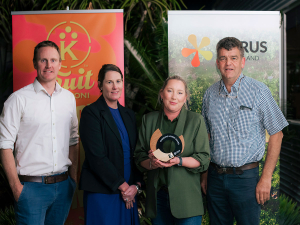
New Zealand's citrus growers were challenged to build their future on the value embedded in their fruit rather than the volume they produce, at Citrus New Zealand's annual gathering in Gisborne on 17 September.
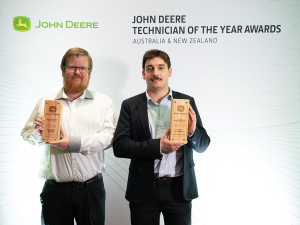
Leading John Deere technicians and apprentices from New Zealand and Australians were recognised at the recent sixth annual JD Technician of the Year Awards, held in Brisbane.
In Dacre, near Invercargill in New Zealand’s South Island, Bruce Dinnington is running a dairy operation unlike any other.
A free online platform aggregating governance vacancies across rural and regional New Zealand has been launched.
Environment Minister Nicola Grigg has announced details of a new rural plastics recycling scheme.
Agricultural drone operators say that a government decision to allow lower-risk drone work without certification won’t lower standards but drive innovation and efficiency.



OPINION: The same mainstream media muppets that brought you Jacindamania in 2017 have been flat out pimping for the Opportunities…
OPINION: Your old mate reckons the atrocious way farmers in the UK are treated by their lords and masters in…