
NZ Food Safety Boss on Balancing Speed and Risk in Approvals
Striking a balance between meeting the needs of industry to speed up approval time for products but on the other hand ensuring that risks are properly assessed.




 increase font size
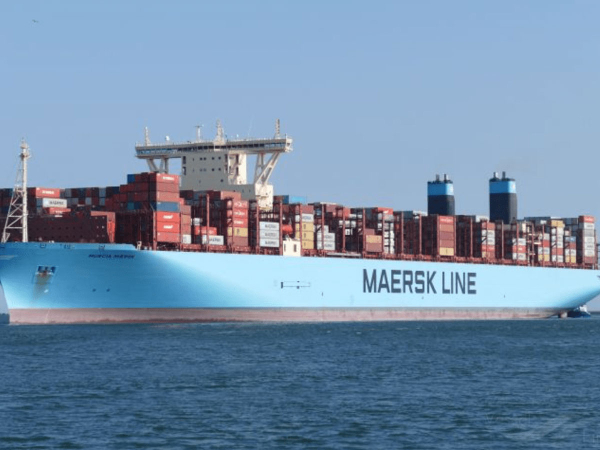 Kotahi, New Zealand’s largest containerised freight manager and A.P. Moller – Maersk have signed a second long term freight agreement to December 2034.
New Zealand’s major primary industry exporters have secured shipping capability to export $160 billion worth of products over the next 10 years.
Kotahi, New Zealand’s largest containerised freight manager and A.P. Moller – Maersk, a global integrated logistics company, have signed a second long term freight agreement to December 2034.
Kotahi, founded in 2011 by Fonterra and Silver Fern Farms, and Maersk manage Fonterra’s exports to customers around the world.
Anna Palairet, chief operating officer at Fonterra, welcomes the deal saying it is great news for New Zealand.
“Despite significant pressure on global supply chains over the past few years, Fonterra and many other New Zealand companies, have been able to keep products moving. We’re looking forward to seeing what this next decade of partnership between Kotahi and Maersk brings.”
A decade ago, Kotahi and Maersk embarked on a ground-breaking collaboration with the purpose of providing greater reliability to New Zealand ocean logistics, focusing on New Zealand exporters’ needs. Ten years later the results are in, together the partnership has shipped 1.8 million TEU or 23 million tonnes of New Zealand cargo to market, the majority being primary industry exports including dairy, meat, seafood, horticulture and forestry, through some challenging conditions.
Kotahi chief executive Daivd Ross says global supply chain disruptions, from pandemic, geopolitical and climatic events are becoming the norm.
“An ongoing freight partnership, with Maersk, will provide New Zealand’s international trade with resilience and agility to navigate these issues into the future.
“The magnitude of this agreement is big, even by global standards, with an estimated NZ$160 billion value of primary export products given greater certainty and capability around delivery to market. The long-term agreement provides our shareholders, and exporters on our platform, with a backbone shipping network for reliable services to key export locations. During the peak of the Covid-19 disruption, Maersk was the standout carrier in choosing to bring additional vessel capacity and containers to New Zealand, which grew the capacity pie for the whole export market. This is an exciting partnership with Maersk. It enabled New Zealand exporters to stay competitive on the world stage and we look forward to the next 10 years.”
Vincent Clerc, chief executive of A.P. Moller-Maersk, says they are proud to continue the partnership with Kotahi, reaffirming commitment to supporting New Zealand's international trade and ensuring the resilience of its supply chains.
“Over the past decade, our collaboration has been instrumental in providing reliable and efficient ocean logistics solutions for New Zealand exporters, and we anticipate sustaining this momentum and further advancing our shared objectives in the years ahead.”
Striking a balance between meeting the needs of industry to speed up approval time for products but on the other hand ensuring that risks are properly assessed.
The Government is being warned that some recent bad policy decisions are undermining its target of doubling exports by 2030.
According to new figures from Stats NZ, kiwifruit exports were valued at $3.1 billion in the year ended August 2024.
Zespri, in collaboration with ANL/CMA CGM, has initiated a feasibility study to investigate the potential for a low-emissions shipping corridor from Tauranga to Zeebrugge, Belgium, through the Panama Canal.
OPINION: Fonterra's decision to join forces with other primary sector exporters and launch a supply chain collaboration, Kotahi, is paying huge dividends.


National’s pledge to introduce 19 new national standards shows the party is serious about getting Wellington out of farming, Federated Farmers says.
The National Party’s policies to make it easier to grow fresh vegetables, secure reliable water and energy and simplify farm planning are practical changes that will give growers the confidence to invest, according to Horticulture New Zealand (HortNZ).
Fonterra Co-operative Group chief financial officer Andrew Murray has resigned to take up a role outside the dairy giant.
A major move is about to get underway to improve the quality and viability of dairy beef and cattle in NZ.
Veterinarians say changes to the code of welfare for dairy cattle provides a positive foundation for improved cattle welfare across the country.
Today, 15 October, is the International Day of Rural Women, which recognises rural women’s contribution to farming, communities and the environment.



OPINION: The same mainstream media muppets that brought you Jacindamania in 2017 have been flat out pimping for the Opportunities…
OPINION: Your old mate reckons the atrocious way farmers in the UK are treated by their lords and masters in…




