
Federated Farmers Backs Year 11 Agricultural Science
Federated Farmers is backing Feilding High School’s call to keep Agriculture and Horticultural Science as a standalone subject in Year 11.




 increase font size
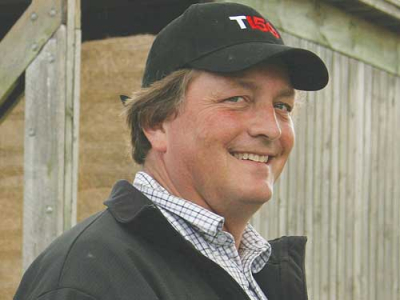 Anders Crofoot.
Reaction to the Parliamentary Commissioner for the Environment's report has been positive.
Forest Owners Association chair Peter Weir says the report is timely and he backs the report's author Dr Jan Wright's call to plant more trees.
“Tree planting by farmers and small scale forest investors has declined in the past few years, and our log processing industry needs the extra tree planting Dr Wright is calling for,” Weir says.
“Another positive is that planting trees, especially on rolling hill country, is better than cost-neutral for a farmer. Returns on harvesting logs are, over the long term, higher than hill country farming of sheep and cattle.”
Forest and Bird also endorses the report, saying the idea of planting more trees is good and will have a range of environmental benefits, including providing better habitat for native bird species and better water quality.
“The impacts on farm productivity are likely to be negligible, as farmers report that the costs of grazing marginal country often outweigh the profits, and native forest restoration potentially opens other business opportunities such as tourism and honey farming.”
Federated Farmers spokesperson on climate change Anders Crofoot says Feds sees the report contributing to the discussion NZ needs to have to find ways to reduce agricultural emissions.
He notes Wright observes that, while total emissions from agriculture during the last 25 years have increased 15%, at the same time emissions from road transport have increased by 71% and industrial processing by 45%.
“To achieve the massive change required to reduce agricultural emissions, we must work together as a nation, and look for solutions based on new technologies, smart science and good research.”
However, he says Feds does not support the inclusion of agricultural emissions in the ETS, because it would put NZ producers at a severe competitive disadvantage on international markets.
Federated Farmers is backing Feilding High School’s call to keep Agriculture and Horticultural Science as a standalone subject in Year 11.
National’s pledge to introduce 19 new national standards shows the party is serious about getting Wellington out of farming, Federated Farmers says.
Mobile phone coverage and reliability are deteriorating in rural areas, and farming families are bearing the cost, according to a Federated Farmers survey.
Central Otago District Council (CODC) has voted against a plan to spread treated sewage sludge from Cromwell and Alexandra on farmland near Lauder, a decision Federated Farmers says reflects strong opposition from rural residents.
Federated Farmers has called on Central Otago District Council (CODC) to drop or vote down a plan to truck sludge from Alexandra and Cromwell to farmland near Lauder, warning it would compound an "outrageous" situation created by a separate council's decision weeks earlier.


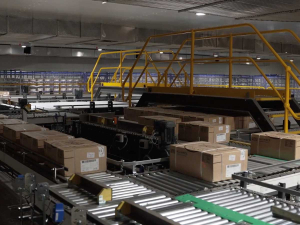
Alliance is calling for final applications for its 2027 Graduate Programme, with applications closing on Sunday 25 October.
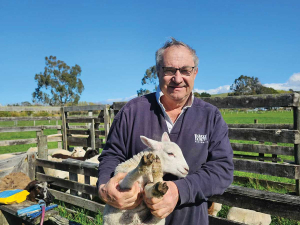
Decades piloting planes has ensured vet and farmer David Hayes is focused on safety. So, after a serious accident while welding on farm, he is sharing his experience so others can learn from it.
Canterbury milk processor, Synlait Milk has confirmed Leon Fung as its chief executive officer.
OPINION: Making it easier to collect rainwater and use it to grow crops and livestock is a no brainer.
As part of its Election 2026 coverage, Rural News asked political parties how they would help pull the arable sector out of the doldrums. Here's what they said:
Farmers are being encouraged to rethink how they manage waste on farm with the launch of ruralwastesorted.co.nz, a new website bringing together practical tips, real farmer experiences and resources.



OPINION: The same mainstream media muppets that brought you Jacindamania in 2017 have been flat out pimping for the Opportunities…
OPINION: Your old mate reckons the atrocious way farmers in the UK are treated by their lords and masters in…




