The only exception is the dairy sector which hardly features in the deal and was never likely to.
The deal is momentous in terms of the primary sector and has been put together in just nine months and has involved an incredible effort on the part of government ministers, in particular Todd McClay and the negotiating team lead by MFAT but also including MPI and other agencies.
The big winners in FTA are meat and wool, horticulture and forestry. The 33% tariff on sheepmeat will go immediately the deal comes into force. This has been a particular bugbear for sheep farmers who have lost out badly to the FTA between Australia and India. Before Australia got its FTA, India bought 89% of its lamb and mutton from NZ, but now it’s down to a mere 8%. This will change under the new arrangement. The tariff on wool exports will also go.
The other big win for NZ is in horticulture. India is the fourth largest market for our apples, but they currently attract a 50% tariff. From day one, this will be reduced to just 25% for 32,500 tonnes growing to 45,000 tonnes over six years.
Kiwifruit will also benefit with the 33% tariff cut to zero for 6,250 tonnes from day one and growing to 15,000 tonnes over six years. For volumes outside the quota the tariff rate will be16.5% from day one.
Manuka honey will get a 75% tariff rate reduction over five years and the 33% tariff on cherries and avocados will be phased out over ten years. The wine industry is another beneficiary with the 150% tariff cut back to between 66-83%.
The 5.5% - 11% tariff on forestry products will be immediately eliminated.
The announcement of the deal was made at a hastily called special press conference at parliament in Wellington on the evening of Monday December 22 by the Prime Minister, Christopher Luxon and Trade and Agriculture Minister, Todd McClay.
Luxon described the deal as a landmark moment and an exciting opportunity for NZ exporters and says the gains are wide ranging and significant. He says India is the world’s most populous country and is the fastest-growing big economy – and that creates opportunities for jobs for Kiwis, exports and growth
“The result is a high-quality trade agreement with a trusted partner that will deliver deep and lasting benefits for NZ. I have just spoken to Prime Minister Modi, who shares our excitement to further cement the strong relationship between New Zealand and India,” he says
Trade Minister Todd McClay has described the deal as one that delivers good for all New Zealanders. He says it’s once-in-a-generation agreement that creates opportunities for our exporters that they have never had in India. He says it will deliver thousands of jobs and billions in additional exports and give unprecedented access to 1.4 billion Indian consumers.
 |
|---|
|
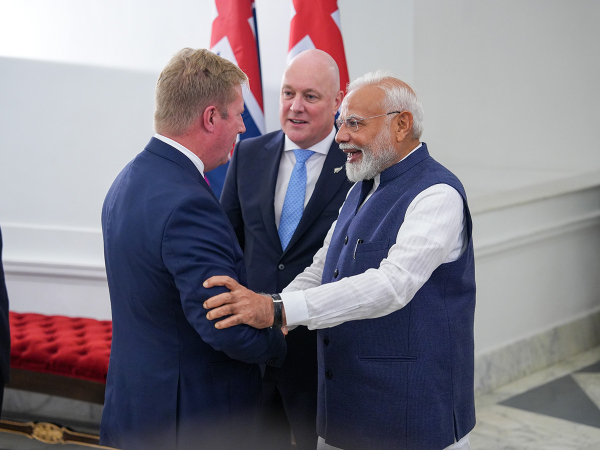
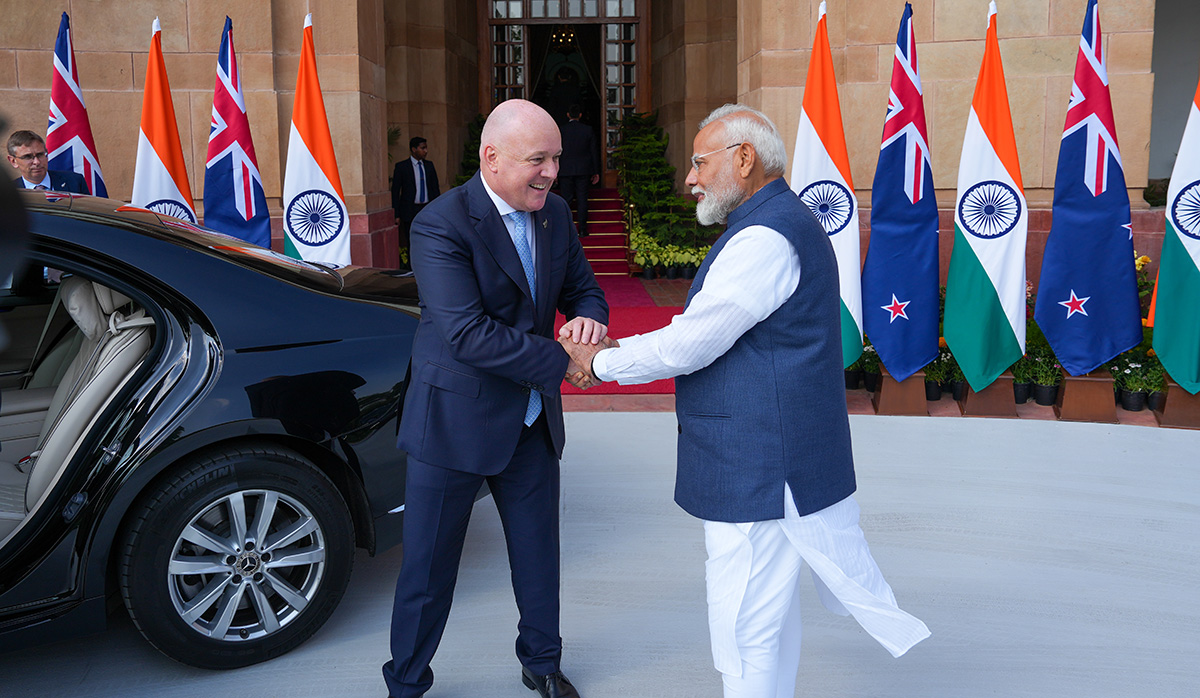
New Zealand Prime Minister Christopher Luxon meets with Indian Prime Minister Narendra Modi.
|
“Trade grows the economy and creates jobs - the NZ India Free Trade Agreement is about future-proofing opportunities for our exporters and allowing Kiwi companies to continue to punch above their weight on the world stage,” he says.
Positive reaction from sector leaders
The chair of the Meat Industry Association (MIA), Nathan Guy says the FTA is a strategically significant milestone for the red meat sector and will unlock a promising market that has been constrained due to the 33% tariff imposed on our sheepmeat.
“In a global environment marked by rising protectionism, uncertainty and volatility, this agreement provides a foundation for the New Zealand red meat sector to realise opportunities in a market that has great prospects in the future,” he says.
Guy adds that beyond sheepmeat, India offers market opportunities for our co-products, including wool, pharmaceuticals and pet food.
Beef + Lamb NZ (B+LNZ) chair
Kate Acland says the announcement is welcome news for the sector in the lead-up to Christmas. She says it’s positive for sheep farmers and puts them on a level playing field with Australia, which concluded an FTA with India several years ago.
“Although the impact on farm-gate returns may not be significant in the short-term, this is an important step for future resilience and profitability in the sector,” she says.
The head of the Horticultural Export Authority, (HEA) Simon Hegarty says news of the FTA is a welcome positive against the current backdrop of a range of significant challenges in exporting perishable products. The HEA is responsible for trade advocacy and been on the sideline of the negotiations.
He says Indian consumers will benefit from the agreement enabling greater choice and better security of access for healthy NZ food products.
“The phased reduction or removal of tariffs on trade with India under the FTA will provide an estimated benefit of NZ$20m to $30m annually and equates to the removal of approximately 30% of our entire annual horticulture tariff costs globally,’ he says.
Meanwhile the CEO of HortNZ, Kate Scott says the FTA is a boost for the hort sector and paves the way for new export opportunities in a market with strong long-term prospects. She says improved access to India will further diversify horticulture’s export portfolio and help drive the sector’s ambitions for growth.
“With India forecast to become the world’s third-largest economy, this FTA offers our growers and exporters an opportunity to build scale and value over time,” she says.
Kiwifruit is a significant beneficiary of the FTA and Zespri CEO Jason Te Brake says the deal unlocks one of the world’s largest markets for NZ Growers. He says India represents a huge opportunity for kiwifruit, with the world’s largest population and fastest-growing large economy. Indian consumers are increasingly focused on health and wellbeing and looking for high quality, nutritious products to support this.
“The market access delivered through the FTA will allow us to invest to build high-value demand, providing the world’s best kiwifruit to more Indian consumers and delivering leading value to growers,” he says.
Honey exporters have also welcomed the deal noting that the reduction of tariff on Manuka honey will allow more honey into India without the burden of prohibitive tariffs. They say the Indian market offers considerable potential, especially to the expanding middle class consumers.
Likewise the Forest Owners are happy with the deal saying it’s a big for their members CEO of the owners group Dr Elizabeth Heeg, says forestry is already NZ’s largest export to India, worth NZ$126 million, including NZ$71 million in log exports.”
She says NZ enjoys a reputation as a reliable, long-term supplier of premium wood products in India, and the new FTA provides the platform to lift volumes over time and grow higher-value trade in processed wood and building products.
“With improved settings for trade under the new FTA, our growers and processors can build longer-term commercial partnerships and invest more with confidence,” she says.
Dairy Misses Out
The one sector to miss out in the deal is the dairy sector. Winston Peters says dairy should have been in the deal – even if it took longer to negotiate this. However right from the start it was abundantly clear that dairy was not going to be there in scale, apart from some high-quality ingredients. This is because India is a major milk produced and most of the milk is produced by farmers with small herds who hold considerable political sway in India.
The Dairy Companies Association of New Zealand (DCANZ) says it’s disappointed negotiations with India have been unable to secure a bigger step towards dairy trade liberalisation, and it is calling for a fresh strategy to address the trade challenges faced by NZ’s biggest export sector. They say the dairy outcomes in the FTA are limited to some protein products, and products exported to India for re-export, meaning that this agreement joins the EU-New Zealand FTA and CPTPP as agreements with significant unfinished business to remove tariffs for the dairy sector.
DCANZ Chairman Guy Roper says while disappointed that India has been unwilling to deliver more than small changes, he does acknowledge that NZ trade officials and Trade Minister Todd McClay have worked tirelessly to conclude this agreement in a tight timeframe, and the deal will benefit a range of other NZ export sectors.
“Looking forward, and with tariffs now being largely resolved for other sectors, it's time to ramp up focused efforts and creative approaches to bring down trade barriers for dairy,” he says.
Guy Roper says they know that there is significant unmet demand for NZ’s high-quality dairy products in markets like India, and there will be mutual benefits if dairy protectionism can be overcome.
Where To Now
While the negotiators have come to an agreement, the FTA still has a number of hoops to go through before it can come into force or become active.
The parliaments of both countries need to approve the deal and in NZ’s case there is likely to be an opportunity for the public to have a say.
One stumbling block in NZ’s cash is that NZ First say they won’t support the deal and it’s likely that National will have to rely on support from Labour to get the legislation through parliament.
The approval process can normally take up to a year, but Christopher Luxon said at the press conference he wants the deal done before next year’s election.