
NZ Farmers Power Economy as Primary Exports Hit Record $64 Billion
Farmers and growers are powering the economy with export revenue at record highs.




 increase font size
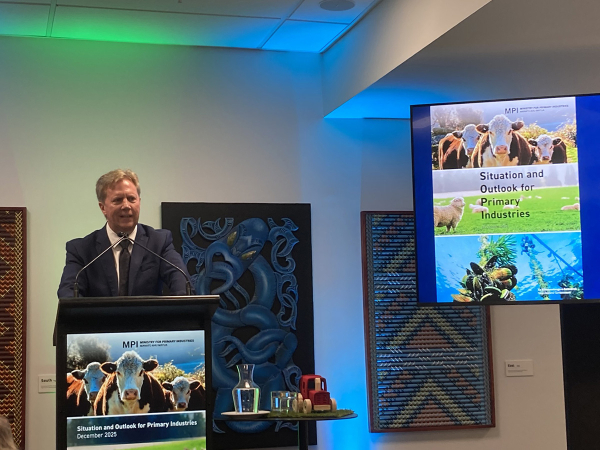 Agriculture and Forestry Minister Todd McClay.
New Zealand's primary sector is set to reach a record $62 billion in food and fibre exports next year.
That's according to the latest Situation and Outlook for Primary Industries (SOPI) report, released today.
Agriculture and Forestry Minister Todd McClay says the projection builds on 2025's $60.4 billion forecast.
"The world wants New Zealand's high-quality, sustainable, safe food and fibre," McClay says.
Exports are forecast to rise 3% from the previous year, and 16% higher than two years previously.
Exports are expected to climb to more than $63 billion in the year to 30 June 2027.
The sector is well positioned to capitalise on robust demand and strong prices, supported by good growing conditions and higher production in most areas.
"It's an outstanding result, especially considering a tough year with challenging global conditions and extreme weather impacting producers,” says McClay.
“The Government is backing the sector’s success, and the growth reflects a lot of on-the-ground hard work.
“The food and fibre sectors now account for 83 per cent of all New Zealand goods exports.”
Meanwhile, Associate Minister for Agriculture (Horticulture) Nicola Grigg describes the results as "phenomenal", adding that the $62 billion forecast would mean the primary sector makes up 15.3% of New Zealand's GDP.
“As Minister for Horticulture, I’m delighted that horticulture export revenue is expected to reach $9.2 billion next year, up 5% from this year (2025), which itself saw a 25% increase," Grigg says.
"These numbers reflect the hard work and resilience of New Zealand growers, who have faced significant adversity - from extreme weather events to international trade challenges," she adds.
“I want to take this opportunity to celebrate, but most importantly thank the sector. Horticulture plays a vital role in our regional and national economies, while also feeding Kiwis and millions more people around the world," Grigg concludes.
Key forecasts for the year ending 30 June 2026 include:
Farmers and growers are powering the economy with export revenue at record highs.
Ministry for Primary Industries (MPI) Director General Ray Smith believes there is potential for an increase in dairy farming in New Zealand.
A stable but uncertain year lies ahead for New Zealand primary products, says Ministry for Primary Industries (MPI) Director General, Ray Smith.
The government is hailing the news that food and fibre exports are predicted to reach a record $62 billion in the next year.
Horticulture New Zealand (HortNZ) says a new report projects strong export growth for New Zealand's horticulture sector highlights the industry's increasing contribution to the national economy.



Federated Farmers is backing Feilding High School’s call to keep Agriculture and Horticultural Science as a standalone subject in Year 11.
Food and fibre exports have returned a billion- dollar bonus to the country.
Zespri has welcomed the entry into force of the India-New Zealand Free Trade Agreement today, calling it a significant milestone that will support long-term growth in one of the world’s largest and fastest-growing consumer markets.
Southland's wet winter and spring will potentially cost Wyndham sheep and beef farmer Ben Dooley between $100,000 and $120,000 in lamb losses.
Beef + Lamb New Zealand says the National Party’s agriculture plan provides a strong basis for lifting productivity, supporting rural communities and recognising the sheep and beef sector’s environmental track record.
Wools of New Zealand chief executive John McWhirter says its new direct-to-consumer wool carpet service, Laneve, is the next step in the development of the business.





OPINION: The same mainstream media muppets that brought you Jacindamania in 2017 have been flat out pimping for the Opportunities…
OPINION: Your old mate reckons the atrocious way farmers in the UK are treated by their lords and masters in…




