
Industrial Hemp Regulations Revoked as New Zealand Opens New Era for Hemp Industry
From last week, the Industrial Hemp Regulations 2006 have been revoked.




 increase font size
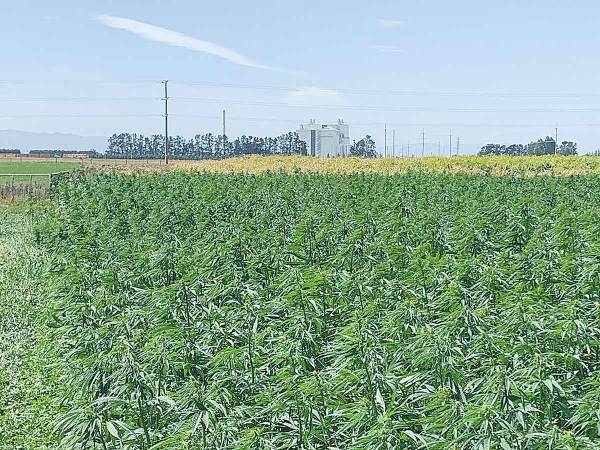 MBIE will provide funding to a project researching hemp and its qualities.
A Taranaki-based medicinal cannabis and industrial hemp venture is part of a group that will investigate ways to turn hemp seed hulls into products for the global market.
Greenfern Industries is part of a partnership that was awarded $145,000 in cash and in-kind funding for research into products created from the by-products of hemp seed oil processing.
Greenfern will work alongside industry partners Callaghan Innovation and Hemp Connect as part of the project funded by the Ministry of Business, Innovation and Employment’s (MBIE) Bioresource Processing Alliance (BPA).
BPA invests in research and development projects with the aim of generating additional export revenue for New Zealand by working with the primary sector to get better value out of biological by-products.
Greenfern’s hemp is grown in Central Otago and Taranaki and the company has plans to expand hemp seed farming to double its crops this year.
The company has already teamed up with Sustainable Foods and the Riddet Institute research centre in a project to turn hemp seeds into food products such as plant-based meat substitutes and cosmetic products.
“We have plans underway for rapid expansion, so we’re keen to find added value opportunities for the by-products of hemp seed processing,” says Greenfern managing director Dan Casey.
Previously, whole hemp seeds were cold pressed for hemp seed oil and hemp seed cake remained as the by-product with a high fibre content but without a pleasant taste.
Now, Greenfern and its partners will see how they can use the entire hemp seed.
The project will look at ways to convert a significant volume of hemp hulls and other parts of the seed into higher value products such as oil, protein peptide supplements, and water-soluble hemp protein for beverages.
“As well as creating new products for export, there is an opportunity to work on new or improved ways of processed, improving yields, and reducing waste. Given our commitment to sustainability, we’re naturally really excited to be part of this research and development project,” Casey says.
As part of the project, Greenfern Industries and Hemp Connect will provide the hemp seed, staffing, and marketing experience and will explore new market opportunities and sales channels in New Zealand and Australia.
From last week, the Industrial Hemp Regulations 2006 have been revoked.
Hemp fibre processor Rubisco is relocating its core processing facility to Ashburton as part of a $20-$30 million expansion to leverage what it says is an accelerating global demand for sustainable and renewable fibres.
The New Zealand hemp industry is hoping for quick and comprehensive reform of its legislative framework after a recent "historic" visit to sites in Canterbury by a big group of politicians, officials and industry stakeholders.
OPINION: Science funding for the bulwark of the nation, agriculture, is in a parlous state and less taxpayer money is shelled out for it every year.
OPINION: Media luvvies have pigeon-holed the Taxpayers Union (TPU) as some right-wing lobby, but as far as this old mutt can tell, the TPU focuses on shaming poor behaviour and wasteful spending by those that govern us, no matter who's in power.


National’s pledge to introduce 19 new national standards shows the party is serious about getting Wellington out of farming, Federated Farmers says.
The National Party’s policies to make it easier to grow fresh vegetables, secure reliable water and energy and simplify farm planning are practical changes that will give growers the confidence to invest, according to Horticulture New Zealand (HortNZ).
Fonterra Co-operative Group chief financial officer Andrew Murray has resigned to take up a role outside the dairy giant.
A major move is about to get underway to improve the quality and viability of dairy beef and cattle in NZ.
Veterinarians say changes to the code of welfare for dairy cattle provides a positive foundation for improved cattle welfare across the country.
Today, 15 October, is the International Day of Rural Women, which recognises rural women’s contribution to farming, communities and the environment.




OPINION: The same mainstream media muppets that brought you Jacindamania in 2017 have been flat out pimping for the Opportunities…
OPINION: Your old mate reckons the atrocious way farmers in the UK are treated by their lords and masters in…




