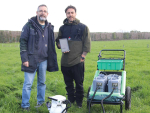
Massey Uses Portable Analyser to Measure Pasture Soil GHGs
Researchers at Massey University are using a special piece of scientific equipment to improve the measurement of greenhouse gas emissions from pasture soils.




 increase font size
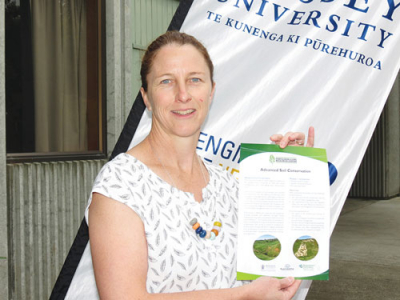 Dr Lucy Burkitt.
The growing need for farmers to have farm environment plans has prompted Massey University to develop a new course to help train rural professionals to do these.
Dr Lucy Burkitt and Dr Mike Bretherton of the university’s School of Agriculture have put together the course, which is online, making it easier for people to complete it in their own time.
Burkitt says with new regulations, such as the Healthy Rivers programme, Massey recognised the need for a tertiary qualification in this subject. It’s built on work done by colleague Mike Touhy, who has been running a course on understanding soils and landscapes, and how nutrient and sediment are lost from landscapes
“We spent last year going around the country doing a lot of market research, talking to regional councils about the important attributes they want their employees and people doing farm plans to know and understand,” she told Rural News.
“We have revamped the existing course to be targeted, so that rural professionals can do it online in their own time.”
Burkitt says the course has three modules. The first is an introduction to soil and nutrient loss issues, with a field trip that will be done with the regional councils. The second module goes into a lot more detail about soil and nutrient loss processes and understanding the hydrology that makes soil and water move, as well as erosion processes.
“The final module has the students developing a farm environment plan themselves, so we will encourage them to hook up with the regional councils. Many of the councils have agreed to provide mentorship to the students and help guide them through the process,” she says.
The aim of the course, Burkitt says, is have people who will be qualified, confident and understanding of all the components of farm plans.
Anyone interested in nutrient management can do the introductory module and field day, but only people with qualifications in soil and nutrient management can do the remaining two modules.
Burkitt says farm plans are complex and people doing these need to understand landscape and soil processes and how these interact with hydrology to influence nutrient and soil loss.
Researchers at Massey University are using a special piece of scientific equipment to improve the measurement of greenhouse gas emissions from pasture soils.

Interest in agritech and production animal systems has prompted Massey University's School of Agriculture and the Environment to new majors to its popular animal science degree.
The industry is crying out for graduates with agricultural related degrees.
A four year trial has reaffirmed that mixing plantain into dairy pastures can help reduce nitrogen losses to freshwater while maintaining milk production and profitability, say researchers.
Special courses for secondary school teachers to help excite kids about agriculture and horticulture are now being run at Massey University.


Safer Farms is urging farmers to make sure everyone working on farm has safe, suitable footwear for the job.

The Government is backing work on a community-led water storage scheme that could irrigate up to 11,000 more hectares of the Poverty Bay flats, Agriculture Minister Todd McClay says.
Agri-tech company Herd-i has become a new all-region sponsor of the New Zealand Dairy Industry Awards (NZDIA), the largest nationwide celebration of excellence in the dairy sector.
Four candidates have been confirmed for two director positions on Fonterra’s board.
Returning to the family dairy farm after playing 20 years of professional rugby around the world is no easy task.
After delivering another record farmgate milk price to 100 supplying farms, independent milk processor Tatua is entering thee new financial year with a positive outlook.



OPINION: The same mainstream media muppets that brought you Jacindamania in 2017 have been flat out pimping for the Opportunities…
OPINION: Your old mate reckons the atrocious way farmers in the UK are treated by their lords and masters in…




