The total number of farms infected with the cattle disease Mycoplasma bovis has reached 21.
Another farm was confirmed positive in South Canterbury/North Otago on January 31, two days after the announcement of two positives, one in the Waimate district and one in Southland.
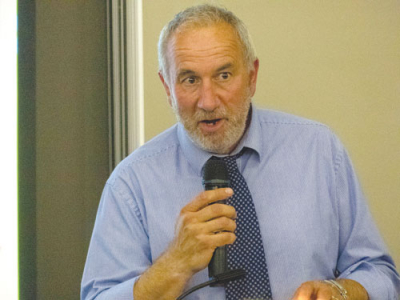
MPI response coordinator David Yard said the 21st infected farm was associated with the original cluster.
The disease was first identified last July on a Van Leeuwen Dairy Group farm near Oamaru.
“It’s fair to say the vast majority of farms, we’ve publicly said, are clearly linked to the two bigger clusters we have, in Oamaru and Southland,” Yard says.
MPI still hopes to eradicate the disease, but expects to find more infected farms because its spread still seems linked to animal movements.
“That’s where our tracing activities pay dividends, because we’re going to each farm and finding out who they’ve sold animals to. And without fail every farm we’ve identified has been one of those we’ve just chased up.”
However, MPI wants to identify any missed clusters or pockets, hence its national milk surveillance programme intended to test 12,000 farms nationwide. This has begun in the Ashburton district and will start in the central region in the first week of February and four more regions one week later, Yard says.
The results so far have been “quite promising,” he told Rural News.
MPI will immediately tell any farmer of a positive test on his herd; or where the disease is not detected the farmer will be notified at the end of the programme.
“To give you an assurance, to date we haven’t found any positives from this national testing. All these new positives we’re getting are a result of our tracing programme.”
Yard was speaking on the day when all 412 dairy farms in the Ashburton district, between the Rakaia and Rangitata rivers, were due to have milk sampled from any off-colour cows in the third and final phase of that district’s testing programme. They had taken similar samples a fortnight before, and bulk milk sampling was done before that.
Meanwhile, the culling of animals from infected herds has been put on hold, Yard says.
“Obviously to cull a person’s herd has a significant impact on their farming operation and would almost be life-shattering.
“So we want to make sure we are certain it’s the right thing to do.
“Clearly if the milk surveillance programme shows we have infection right across the country then maybe culling won’t be the right option. We’re using this opportunity to take a deep breath, wait for the results of the national milk surveillance, and then we’ll decide whether that is the appropriate way to go.”
Yard says all potentially infected properties remain in lockdown under restricted place notices and present no greater risk than any other farm.
“They will stay that way until we’ve got the results to show where the level of infection is across the country.”