
Feds Back National’s 19 Farming National Standards
National’s pledge to introduce 19 new national standards shows the party is serious about getting Wellington out of farming, Federated Farmers says.




 increase font size
 Fed Farmers’ Andrew Hoggard says most farmers will have to borrow money to get through a challenging season and a lower interest rate will help.
Dairy farmers are welcoming the latest cut in the official cash rate.
Federated Farmers Dairy president Andrew Hoggard says most farmers will borrow money to get through a challenging season and a lower interest rate will help.
“The less interest they will pay, the better,” he told Rural News.
Hoggard also expects the cut in the OCR by 25 basis points to 2.75% will push the dollar down, helping export earnings.
Reserve Bank Governor Graeme Wheeler has signalled further cuts. He says global economic growth remains moderate, but the outlook has been revised down due mainly to weaker activity in the developing economies.
“Concerns about softer growth, particularly in China and East Asia, have led to elevated volatility in financial markets and renewed falls in commodity prices,” he says.
The New Zealand economy is adjusting to the sharp decline in export prices, and the consequent fall in the exchange rate.
“A reduction in the OCR is warranted by the softening in the economy and the need to keep future average CPI inflation near the 2% target midpoint,” Wheeler says. “At this stage, some further easing in the OCR seems likely. This will depend on the emerging flow of economic data.”
Hoggard says while farmers are happy with the low dollar and low interest rates, they are also watching the GlobalDairyTrade (GDT) auction, which has made two strong consecutive gains after a run of 10 price drops.
He believes unless there’s a miracle and GDT prices rise 10% for the next six consecutive auctions, this season’s payout will remain low.
“Most of GDT sales are forward contracts so a lot of products have been sold at low prices; we are happy with the two consecutive price rises but they have to be maintained.”
The last GDT auction overall price index lifted 10.9%; whole milk powder rose 12.1%.
Rabobank agribusiness research analyst Emma Higgins says while it’s been great to see prices on the GDT bounce upwards over the past two events, global dairy market fundamentals are still out of balance.
“We are still awaiting the global supply taps to be turned off, particularly in Europe as farmers continue to expand production after having their shackles removed following the unwinding of the EU quotas.
“From a demand perspective, China is still whittling away excess inventory, while other importers outside China and Russia who have previously mopped up the oversupply appear to be stuffed to the rafters with inventory.
“The good news is that the mechanisms to move these market place fundamentals have been triggered. Overseas, farmers are beginning to feel the crunch of falling farmgate prices in key export regions, particularly in Ireland. This is significant as low farmgate prices are the first step towards slowing supply growth – much needed in a market still awash with milk.
“We are expecting a significant improvement in dairy prices by mid-2016 as the supply/demand fundamentals rebalance once excess stocks are whittled away and global production slows.”
National’s pledge to introduce 19 new national standards shows the party is serious about getting Wellington out of farming, Federated Farmers says.
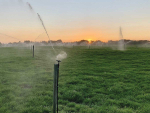
OPINION: Rivers never sit still. They start as snowmelt and rain in the high country, pick up a creek here and a stream there, and carry all of it down to where it's needed.
Mobile phone coverage and reliability are deteriorating in rural areas, and farming families are bearing the cost, according to a Federated Farmers survey.
Central Otago District Council (CODC) has voted against a plan to spread treated sewage sludge from Cromwell and Alexandra on farmland near Lauder, a decision Federated Farmers says reflects strong opposition from rural residents.
Federated Farmers has called on Central Otago District Council (CODC) to drop or vote down a plan to truck sludge from Alexandra and Cromwell to farmland near Lauder, warning it would compound an "outrageous" situation created by a separate council's decision weeks earlier.



National’s pledge to introduce 19 new national standards shows the party is serious about getting Wellington out of farming, Federated Farmers says.
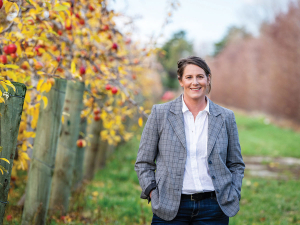
The National Party’s policies to make it easier to grow fresh vegetables, secure reliable water and energy and simplify farm planning are practical changes that will give growers the confidence to invest, according to Horticulture New Zealand (HortNZ).
Fonterra Co-operative Group chief financial officer Andrew Murray has resigned to take up a role outside the dairy giant.
A major move is about to get underway to improve the quality and viability of dairy beef and cattle in NZ.
Veterinarians say changes to the code of welfare for dairy cattle provides a positive foundation for improved cattle welfare across the country.
Today, 15 October, is the International Day of Rural Women, which recognises rural women’s contribution to farming, communities and the environment.





OPINION: The same mainstream media muppets that brought you Jacindamania in 2017 have been flat out pimping for the Opportunities…
OPINION: Your old mate reckons the atrocious way farmers in the UK are treated by their lords and masters in…




