
Feds Back National’s 19 Farming National Standards
National’s pledge to introduce 19 new national standards shows the party is serious about getting Wellington out of farming, Federated Farmers says.




 increase font size
 Federated Farmers National President Andrew Hoggard.
Rising interest rates are weighing heavily on the minds of many farmers this year, according to the latest Federated Farmers Banking Survey.
Close to 1,200 farming businesses answered questions in the survey conducted last month, reporting their average mortgage interest rate had increased to 6.29% from 4.59% in May (and 3.95% in November 2021.
Federated Farmers national president and economy spokesperson Andrew Hoggard says the survey reflects the impact of official cash rate rises, and “while plenty of other Kiwi households and businesses are feeling the pinch, many farms are carrying high debt”.
Since the May Federated Farmers survey, the average farm mortgage value increased from $4.07 million to $4.19 million. The median also increased from $2.25 million to $2.5 million.
The average level of overdraft rose significantly, up $46,000 to $328,000, with an average interest rate of 8.59%.
"It’s not a surprise given those big numbers that just over 40% of farmers said they felt their mental wellbeing had been affected by their debt levels, interest rates, changing condition, or other forms of financial pressure," Hoggard says.
The release of the survey results comes after the Government released its Situation and Outlook for Primary Industries (SOPI) report at the National Fieldays.
The report highlights a boost to the economy from an estimated record $55 billion in food and fibre export returns by June next year, but Federated Farmers say media reports on SOPI didn’t account for a 15% rise in farm expenses in the September quarter compared to September 2021, with a 53% rise in fuel costs, a 37% jump in fertiliser prices and debt servicing up 34%.
The Federated Farmers survey showed a dip in farmer satisfaction with their banking relationship.
Although approximately 60% of farmers said they were either very satisfied or satisfied with their relationship with their bank, that number was down 5 points from the May survey and is the lowest since biannual surveys began in 2015.
17.4% of farmers perceived they had come under undue pressure over the past six months, up 3.5 points from May 2022, with sharemilkers leading the way (20.7%).
Overall, banks’ conditions for lending became tougher rather than easier for all farm types, with 3.3% reporting easier conditions and 26.8% reporting tougher conditions.
Hoggard says satisfaction with communication from banks has also slipped.
“"That sector might reflect on comments from respondents that personal contact from bank staff has been declining over recent years and most farmers are unhappy about it.
"High staff turnover, rural bank branch closures with consolidation of staff into bigger branches and regional centres, and Covid work policies (e.g., working from home and less able to travel) have all been cited as reasons for reduced personal contact."
National’s pledge to introduce 19 new national standards shows the party is serious about getting Wellington out of farming, Federated Farmers says.
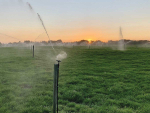
OPINION: Rivers never sit still. They start as snowmelt and rain in the high country, pick up a creek here and a stream there, and carry all of it down to where it's needed.
Mobile phone coverage and reliability are deteriorating in rural areas, and farming families are bearing the cost, according to a Federated Farmers survey.
Central Otago District Council (CODC) has voted against a plan to spread treated sewage sludge from Cromwell and Alexandra on farmland near Lauder, a decision Federated Farmers says reflects strong opposition from rural residents.
Federated Farmers has called on Central Otago District Council (CODC) to drop or vote down a plan to truck sludge from Alexandra and Cromwell to farmland near Lauder, warning it would compound an "outrageous" situation created by a separate council's decision weeks earlier.



National’s pledge to introduce 19 new national standards shows the party is serious about getting Wellington out of farming, Federated Farmers says.
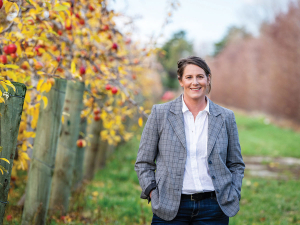
The National Party’s policies to make it easier to grow fresh vegetables, secure reliable water and energy and simplify farm planning are practical changes that will give growers the confidence to invest, according to Horticulture New Zealand (HortNZ).
Fonterra Co-operative Group chief financial officer Andrew Murray has resigned to take up a role outside the dairy giant.
A major move is about to get underway to improve the quality and viability of dairy beef and cattle in NZ.
Veterinarians say changes to the code of welfare for dairy cattle provides a positive foundation for improved cattle welfare across the country.
Today, 15 October, is the International Day of Rural Women, which recognises rural women’s contribution to farming, communities and the environment.





OPINION: The same mainstream media muppets that brought you Jacindamania in 2017 have been flat out pimping for the Opportunities…
OPINION: Your old mate reckons the atrocious way farmers in the UK are treated by their lords and masters in…




