
Federated Farmers Welcomes ACT’s New Farming Policies
Federated Farmers has welcomed new rural policies released by ACT, saying they align closely with its own election priorities.




 increase font size
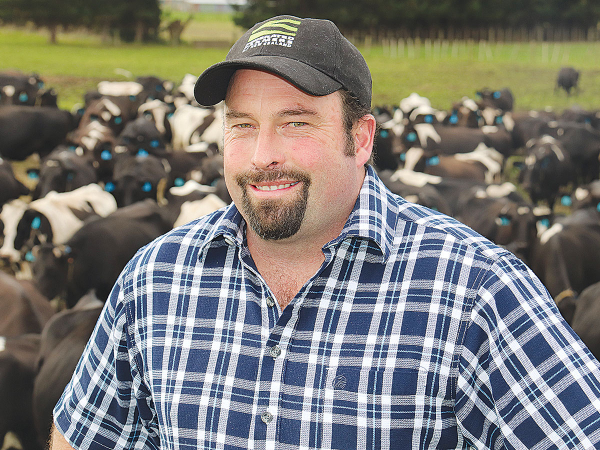 Federated Farmers dairy chair Richard McIntyre.
Federated Farmers dairy chair Richard McIntyre says the farmer organisation welcomes recently announced changes to immigration settings.
However, he says, there are still concerns that need to be addressed.
Yesterday, then-Immigration Minister Michael Wood announced a series of changes to the Skilled Migrant Category as part of what the Government has labelled an ‘immigration rebalance’.
The changes include the axing of a cap on highly skilled workers, a new six-point system designed to give certainty to migrants on their eligibility, clearer criteria, and a faster pathway to residence for highly skilled people, and an extension of the Accredited Employer Work Visa (AEWV) from three to five years.
“We know many industries are calling for workers as the global labour shortage bites,” said Wood, who has subsequently resigned from the portfolio amid concerns regarding his share portfolio.
“The new skilled migrant settings will help attract and retain skilled migrants to fill medium-to-long-term skills needs that would take time to fill by workers already in New Zealand.”
McIntyre says that the step to extend the AEWV is a positive one which he says will give both employers and employees more certainty.
“It will also smooth out the process for those farm staff who progress into herd management, which is a green list occupation and has a pathway to residency,” McIntyre says.
Previously, he says, there was a situation where applicants needed three years’ experience to be eligible for the green list, but at the time of applying most had two and a half.
This would mean they had to go through the effort and expense of applying for an additional visa in between.
“While it’s great to have a pathway to residency for herd management roles, we should also be providing pathways for those who enjoy their jobs as dairy assistants and are happy to continue at that level,” he says.
McIntyre says these employees are of real value to the dairy sector, and New Zealand needs to ensure it doesn’t lose them to a highly competitive market like Canada or Australia.
“We’ve got a real shortage of farm staff in this country, and we need to be making it as easy as possible for these people who have chosen to call New Zealand home to continue their farming careers here.”
He says Federated Farmers still has significant concerns regarding the fact that the AEWV is currently linked to the median wage of $29.66.
“Farmers simply can’t afford to pay that for entry-level staff. We’re already seeing a huge profit squeeze with declining milk prices and significant on-farm inflation,” McIntyre says.
He says some farmers are taking on staff they desperately need, but can’t afford, putting them under financial pressure.
“Others are simply going without staff and working excessively long hours to the detriment of their own health.”
Federated Farmers has welcomed new rural policies released by ACT, saying they align closely with its own election priorities.

Federated Farmers is backing Feilding High School’s call to keep Agriculture and Horticultural Science as a standalone subject in Year 11.
National’s pledge to introduce 19 new national standards shows the party is serious about getting Wellington out of farming, Federated Farmers says.
Mobile phone coverage and reliability are deteriorating in rural areas, and farming families are bearing the cost, according to a Federated Farmers survey.
Central Otago District Council (CODC) has voted against a plan to spread treated sewage sludge from Cromwell and Alexandra on farmland near Lauder, a decision Federated Farmers says reflects strong opposition from rural residents.



Federated Farmers has welcomed new rural policies released by ACT, saying they align closely with its own election priorities.

Rural Contractors NZ says proposed changes to land transport rules for agricultural vehicles are a welcome response by the Government to out of date regulations which have seen members hit with huge fines.
Alliance is calling for final applications for its 2027 Graduate Programme, with applications closing on Sunday 25 October.
Decades piloting planes has ensured vet and farmer David Hayes is focused on safety. So, after a serious accident while welding on farm, he is sharing his experience so others can learn from it.
Canterbury milk processor, Synlait Milk has confirmed Leon Fung as its chief executive officer.
OPINION: Making it easier to collect rainwater and use it to grow crops and livestock is a no brainer.




OPINION: The same mainstream media muppets that brought you Jacindamania in 2017 have been flat out pimping for the Opportunities…
OPINION: Your old mate reckons the atrocious way farmers in the UK are treated by their lords and masters in…




