Beef + Lamb NZ's Lambing Kit Checklist for a Tough Season
With lambing underway in many regions, Beef + Lamb New Zealand is encouraging farmers to put together a wellequipped lambing kit to help minimise lamb losses, particularly in bad weather.




 increase font size
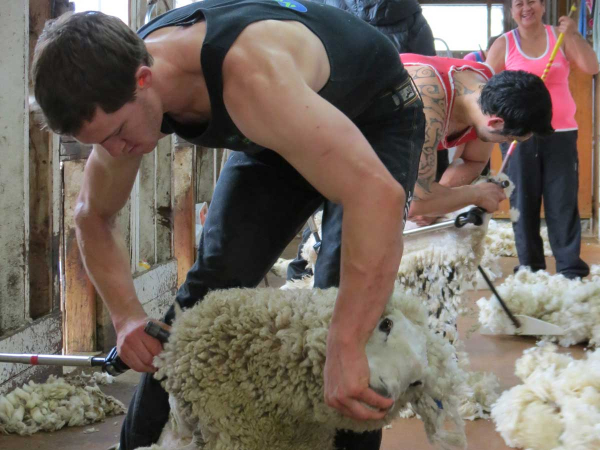 The wool industry is hoping for some lifting of COVID-19 restrictions.
The wool industry hopes for some lifting of COVID-19 restrictions limiting shearing and crutching to animal welfare reasons only.
“The shearing and crutching that is happening is taking place in the sheds where the contractors are helping to introduce social distancing protocols,” says Federated Farmers meat and fibre chairman Miles Anderson.
“The staff are all 2m away from each other and that sort of thing. So, the shearing and crutching that is happening on farm is taking a bit longer.
“Any wool that has been shorn in the last several weeks is being stored on farm.”
He hopes some restrictions are lifted as pre-lamb shearing was coming up which is an extremely busy time for the contractors.
“The last thing you need is to for them to fall that far behind that they can't do what is in front of them.”
It will depend what the levels look like but only business as usual with a few more health and safety protocols will enable the necessary work to get done.
“There will be more sheep queuing up to be shorn, crutched etc which could pose issues for the industry if the current situation extends well into May. There could be a hell of a number of stock needing to be shorn.”
The North Island lambs earlier so will want to start their pre-lamb preparation and the “big squeeze” in the South Island will come in June.
With lambing underway in many regions, Beef + Lamb New Zealand is encouraging farmers to put together a wellequipped lambing kit to help minimise lamb losses, particularly in bad weather.

New Zealand wool is reaching new heights as air filtration companies move away from synthetic products to biodegradable alternatives.
Will a stronger, more coordinated voice help rebuild confidence and improve returns in the wool sector?
OPINION: Confidence in the wool sector is rebounding as prices hit levels not seen in more than 15 years.
The recently signed free trade agreement with India is an invitation to strengthen relationships between the New Zealand and Indian strong wool industries, says Wool Impact chief executive Andy Caughey.


Farmers are being encouraged to rethink how they manage waste on farm with the launch of ruralwastesorted.co.nz, a new website bringing together practical tips, real farmer experiences and resources.

New Zealand Winegrowers (NZW) is celebrating the India-New Zealand Free Trade Agreement (FTA) coming into force today, bringing New Zealand wine improved access to one of the world’s fastest-growing economies.
New Zealand’s red meat sector has welcomed the India-New Zealand Free Trade Agreement taking effect, which removes India’s 33% tariff on New Zealand sheepmeat.
More than 95 per cent of New Zealand’s forestry and wood exports to India can now enter tariff free as the New Zealand-India Free Trade Agreement comes into force today.
Federated Farmers is backing Feilding High School’s call to keep Agriculture and Horticultural Science as a standalone subject in Year 11.
Food and fibre exports have returned a billion- dollar bonus to the country.




OPINION: The same mainstream media muppets that brought you Jacindamania in 2017 have been flat out pimping for the Opportunities…
OPINION: Your old mate reckons the atrocious way farmers in the UK are treated by their lords and masters in…




