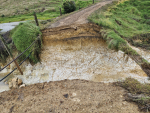
Award-winning Māori farm severely damaged by isolated Northland thunderstorm
One of the country's top Māori farms has been badly damaged by a severe isolated thunderstorm which hit parts of the east coast of Northland last week.




 increase font size
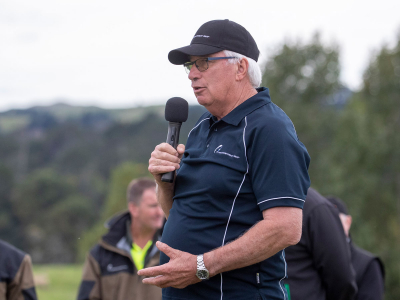 Bob Cottrell, Chairman of Te Awahohonu Forest Trust.
A field day at historic Gwavas Station, Tikokino in Central Hawke’s Bay this week attracted a good crowd of people keen to see why this property is a finalist in this year’s Ahuwhenua Trophy for excellence in Māori sheep and beef farming.
The farm is owned by the Te Awahohonu Forest Trust which has Tarawera Station on the Napier Taupo Road which Gwavas complements. Gwavas Station is a 1,178 hectare (989 effective) property on which is wintered 12,000 stock units – split 50/50 between cattle and sheep. Three full time staff run property with input from two advisors.
Bob Cottrell, Te Awahohonu Forest Trust’s chairman described the turnout of people at the field day as exceptional. He says he hopes people go away from the field day with a good understanding of who the owners of the farm are and what they are doing.
The field day at Gwavas is the second of three field days to be held over three weeks. The final field day will be held at Kiriroa Station owned by Eugene and Pania King at Motu, 70km north west of Gisborne.
The field days are open to the public and are an opportunity for the finalists to demonstrate why they were selected as finalists for this prestigious award which was inaugurated 86 years ago by the great Maori leader, Sir Apirana Ngata and the Governor General at the time Lord Bledisloe. Kingi Smiler, the Chairman of the Ahuwhenua Trust Management Committee which runs the competition says the field day at Gwavas Station was an excellent event which highlighted the thought and work that had gone into developing the property.
“It was a good example of the strategic planning that had been undertaken by its owners the Te Awahohonu Forest Trust. They bought Gwavas as a finishing block to complement their other property, Tarawera which is largely a breeding operation. This shows that Maori are creating new farming enterprises that will help build resilience and mitigate risk to deal with volatile climatic and market conditions”.
Smiler says it is good to see large numbers of people turning up to the field days which are an integral part of the Ahuwhenua competition. He says the field days are chance for Maori to show the quality and professionalism of their farming operations.
“We are not just talking about good Maori farms, we are talking about farms which stand alongside some of the best farms in Aotearoa,” he says.
One of the country's top Māori farms has been badly damaged by a severe isolated thunderstorm which hit parts of the east coast of Northland last week.
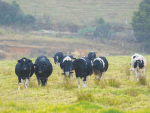
Recently two of New Zealand's top Maori sheep and beef farms held field days as part of the prestigious Ahuwhenua Trophy competition. The two are: Whangaroa Ngaiotonga Trust, northeast of Whangarei, and the proprietors of Tawapata Onenui farm on Mahia Peninsula in southern Hawke's Bay. Reporter Peter Burke attended both field days.
Farms from Northland and northern Hawke's Bay are the finalists in this year's Ahuwhenua Trophy competition for the top Māori sheep and beef farms.
The search is on to find the top Māori sheep and beef farm with entries now open for the 2025 Ahuwhenua Trophy competition.
A dairy farm owned by one of the largest Māori dairying farming operations in the country has won the prestigious Ahuwhenua Trophy for the top Māori dairy farm for 2024.


Federated Farmers has welcomed new rural policies released by ACT, saying they align closely with its own election priorities.

Rural Contractors NZ says proposed changes to land transport rules for agricultural vehicles are a welcome response by the Government to out of date regulations which have seen members hit with huge fines.
Alliance is calling for final applications for its 2027 Graduate Programme, with applications closing on Sunday 25 October.
Decades piloting planes has ensured vet and farmer David Hayes is focused on safety. So, after a serious accident while welding on farm, he is sharing his experience so others can learn from it.
Canterbury milk processor, Synlait Milk has confirmed Leon Fung as its chief executive officer.
OPINION: Making it easier to collect rainwater and use it to grow crops and livestock is a no brainer.

OPINION: The same mainstream media muppets that brought you Jacindamania in 2017 have been flat out pimping for the Opportunities…
OPINION: Your old mate reckons the atrocious way farmers in the UK are treated by their lords and masters in…




