AgFirst Warns Dairy Farmers Not to Expect Repeat Season
A warning to dairy farmers not to expect the same good conditions that they experienced last season, has been issued by a leading farm consultant.




 increase font size
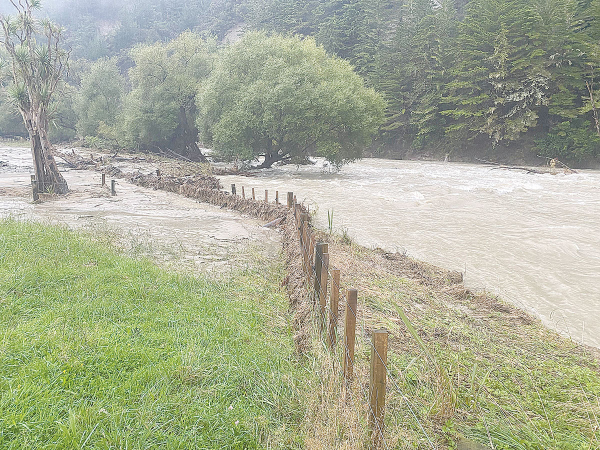 Six months on from devastating floods, following Cyclone Gabrielle, many farms in the Hawke’s Bay are starting to come right.
For many farmers in cyclone ravaged Hawke's Bay things are starting to come right, according to AgFirst farm consultant Lochie MacGillivray.
However, he says the state of farms in the region varies a lot. MacGillivray knows of a farmer whose fences and tracks were badly damaged and it has taken him six months to get things right. But he says for others it will take years and they are in for some tough times.
"We have got this double whammy with lower export prices coming through on top of high interest rates and for some that's going to cause problems on how they manage though," he told Rural News. "Some of the areas inland around Wairoa, that's where it will be hardest to work through."
MacGillivray says there are a lot of twinning ewes around and lamb survivability has been high. He adds that the ewes are looking good and milking well. While there has been talk of a drought, MacGillivray says in the past few weeks, farmers have had a bit of a reprieve with some rain, which has seen soil moisture levels high.
He believes the real test will come in January and February to see if the drying winds arrive and bring with it a drought.
For some farmers in Hawke's Bay, limited road access remains a problem. MacGillivray says some farmers in areas west of Hastings, around the settlement of Kereru, are still experiencing problems.
"They can't use the Kereru road and they have got to go up the Salisbury road, which is metal and it's difficult at the moment," he explains. "It takes a long time to get the kids to school and the school is struggling to have its fundraising events because it's only got half its students."
MacGillivray adds that not having good access makes life difficult because where once it took half an hour to get to town, it now takes an hour or more.
He told Rural News the mood of farmers is pretty finely balanced and it's somewhere between five or six out of ten.
MacGillivray believes the election result will be a positive for farmers, but many are still worried about the low prices for lamb.
He says there is also uncertainty around land prices and he believes these may fall.
A warning to dairy farmers not to expect the same good conditions that they experienced last season, has been issued by a leading farm consultant.
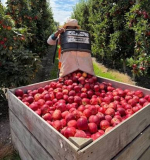
The chief executive of Apples and Pears New Zealand, Danielle Adsett, says fruit quality this year is phenomenal and the sector is hitting crop estimates, which is great for growers.
As fuel and fertiliser prices rise and with uncertainty in the future, farmers are being urged to go over their budgets with a fine-tooth comb.
For the most part, dairy farmers in the Waikato, Bay of Plenty, Tairawhiti and the Manawatu appear to have not been too badly affected by recent storms across the upper North Island.
Fears of a serious early drought in Hawke’s Bay have been allayed – for the moment at least.

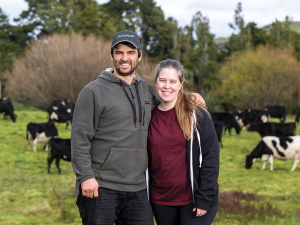
Signing up to a benchmarking tool is not about competition, but about improving collectively, says Ximena Puig and Alvaro Luzardo who are 50-50 sharemilkers at a 164-hectare (effective) dairy farm in Eketāhuna in the Lower North Island.
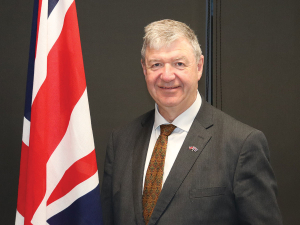
A leading British farming politician says he's impressed with the positive attitude of New Zealand farmers that he met during his recent trip here.
OPINION: With 10,500 dairy farms, New Zealand continues to punch above its weight around the world.
The Southern Dairy Hub (SDH), which runs a demonstration farm for South Island farmers, has a new general manager.
Esther Guy-Meakin has been announced as the new chief executive of the New Zealand Meat Board (NZMB).
According to a progress report on the Aotearoa Horticulture Action Plan (AHAP), New Zealand's horticulture sector is making real progress on the big issues facing growers.



A fair question has been raised about how member-funded organisations should conduct themselves when taking a public position on any…
OPINION: It really is getting harder to lampoon government bureaucrats when they do such a good job of it themselves.…