Election 2026: How Parties Would Lift the Arable Sector
As part of its Election 2026 coverage, Rural News asked political parties how they would help pull the arable sector out of the doldrums. Here's what they said:




 increase font size
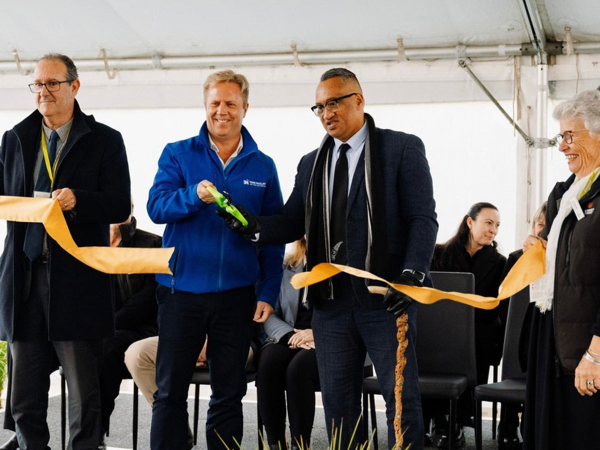 Agriculture Minister Todd McClay opening the National Fieldays this morning.
Farmers are welcoming a $17 million, seven-year collaborative science and research programme to lift pasture persistence and productivity.
The ‘Resilient Pastures’ programme will receive a $8.2 funding boost from the Government, Agriculture Minister Todd McClay announced at Fieldays today.
The state funding will come from Budget 2025’s new Primary Sector Growth Fund (PSGF). The study is led by DairyNZ with support from Beef + Lamb New Zealand, the T.R. Ellett Agricultural Research Trust, Hine Rangi Trust, Northland Dairy Development Trust (NDDT), Barenbrug, and Fonterra.
McClay says the partnership with farmers will boost productivity, profitability, and sustainability by identifying the most resilient, high-performing pastures for New Zealand conditions.
“This is a smart investment that will deliver real outcomes for farmers — increasing pasture performance, extending productive lifespan, cutting re-grassing costs, and improving profitability across the board,” McClay says.
“New Zealand farmers produce high-quality, safe, and sustainable food and fibre that is in demand around the world. Projects like this help us stay at the front of the pack —making it easier to farm productively and drive farm gate profitably.’
The project will focus on the upper North Island, where pasture productivity has been challenging. Research and trials will develop region-specific pasture mixes and on-farm practices that respond to changing conditions, with farmers involved every step of the way.
The problem is clear with farmers saying pastures are not lasting as long (persisting), and DairyNZ analysis suggesting pasture renewal rates are increasing as pasture harvest is declining – by 0.5 to 1 tonne of DM/ha per decade across Waikato and Northland.
Pasture is vital to the New Zealand economy. It provides a sustainable, low-cost feed source, underpinning the country’s competitive advantage in global markets and without action pasture persistence and productivity will likely continue to fall.
“This is one where we need to work together to ensure we can adapt and remain productive and sustainable in a changing climate,” DairyNZ chair Tracy Brown says.
“It’s a real concern for the country as a whole as it poses a threat to our pasture-based value proposition and to dairy as our biggest export earner. The solutions we discover and help farmers to adopt during this project will ultimately benefit all regions across the country.”
B+LNZ chair Kate Acland says pasture is the foundation of red meat farming systems.
“It’s what makes our red meat production low-emissions, grass-fed, and globally competitive. If we lose pasture performance, we lose profitability and resilience – so this research is an important one for livestock farmers too.”
The strength of the Resilient Pastures programme lies in its grassroots focus.
“This isn’t top-down science – it’s driven by farmers’ real-world experiences and shaped by what they’re seeing on the ground. We’re partnering with them to develop practical, region-specific solutions that will strengthen the productivity and resilience of our pasture systems for the long term,” Acland says.
As part of its Election 2026 coverage, Rural News asked political parties how they would help pull the arable sector out of the doldrums. Here's what they said:
Food and fibre exports have returned a billion- dollar bonus to the country.
The Government is backing work on a community-led water storage scheme that could irrigate up to 11,000 more hectares of the Poverty Bay flats, Agriculture Minister Todd McClay says.
A Labour-led Government won’t be bringing back the controversial freshwater rules of 2020.
Ravensdown shareholders have elected Jane Montgomery and Kate Acland to the Ravensdown Board for three-year terms, following a closely contested director election.

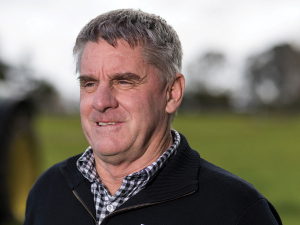
Federated Farmers has welcomed new rural policies released by ACT, saying they align closely with its own election priorities.

Rural Contractors NZ says proposed changes to land transport rules for agricultural vehicles are a welcome response by the Government to out of date regulations which have seen members hit with huge fines.
Alliance is calling for final applications for its 2027 Graduate Programme, with applications closing on Sunday 25 October.
Decades piloting planes has ensured vet and farmer David Hayes is focused on safety. So, after a serious accident while welding on farm, he is sharing his experience so others can learn from it.
Canterbury milk processor, Synlait Milk has confirmed Leon Fung as its chief executive officer.
OPINION: Making it easier to collect rainwater and use it to grow crops and livestock is a no brainer.


OPINION: The same mainstream media muppets that brought you Jacindamania in 2017 have been flat out pimping for the Opportunities…
OPINION: Your old mate reckons the atrocious way farmers in the UK are treated by their lords and masters in…




