Ravensdown Elects Montgomery, Acland to Board
Ravensdown shareholders have elected Jane Montgomery and Kate Acland to the Ravensdown Board for three-year terms, following a closely contested director election.




 increase font size
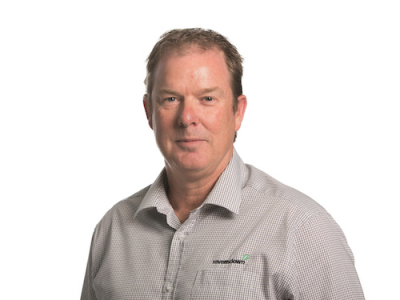 Chief executive Greg Campbell.
Fertiliser co-op Ravensdown is paying a total annual rebate of $45 per tonne to its farmer shareholders after a third year of strong results.
The 10% increase in rebate on purchased products compared to last year was due to continued balance sheet strength, growing market share and a profit before tax and rebate of $51 million from continuing operations.
“All-year value is important to farmers, so I’m delighted we were able to deliver this rebate as well as having led major price reductions throughout the year,” says Ravensdown chairman John Henderson.
“This strong performance is now part of a consistent pattern Ravensdown has established. Strong years in 2015 and 2016 meant at the start of the last financial year, we were able to set ambitious targets to invest in infrastructure, to improve market share and to develop new technology,” said John Henderson. “I am so pleased that, for the third year in a row, our targets were achieved and we will still remain in the black after rebate and taxes.”
Sales volumes were up by 2% as the cooperative welcomed new customers yet revenue fell 5% to $627 million because price reductions were delivered as early in the year as possible.
For those who bought solid fertiliser before 31 May 2017, $20 dollars of the total rebate has been in shareholders’ bank accounts since June 9. For fully paid-up shareholders, the remaining $25 per tonne will be paid in cash this month.
“Ravensdown is here to enable smarter farming which ultimately leads to a better New Zealand. Last year’s growth areas highlighted progress toward this purpose,” said chief executive Greg Campbell.
The cooperative’s environmental consultancy, which helps farmers to mitigate their impacts and work with regulatory frameworks, was its fastest-growing service. Farmer demand for N-Protect, which is the only Fertmark-certified urease inhibitor in New Zealand, showed farmers shared Ravensdown’s concerns of reducing nitrogen loss to the atmosphere. Our agronomic advice on using coated urea products such as N-Protect remains to only use them in the conditions where they confer a material advantage.
New technology called HawkEye was introduced to replace Smart Maps and help farmers assess and alter their nutrient levels across paddocks on an easily understood and readily shared map. Wholly-owned subsidiary C-Dax, which specialises in pasture measurement, spreading and spraying technology, delivered a healthy result.
The Civil Aviation Authority has given approval for the cooperative’s fleet of topdressing planes to be upgraded to the precision application service called IntelliSpread. As this service is phased in, it will enable greater control and accuracy of topdressing planes because the computer-controlled hopper doors adjust to deliver the fertiliser where it’s needed. Research released in February showed that on average 9% of hill country land assessed was non-productive or environmentally sensitive which means IntelliSpread could avoid those areas. Compared to blanket rate applications of fertiliser, this targeted rate application was estimated to deliver savings of on average $43 per hectare after a 10-year period.
Agronomy products such as seed and agrichemicals were backed up with technical advice and experienced a strong year. Animal health products delivered a good response against tough competition.
Campbell believes Ravensdown’s contribution backs up New Zealand food’s back story. “When it comes to farmers and growers, we help them show others how they take their environmental responsibilities seriously, how they use technology to precisely diagnose what the land needs. Providing traceable application maps can assure global buyers that the details fit with the premium food story,” said Greg.
Ravensdown shareholders have elected Jane Montgomery and Kate Acland to the Ravensdown Board for three-year terms, following a closely contested director election.
OPINION: It appears to be difficult for people who haven’t tried to run a business to understand the difference between assets and cash.
OPINION: In the 1980s, concern was expressed in West Germany about the falling birth rate. Some simple analysis was performed by Professor Helmut Sies, physician and biochemist at Dusseldorf University. His letter ‘A new parameter for sex education’ was published in Nature in 1988:
When it comes to annual rebates, it's been a long time between drinks for Ravensdown shareholders.
Ravensdown has reported a net profit before tax and rebate of $50.1 million for the year ended 31 May 2026.


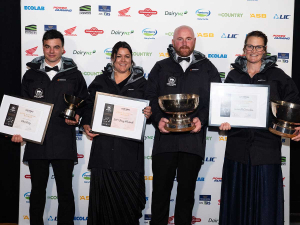
Entries opened on Monday, 5 October 2026 for the 2027 New Zealand Dairy Industry Awards (NZDIA), which organisers describe as the nation's biggest celebration of excellence in the dairy sector.
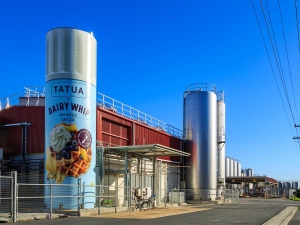
Waikato milk processor Tatua has again declared a record milk payout to farmer shareholders, leaving other processors in the dust.
A Labour-led Government won’t be bringing back the controversial freshwater rules of 2020.
National’s much-touted free trade deal with India featured in the Rural Issues Debate at Mystery Creek, Hamilton on Wednesday night.
New Zealand's 2026-27 freshwater fishing season has opened, with anglers encouraged to head to rivers and lakes over the coming days as conditions look favourable across much of the country.
Central Otago District Council (CODC) has voted against a plan to spread treated sewage sludge from Cromwell and Alexandra on farmland near Lauder, a decision Federated Farmers says reflects strong opposition from rural residents.


OPINION: The same mainstream media muppets that brought you Jacindamania in 2017 have been flat out pimping for the Opportunities…
OPINION: Your old mate reckons the atrocious way farmers in the UK are treated by their lords and masters in…